


Our pickLikely to sell out
10 - 10.5 hours·English, German
4.6(16,917)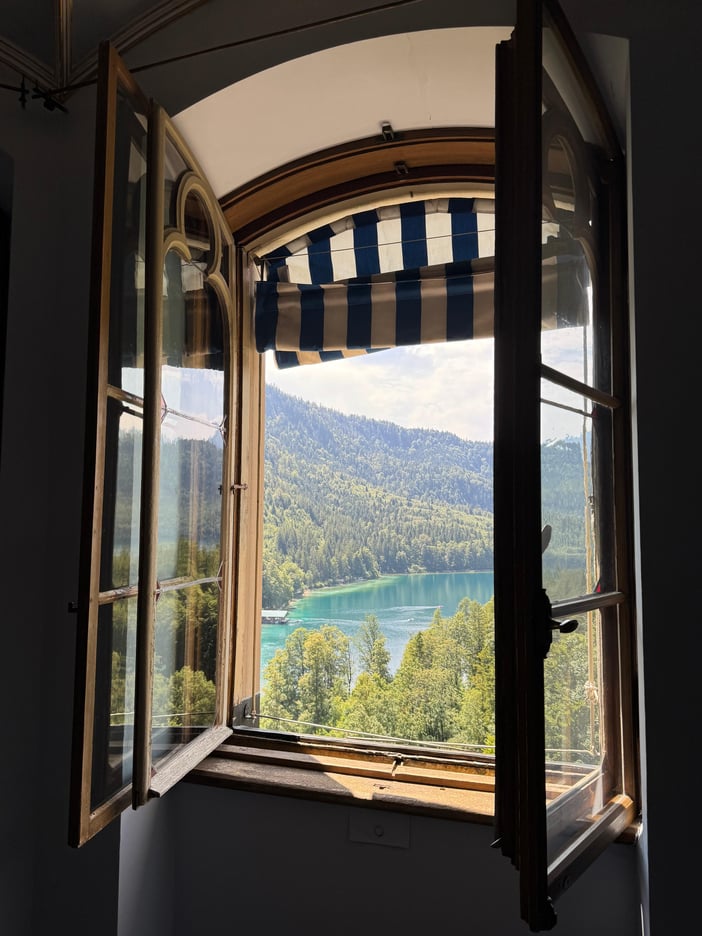
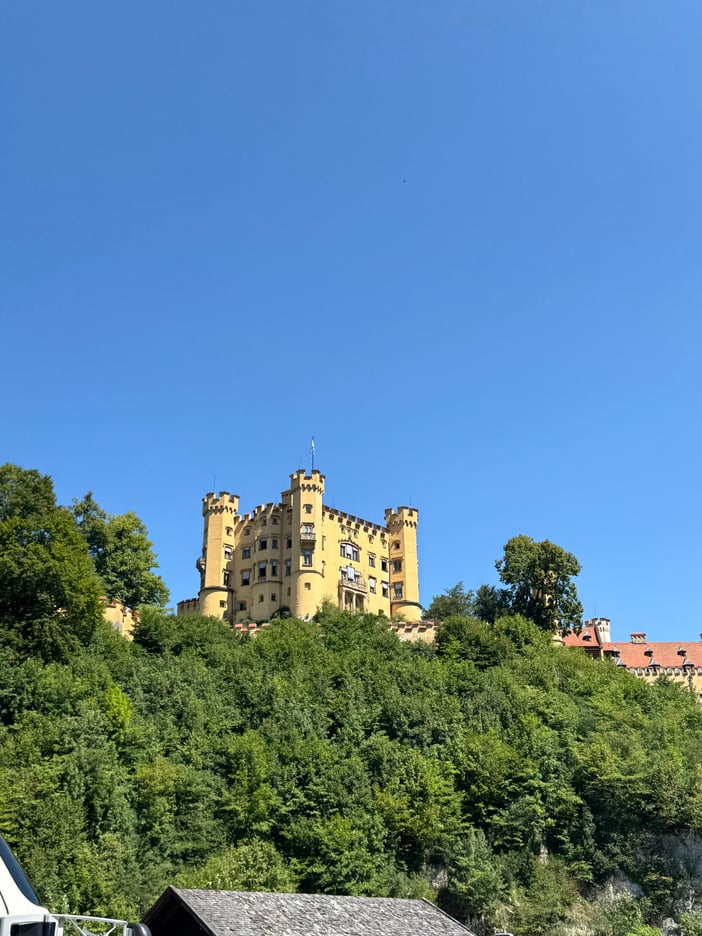
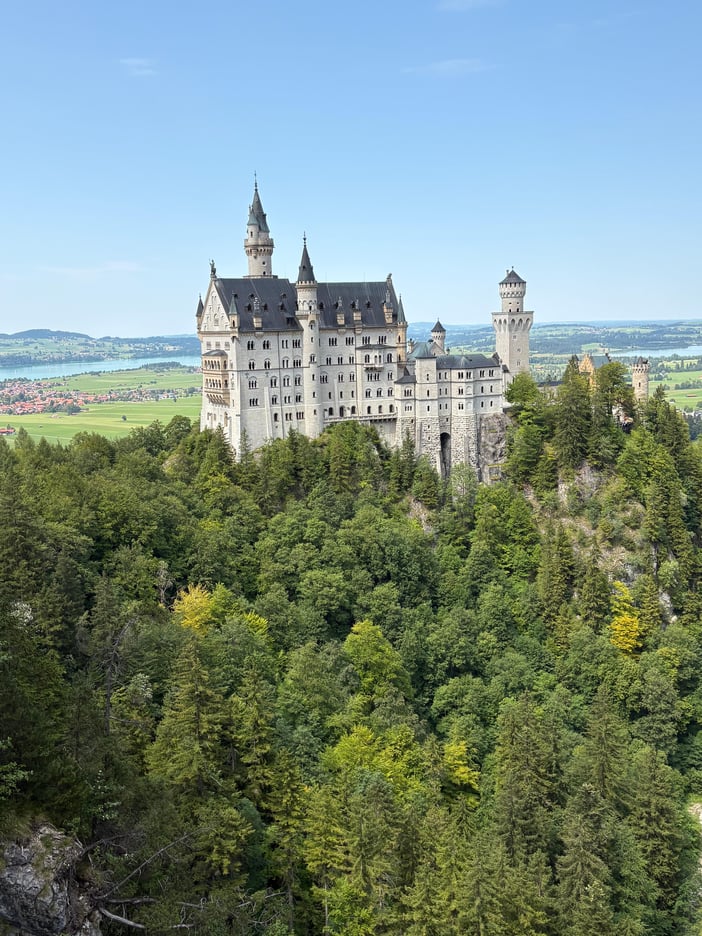
From Munich: Neuschwanstein & Linderhof Castle Full-Day Trip
Free cancellationTour guide* Premium tour only in English

Make the castle day happen from Salzburg. Ride the early train to Munich, then join a full-day guided coach tour with castle entry tickets, lively stories of King Ludwig II and the Marienbrücke viewpoint. Over 16,000 travelers have done it. Book your seat and leave the logistics to someone else.
A Neuschwanstein Castle day trip from Salzburg works, and the tours on this page are the way to do it: an early train from Salzburg Hauptbahnhof reaches Munich Central Station in time for a morning castle departure.
The closest match is From Munich: Neuschwanstein & Linderhof Castle Full-Day Trip, a 10 to 10.5 hour coach day with a guide, Linderhof Palace and Neuschwanstein entry options, plus the Marienbrücke views. It departs from Munich, so the train ride comes first; the castles, the storytelling and the full Bavarian day are all here.
A departure from Salzburg is not among the tours sold here, so this page points you at the closest match on sale: a full-day trip from Munich that covers Neuschwanstein Castle and, with it, Linderhof Palace.
The link below takes you to From Munich: Neuschwanstein & Linderhof Castle Full-Day Trip, the tour this page recommends instead.
It runs 10 to 10.5 hours in an air-conditioned coach with a toilet on board, and a guide tells the story of King Ludwig II along the way.
Several booking options let you shape the day: a later 9:30 am start that skips Linderhof and keeps the group smaller, a version where you buy tickets on the bus, one with entry to both castles included, and a premium small-group option with snacks, drinks and extra legroom.
For a Salzburg traveler, the appeal is that the timed castle entry and the coach schedule are handled in one booking, so a missed connection does not have to sink the plan. Come prepared for a 30 to 40 minute uphill walk from the ticket center to the castle, and bring comfortable shoes.
Green marks the lowest price. Prices per person.


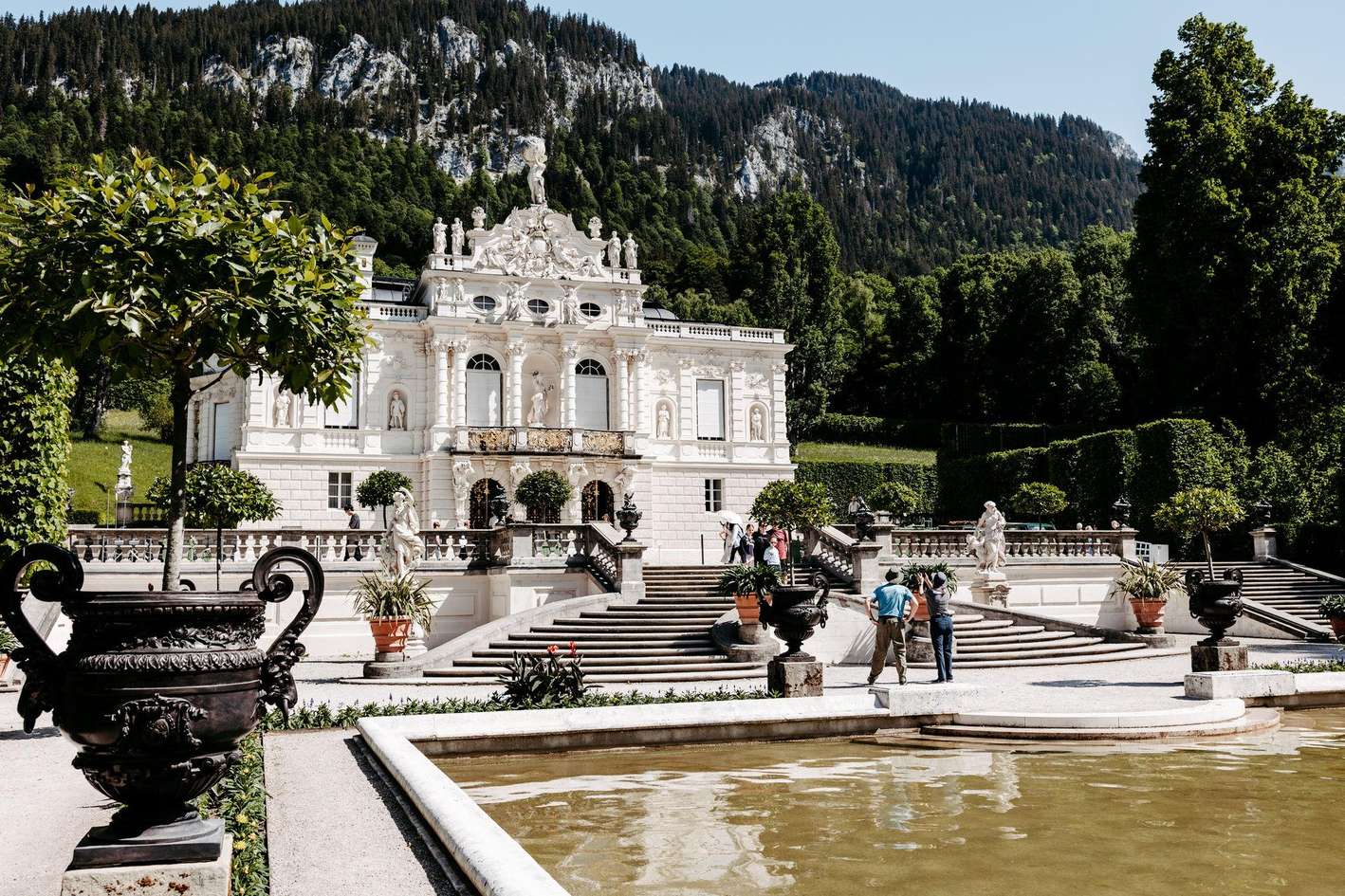
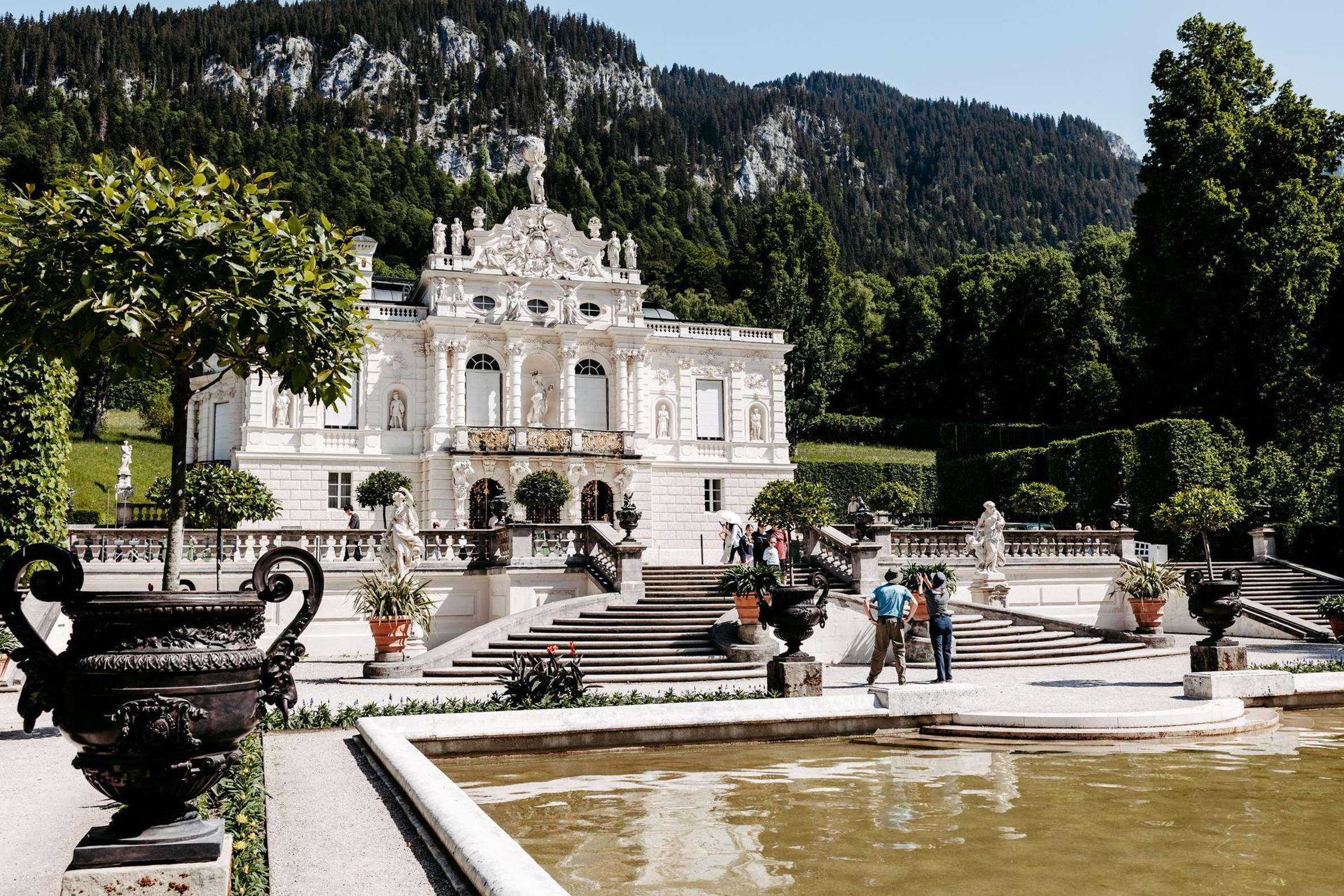
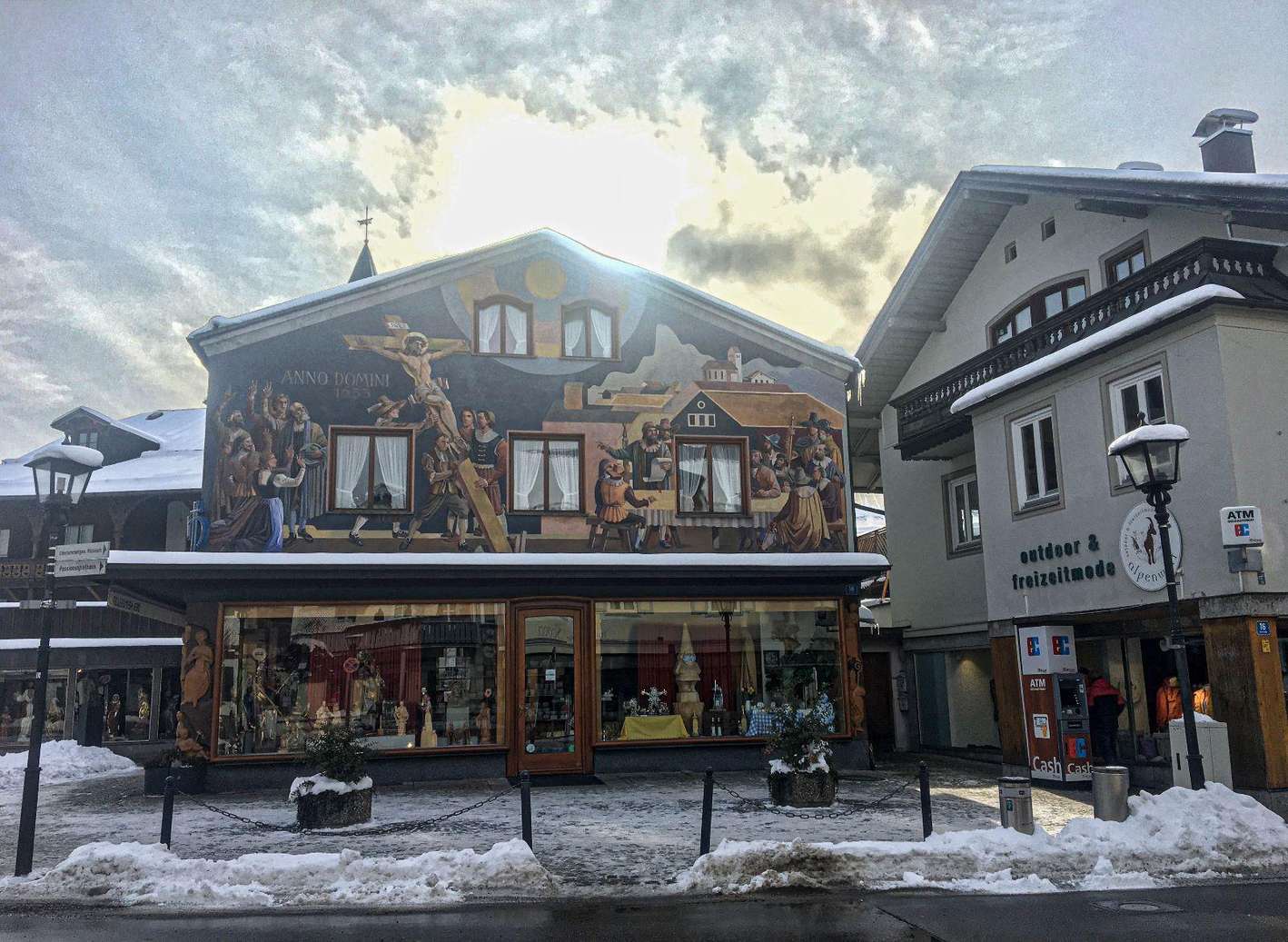
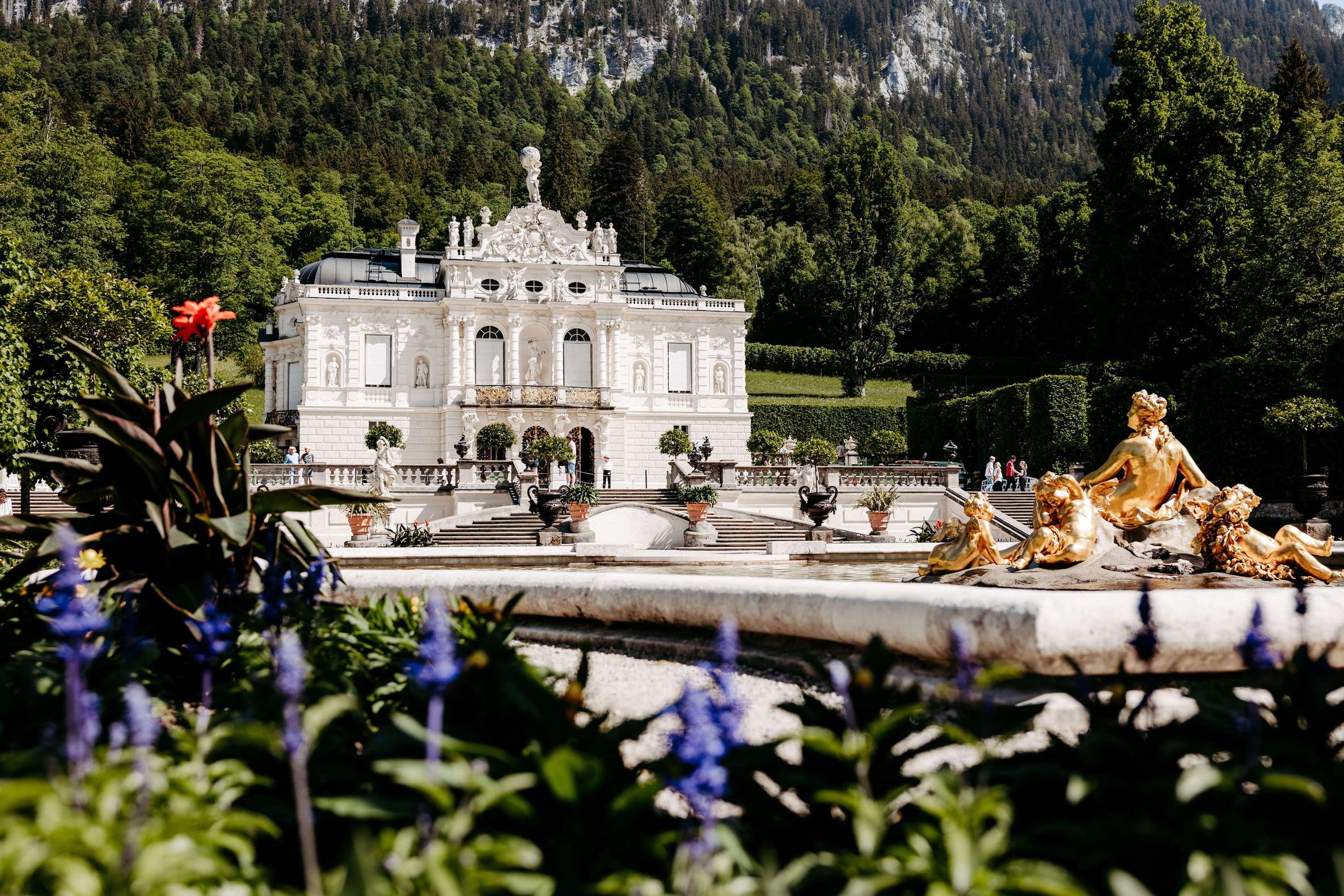
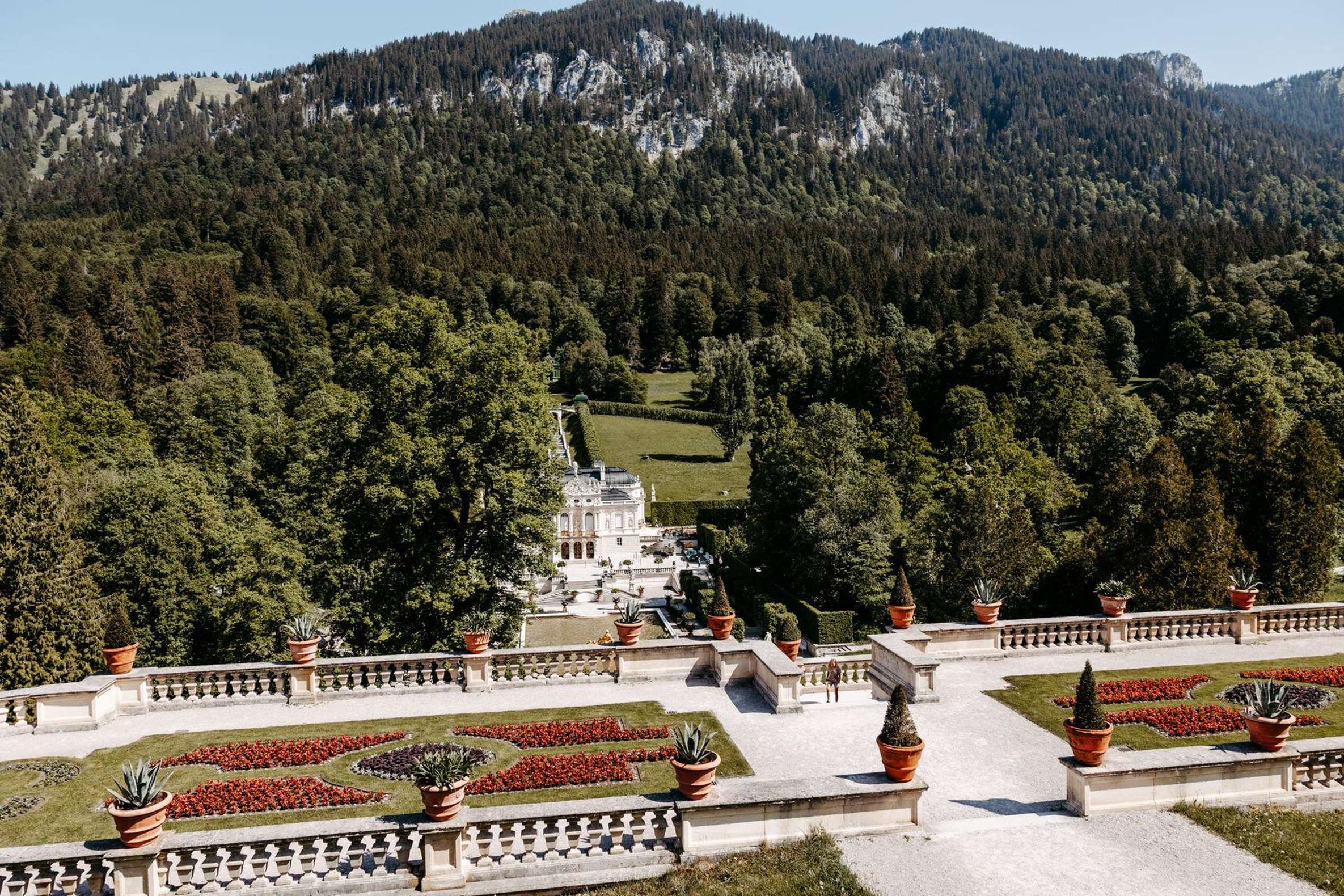
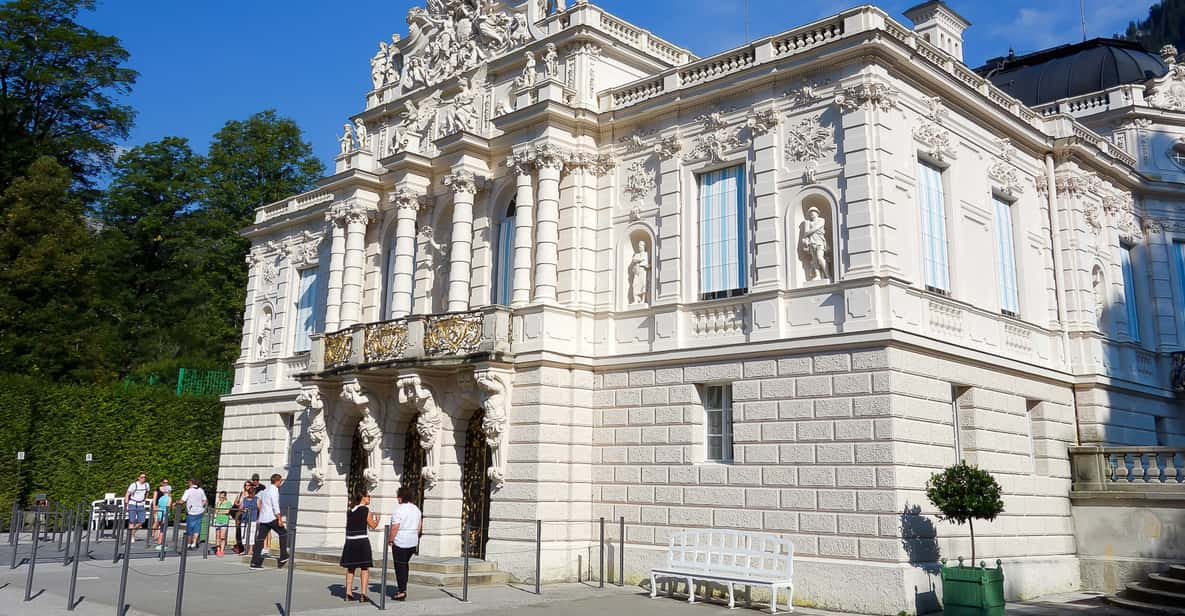
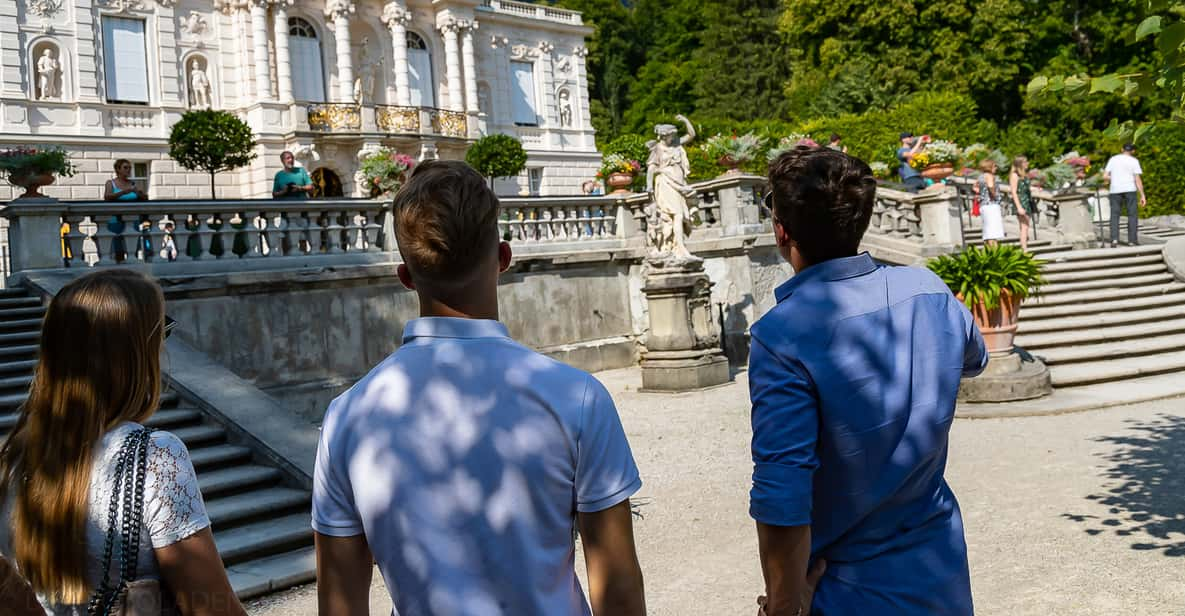
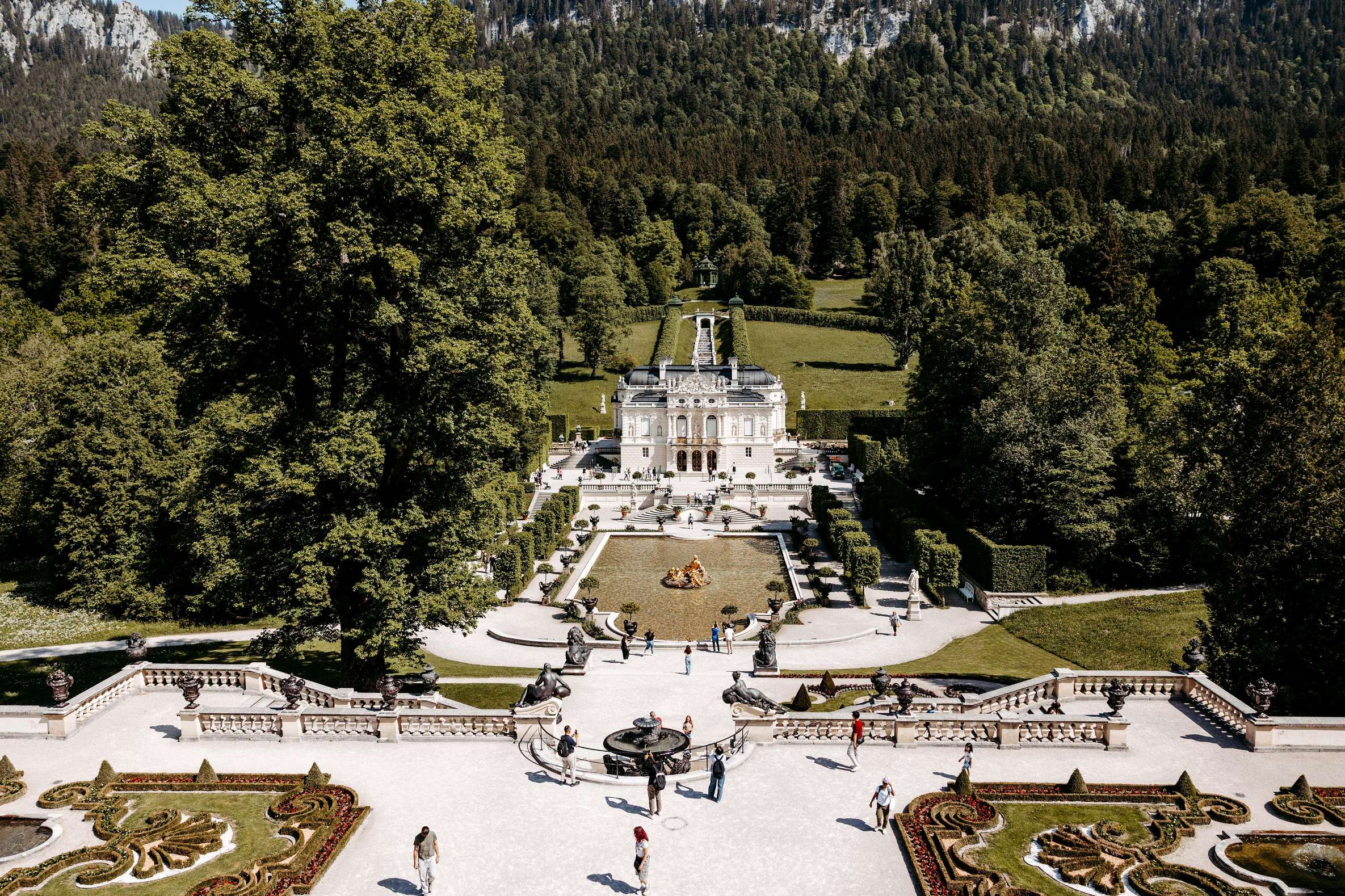
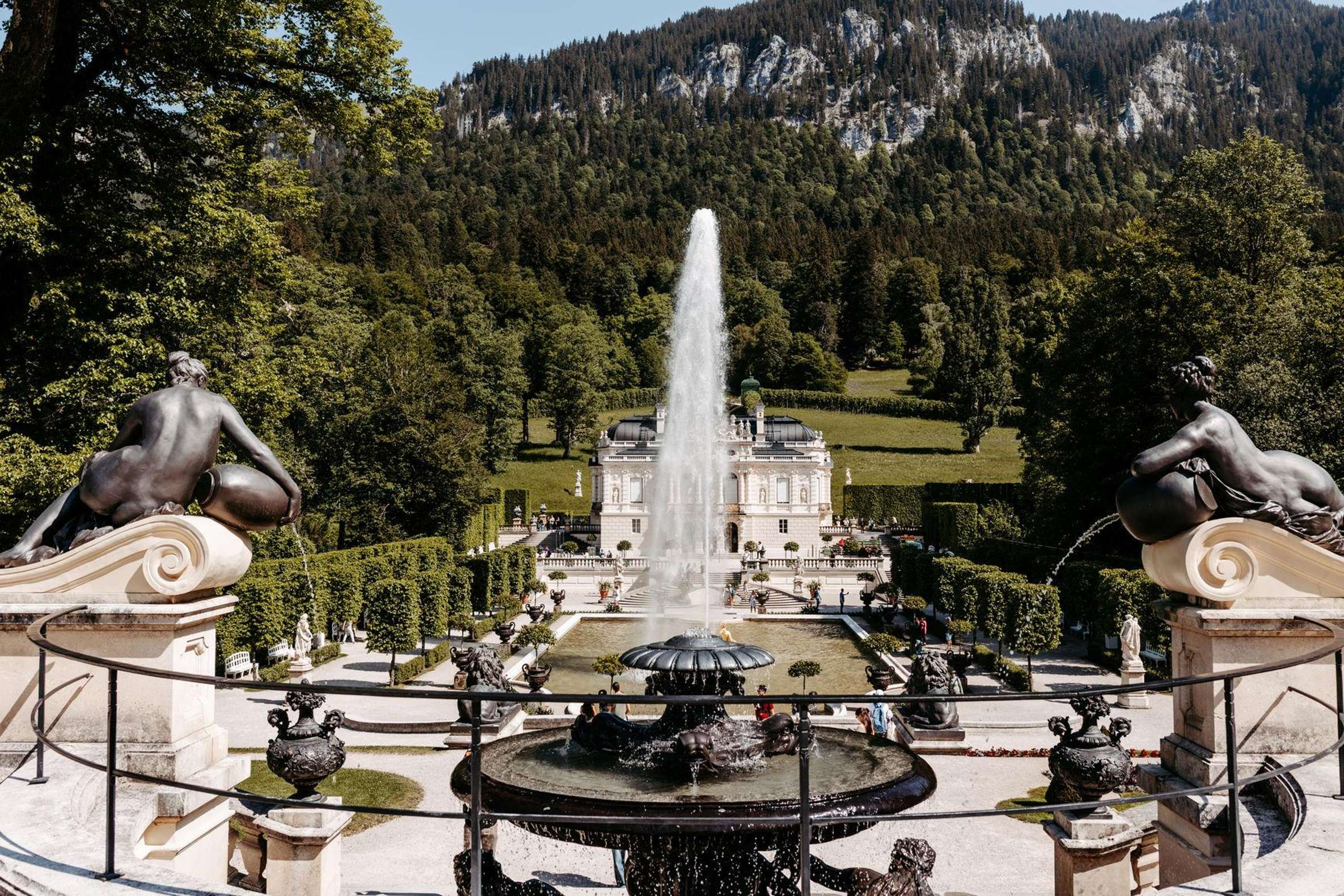
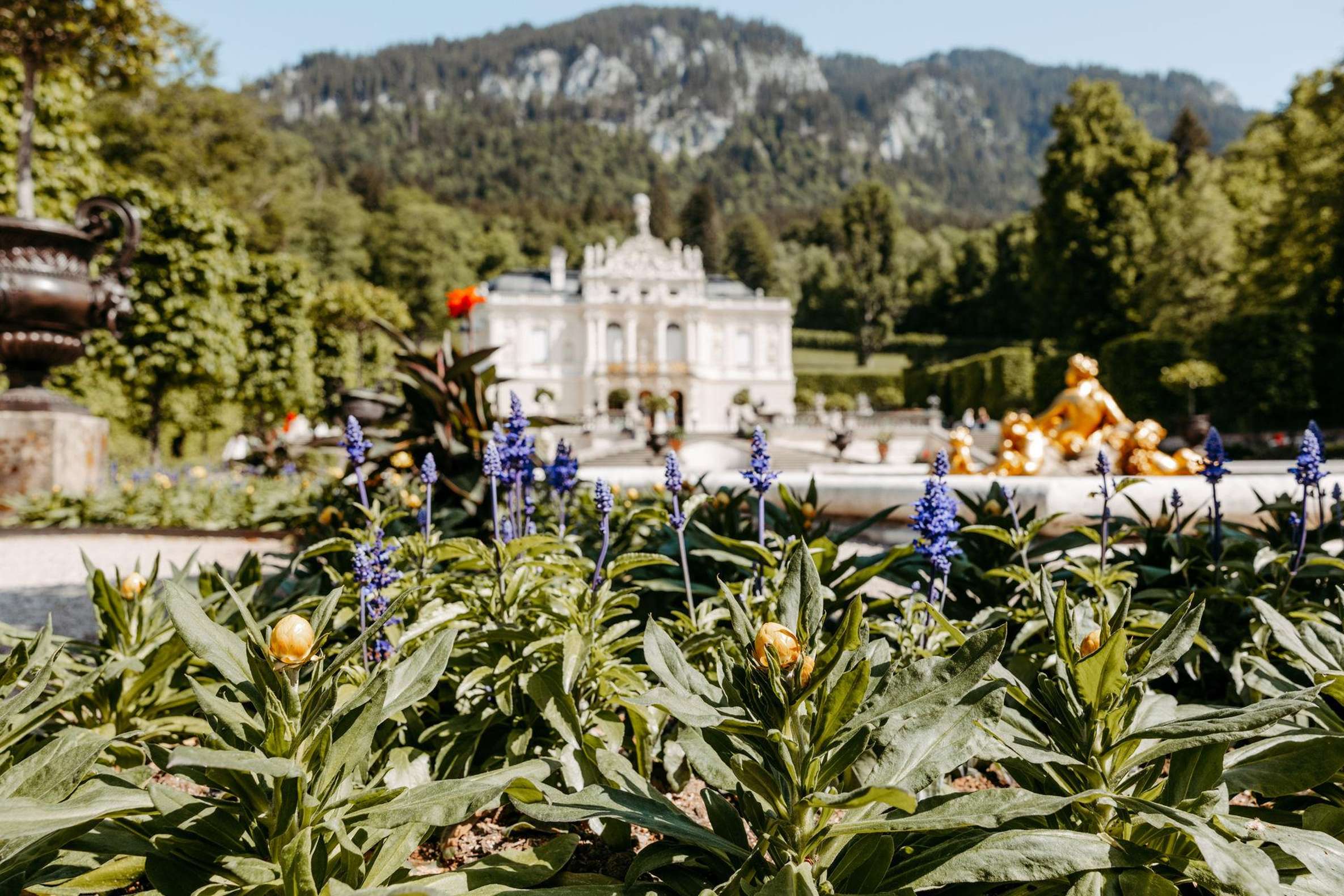
Linderhof Palace comes first, and it sets the tone for the day. This is the only palace King Ludwig II finished in his lifetime, and you walk through its rooms on a guided interior tour before the coach carries on through the Ammergau Alps, past Oberammergau and its painted houses.
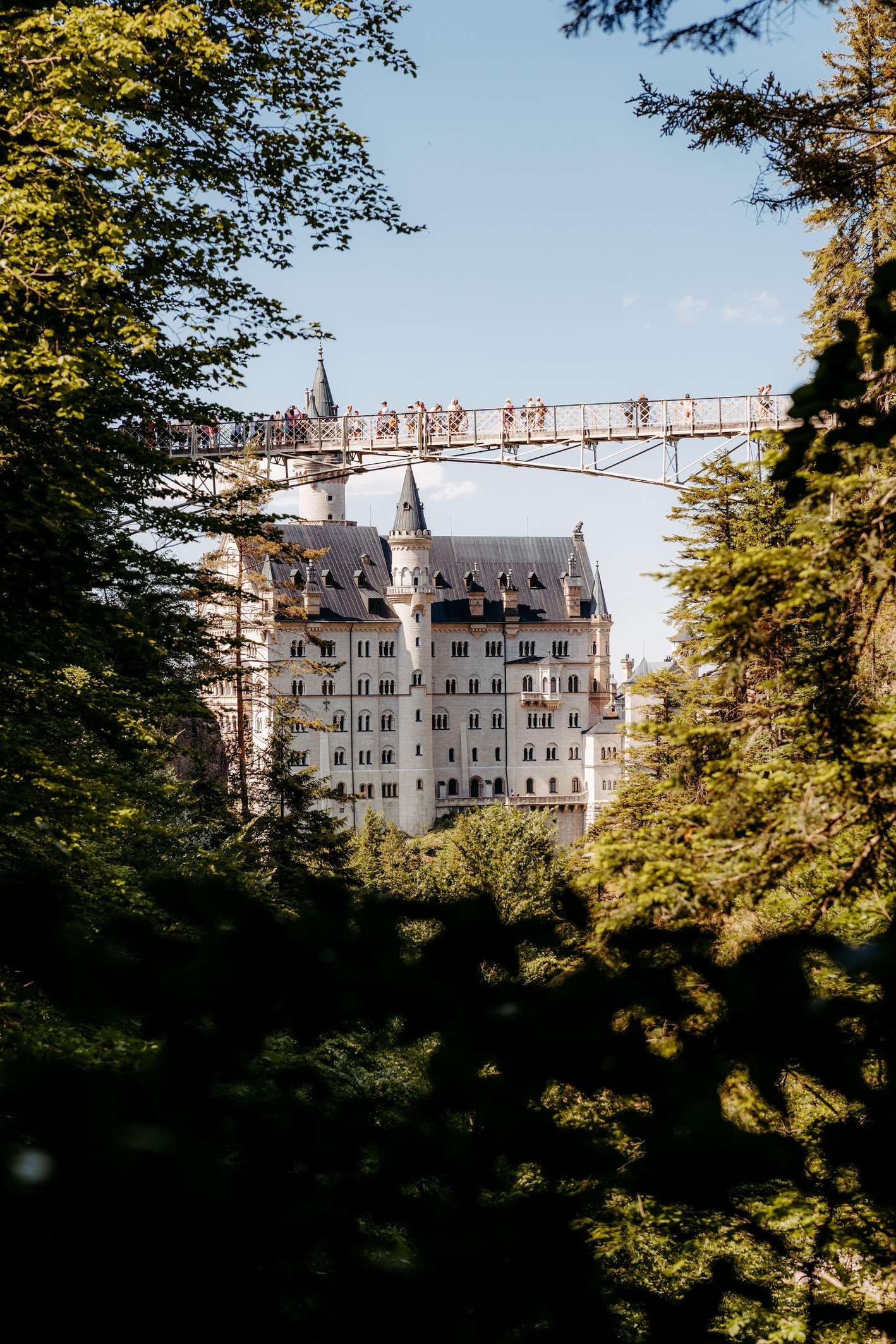
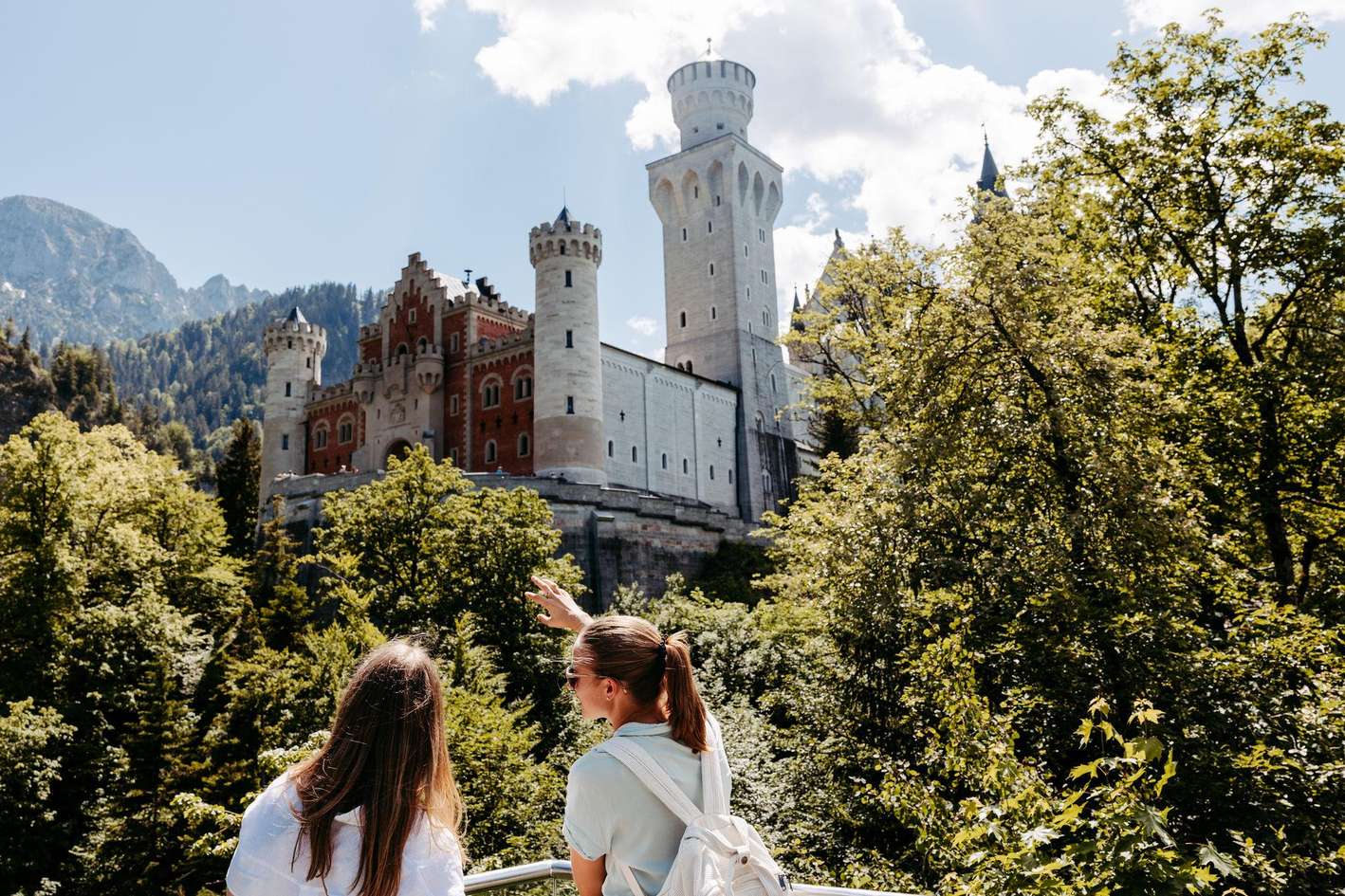
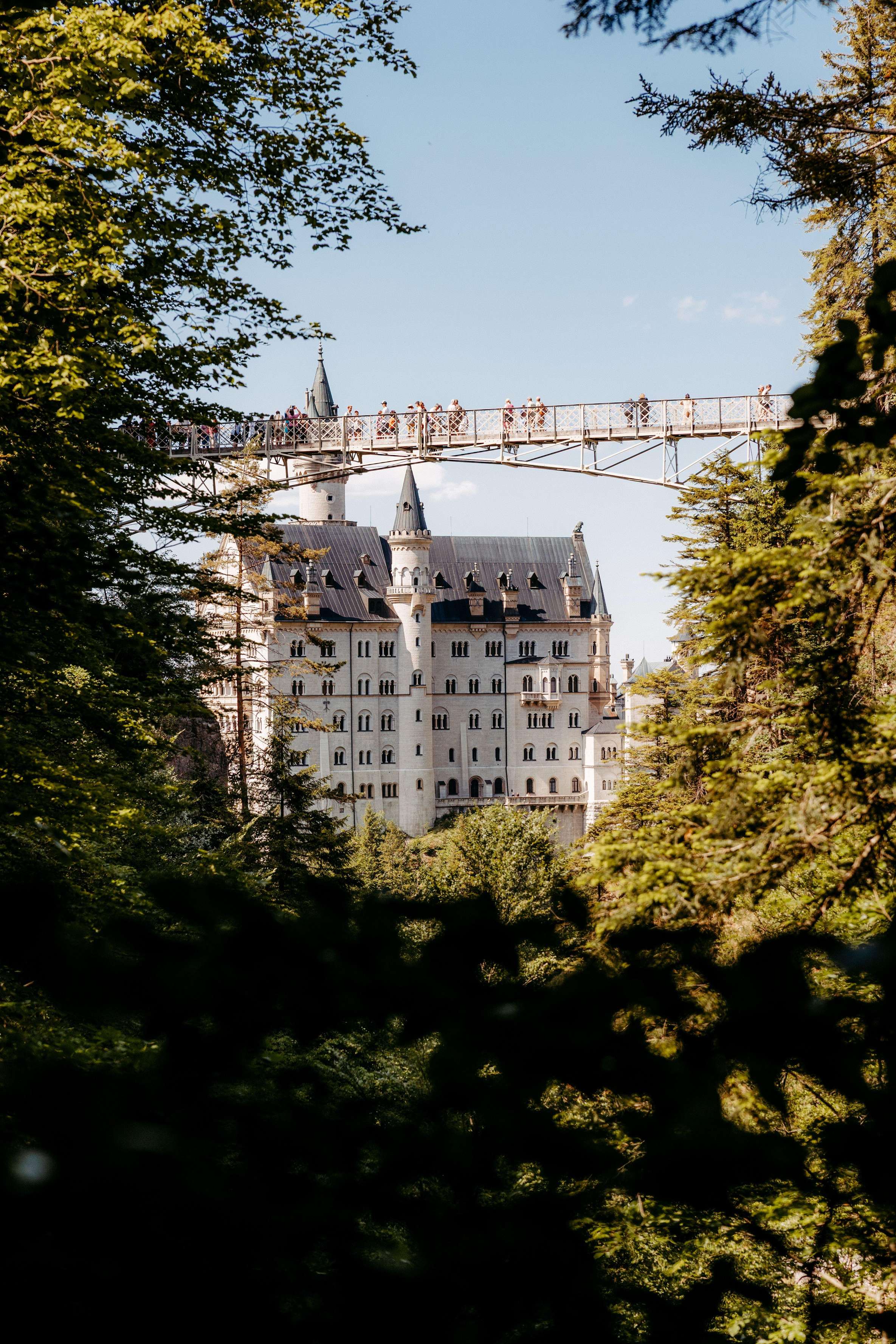
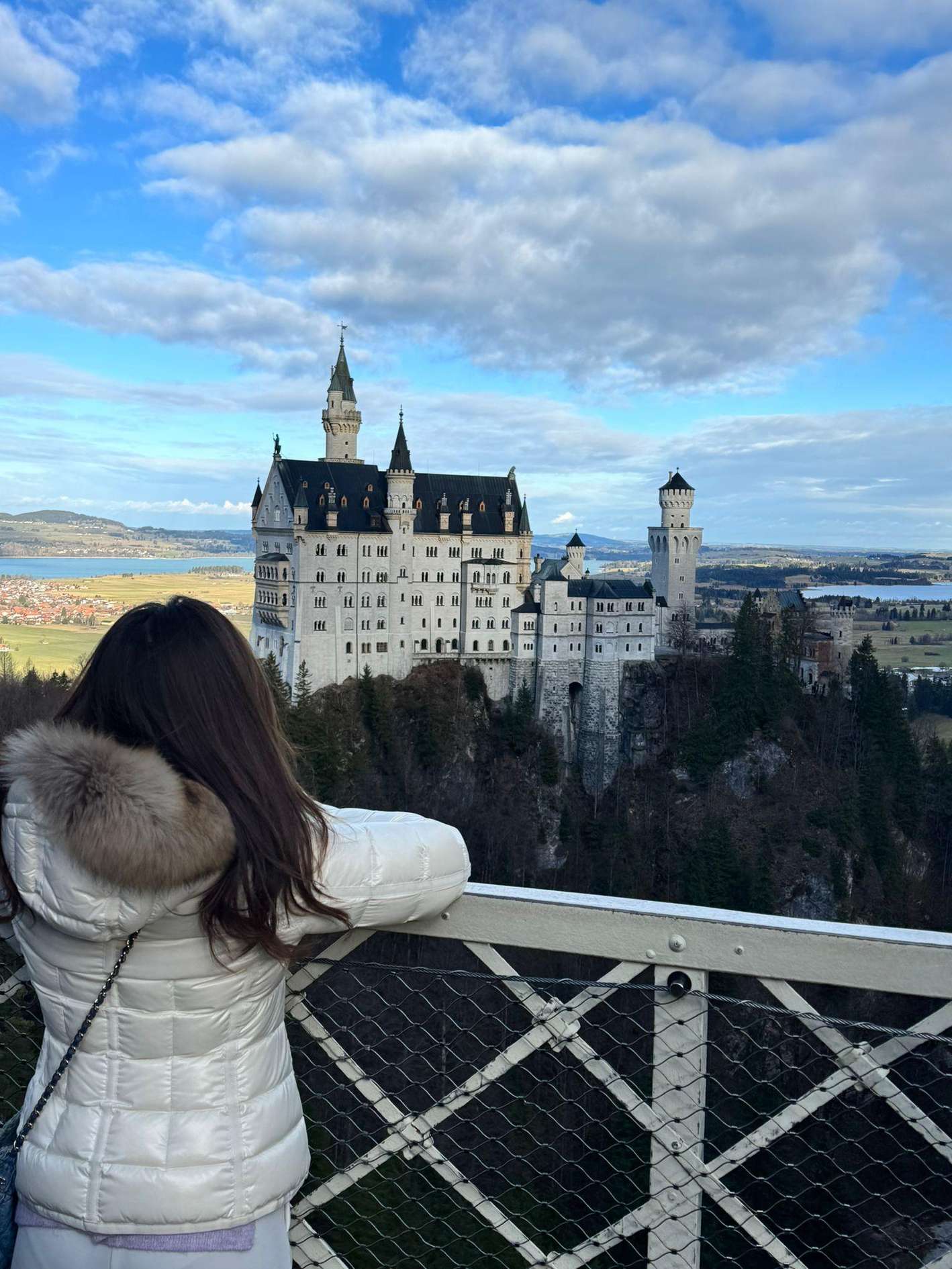
The afternoon belongs to Neuschwanstein. You get two hours in Hohenschwangau for lunch and photos, ride up to Marienbrücke for the view over the Pöllat Gorge, then join the 30-minute guided tour of the castle rooms with your entry ticket included in the selected option.
An English-speaking guide travels with you the whole way, and the air-conditioned coach has a toilet on board. Audio commentary runs in eight languages.
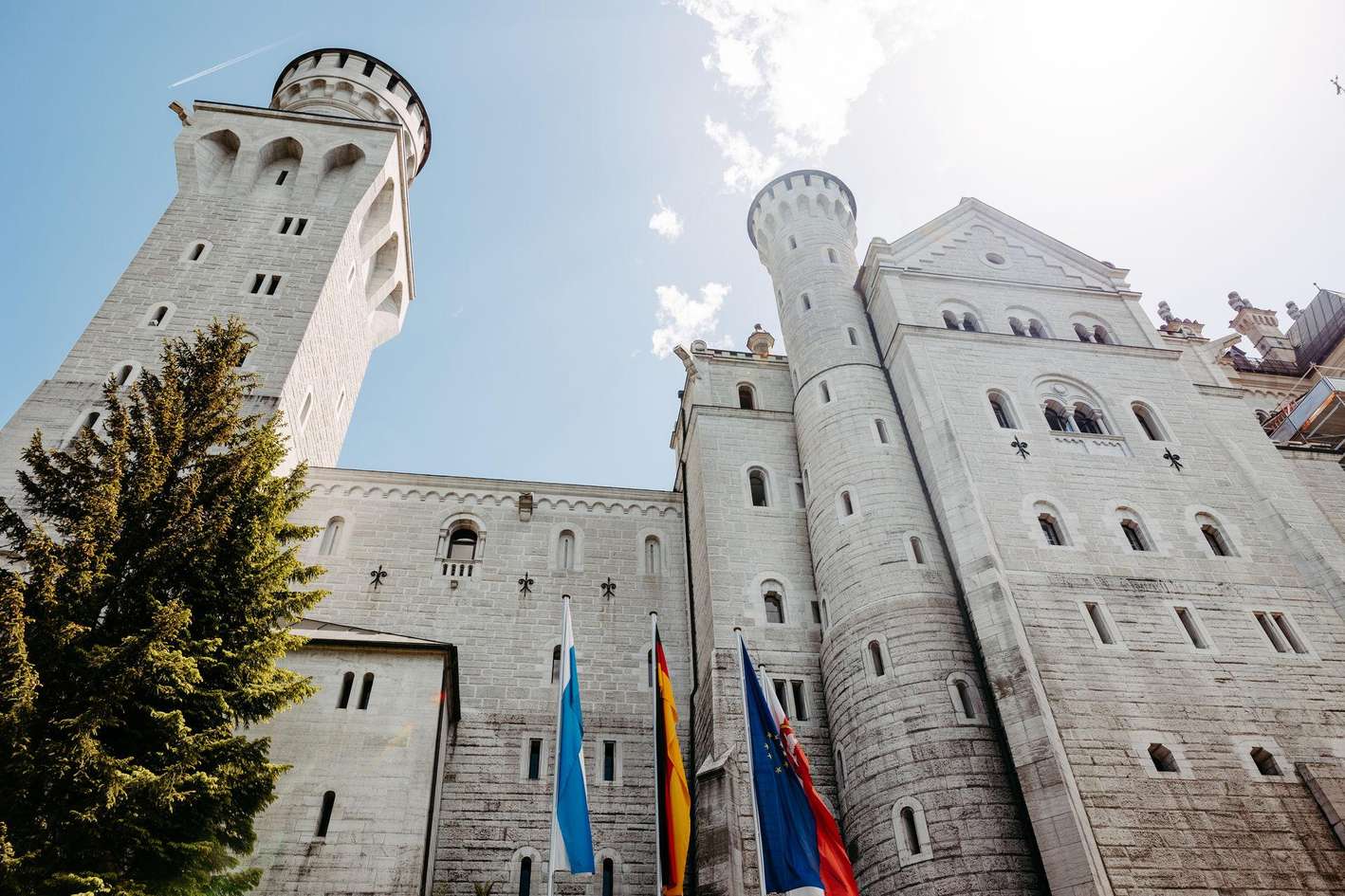
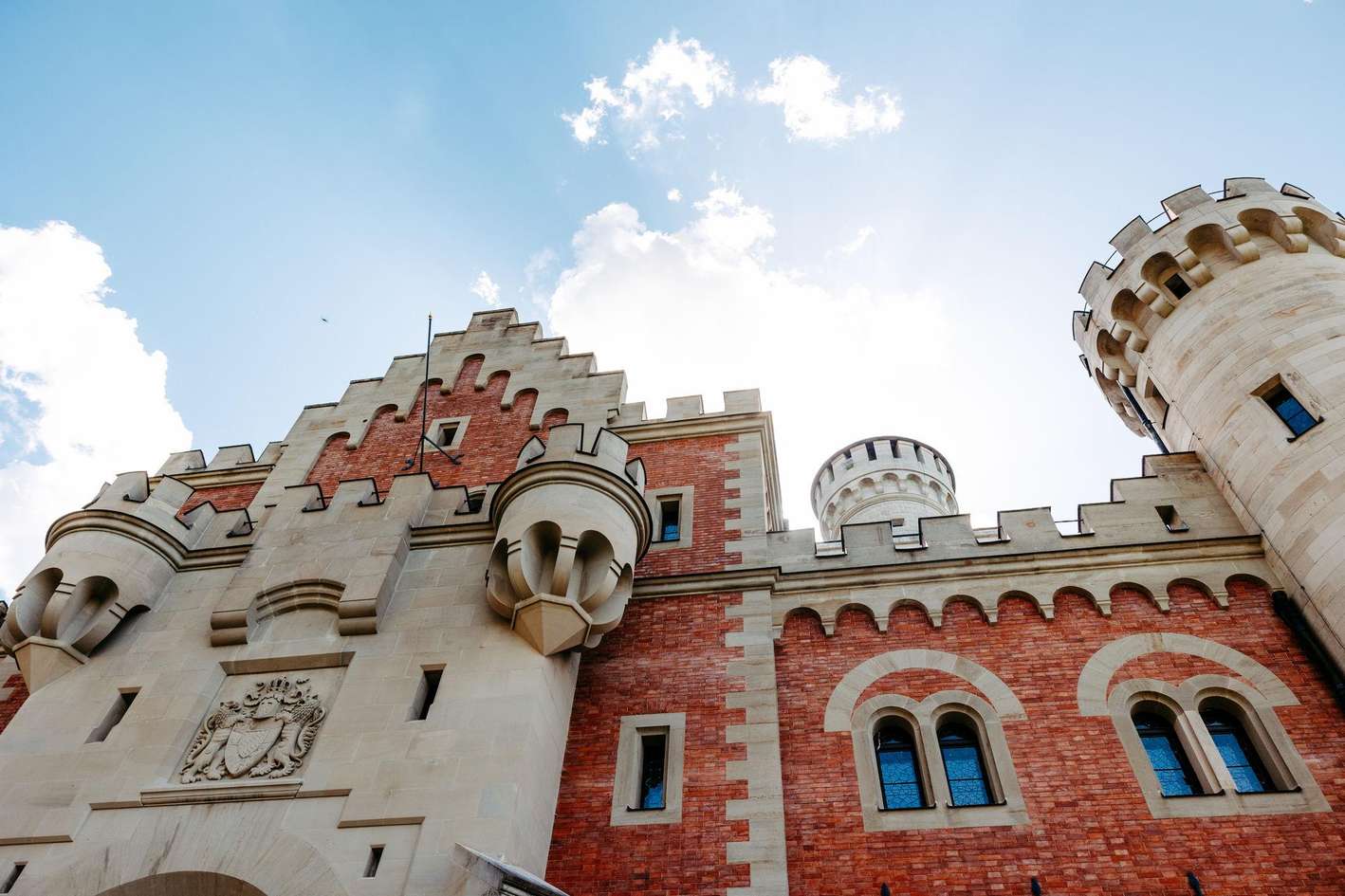
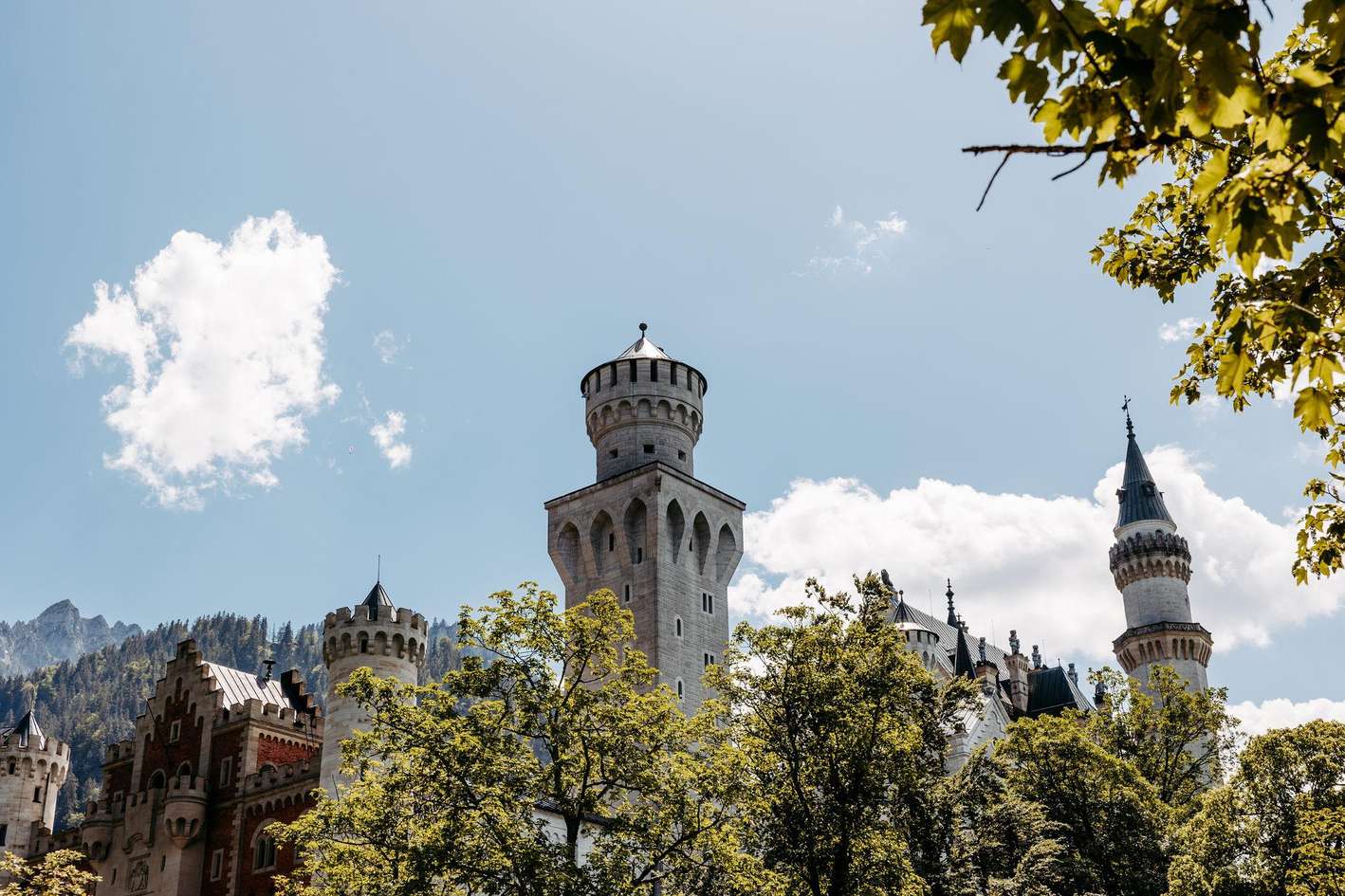
Both castles gorgeous, Linderhof wins inside, Neuschwanstein outside.
Felicia our guide was a blast, kept us all together. One of my favorite tours. Amazing views, cool castle, and she led us to the best lunch spot.
Julia was fantastic, knowledgeable and funny. Great tours at both castles, roamed the grounds and took photos (outside only). Comfy AC bus, great Alpine views.
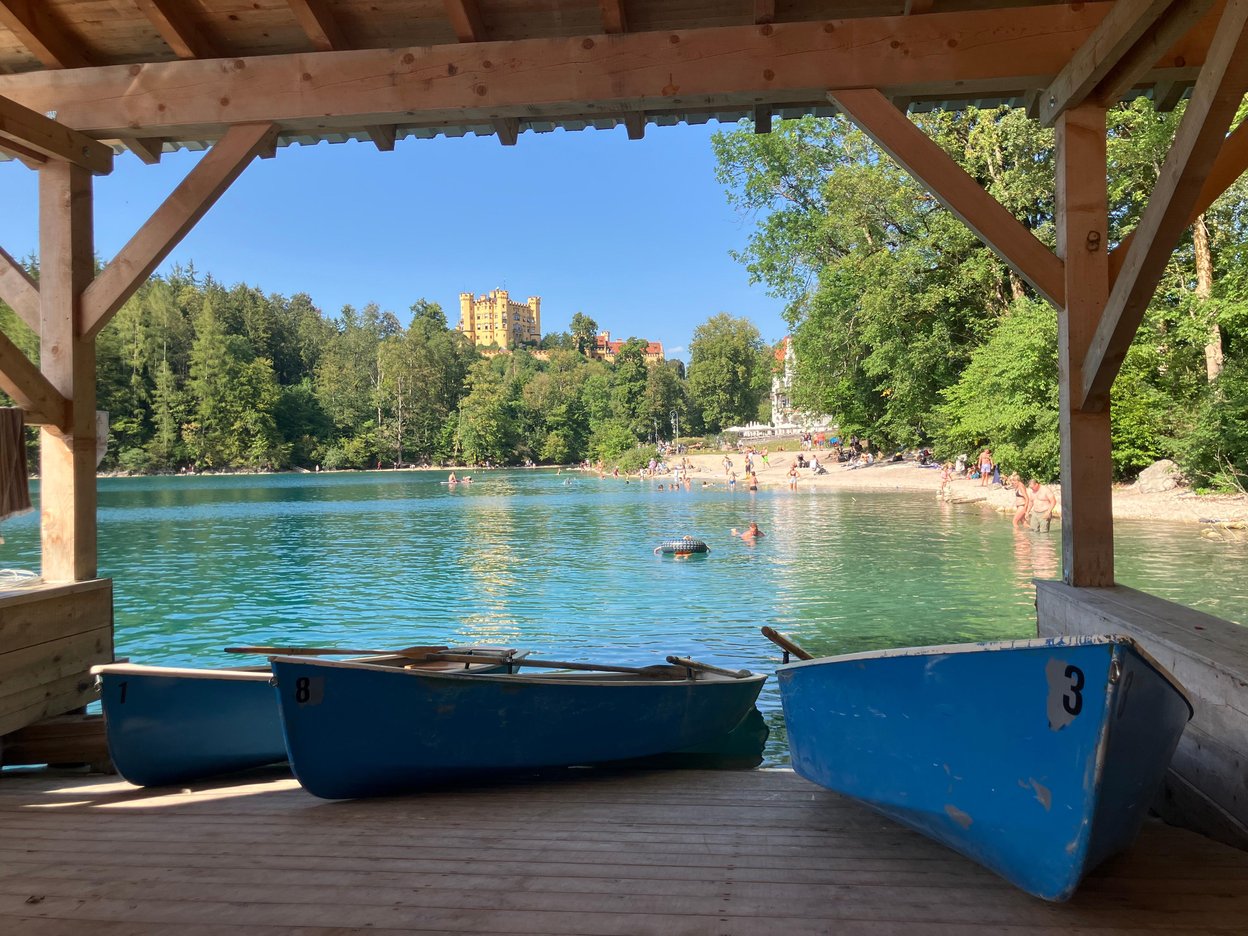
Very good guide and day out overall. Pricey, but a good way to see the area. We skipped castle interiors and did exteriors, gardens, and boating on the lake, lovely.
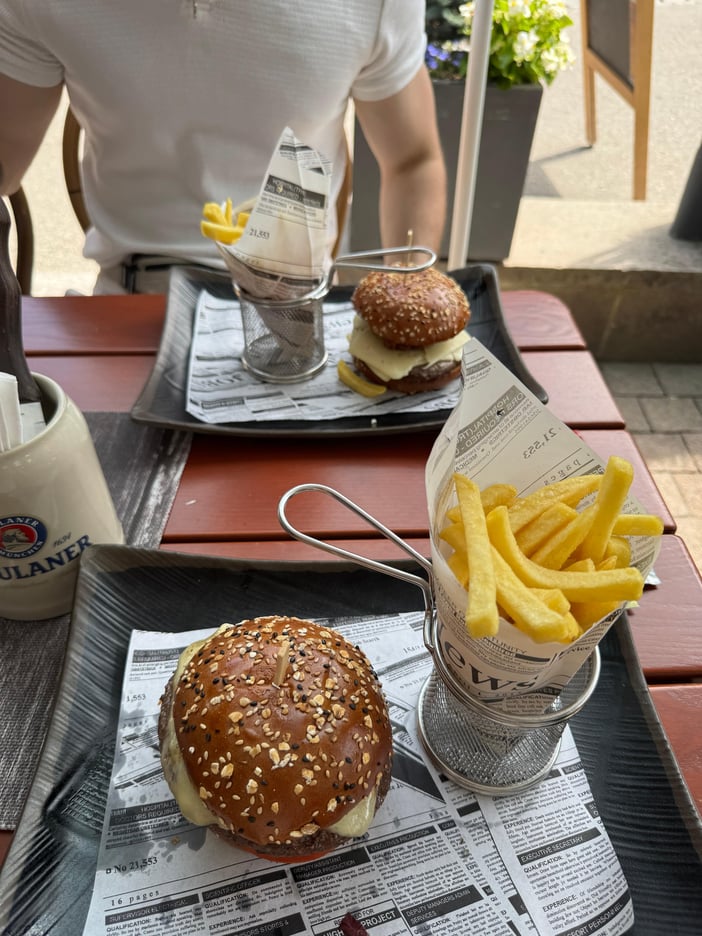
One of my best trips. Our guide was so helpful and insightful, we saw both castles inside and out, plus.
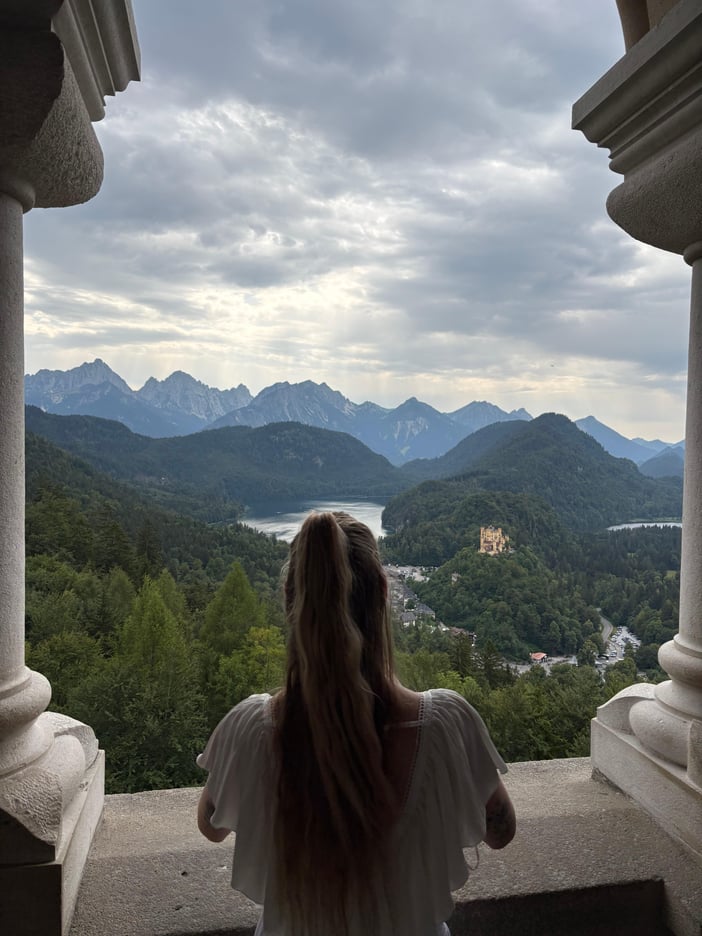
Really enjoyed the trip. Daisy was so sweet and helpful, checked in with guidance and drinks. The castle trip was the best part of my trip.
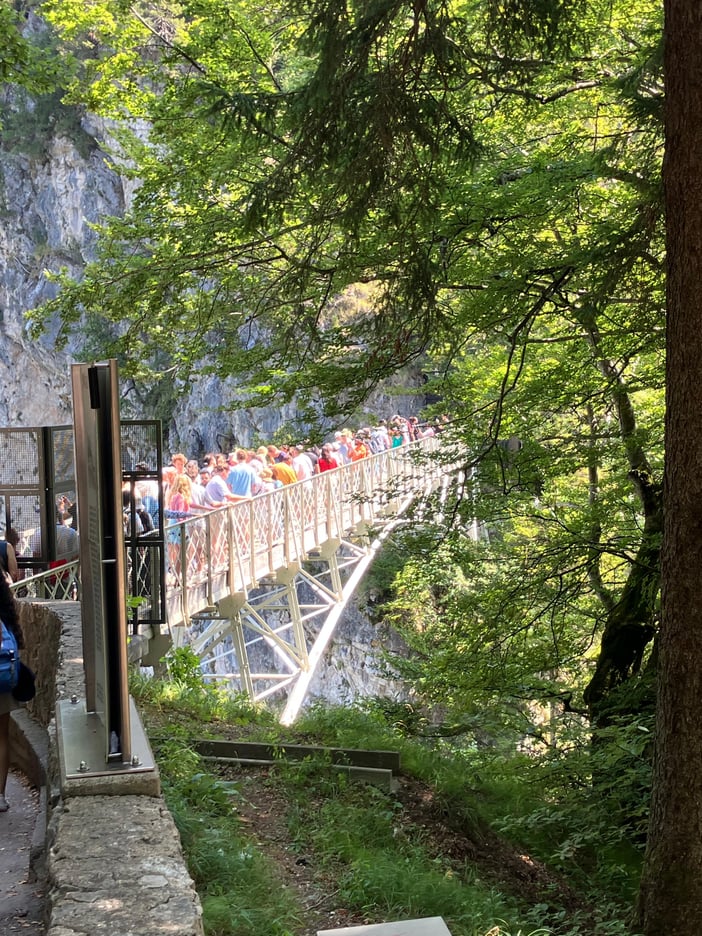
The bus made things so much easier than driving ourselves. Loved the trivia. Everything ran on time and was comfortable.
Most reviewers praise their guides as knowledgeable and fun, saying lively stories and history carried the whole day.
Many travelers loved the free snacks and drinks on board, some surprised by a cold German beer for the ride home.
Several wished for more time at Mary's Bridge, where crowds made photo stops tight before their castle entry time.
Choose the day first and book it straight away, because interior tickets can sell out months ahead in summer and autumn. Book the Munich full-day tour on the same day so your transport and castle entry line up.
The Munich full-day tour runs in four versions: with castle tickets included, without tickets (you buy them on the bus), a later departure that skips Linderhof Palace, and a premium small-group coach with snacks and drinks on board.
Your castle ticket is valid only for its time slot, and a late arrival means you cannot join the guided tour. If you travel independently by rail, allow at least 20 minutes for your transfer at Munich Hauptbahnhof.
After payment you get a confirmation with the exact meeting point and start time, so read the operator's message before you travel. Munich departures gather at spots such as Karlsplatz 21 or Munich Central Station, Platform 27.
On the day, the coach handles the driving, but the castle approach still means a 30 to 40 minute steep uphill walk unless you pay for the shuttle or horse carriage. Wear comfortable shoes and keep some small euro notes with you.
You have a real choice of how to travel the last leg: a modern air-conditioned coach, a small-group day tour by regional train, a van along the Romantic Road, or a private Mercedes van with hotel pickup in Munich.
Group sizes vary a lot between tours. The premium coach tour caps the group at 28 guests, the small-group train tour takes 10 to 12, and the van and private tours stay smaller still.
Castle entry is included on some booking options and not on others, so pick the option that fits. On the coach tour you can buy entry tickets from the guide on the bus. Not covered anywhere: lunch, the Hohenschwangau shuttle bus and horse carriage, and parking.
Neuschwanstein entry tickets can sell out months ahead in summer and autumn. Booking the tour and its castle admission well in advance is the surest way to have a seat on the bus and a timed slot inside the castle on the same day.
Plans can change after a long cross-border day is planned. You can cancel any of these day trips up to 24 hours before departure for a full refund, which makes booking early far less risky.
Carry a passport or a valid ID card when you cross from Austria into Germany; a driving licence does not count as a travel document. The small-group train tour also asks every guest to bring a passport or ID card.
The castle stands high above Hohenschwangau: the walk up takes 30 to 40 minutes on a steep paved road, and the interior tour climbs many narrow stairs. Wear comfortable shoes. These tours are not suitable for wheelchair users or guests with limited mobility.
The Munich day tours meet either at Munich Central Station, Platform 27, or at Karlsplatz 21 in the city center. From the Salzburg train, allow at least 20 minutes to cross the station and reach your platform, more with luggage or children.
Castle tickets are valid only for the time slot printed on them, and the guided tour starts punctually. A late arrival means you cannot join the tour, even when a delayed train or traffic jam is at fault, so build buffer time into the morning.
Rucksacks, prams, child carriers and luggage stay outside the castle; leave bulky items in the car or use the lockers at the castle courtyard entrance. Weapons, knives, scissors, pepper spray and glass bottles are prohibited.
Photography is not allowed inside the castle rooms. The pictures you came for happen outdoors anyway, above all from the Marienbrücke bridge, so keep the camera ready for the approach and the views.
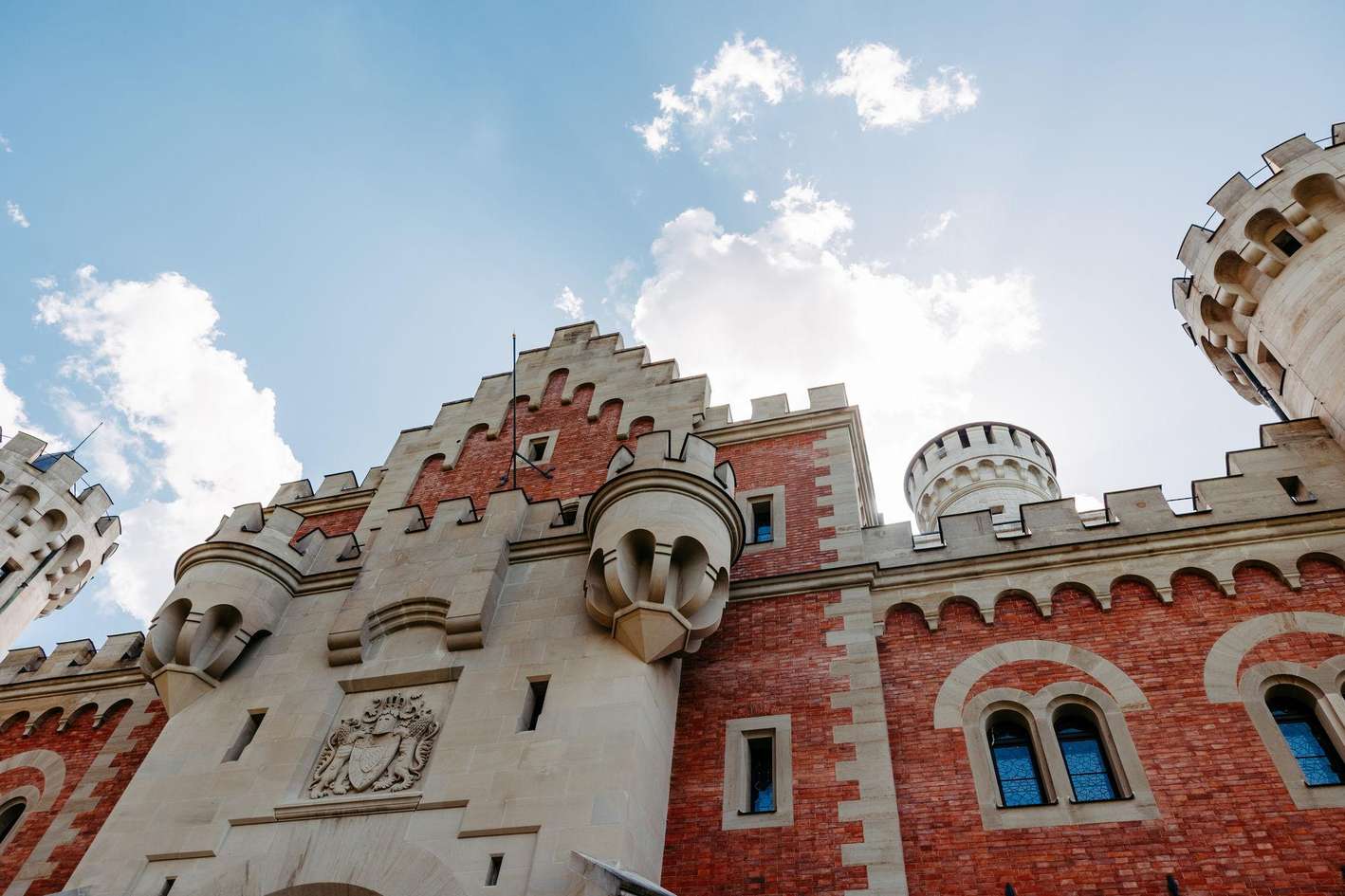
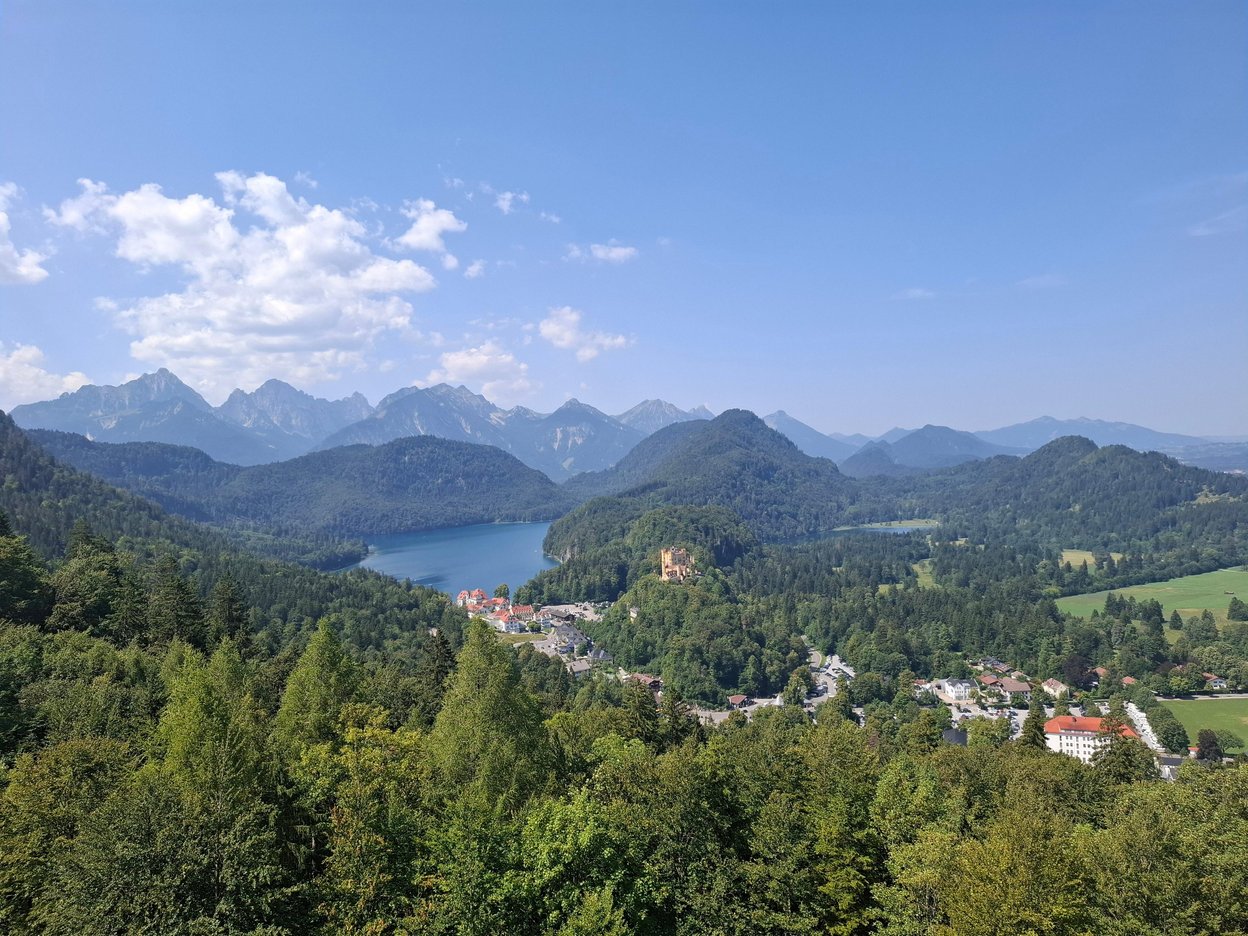
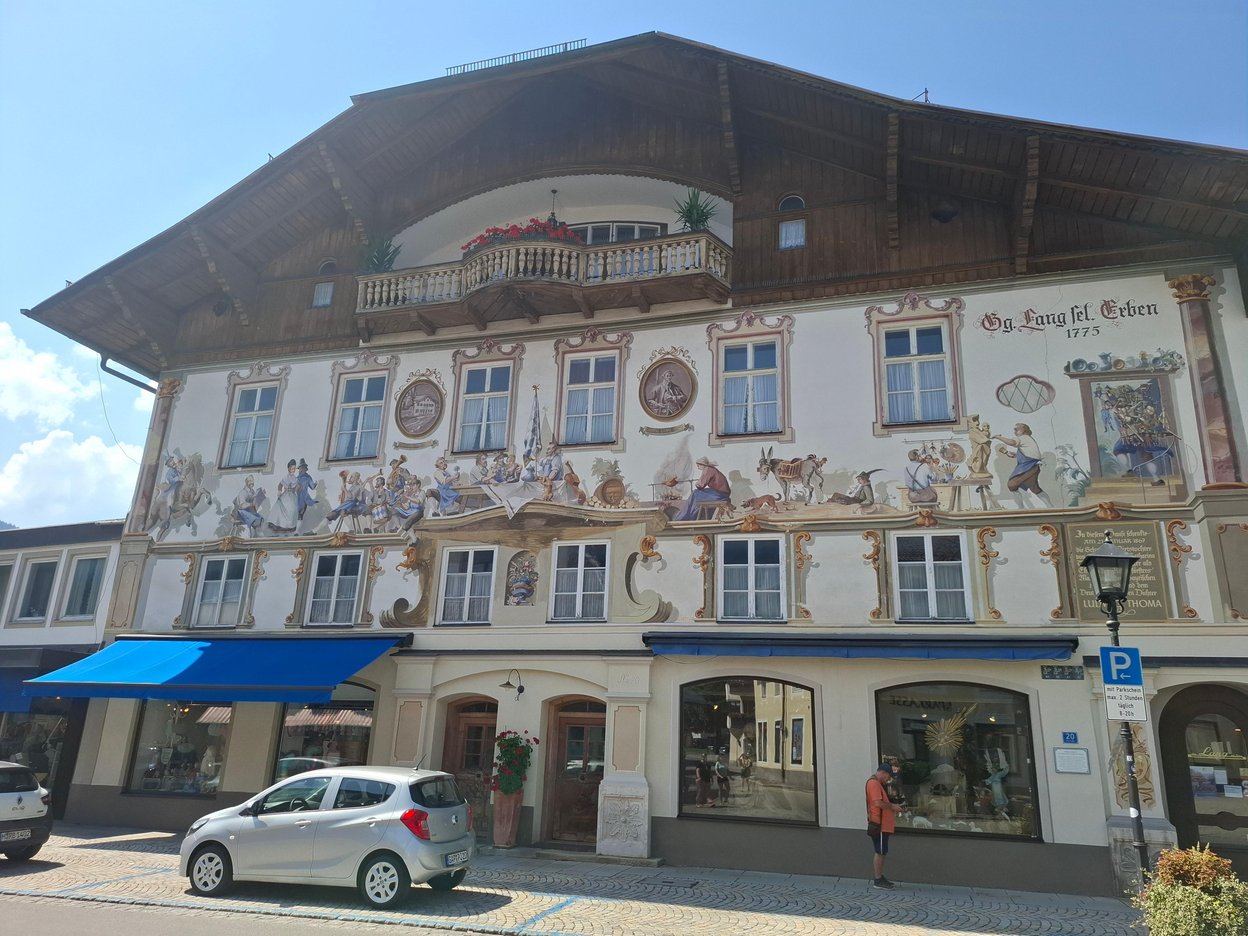




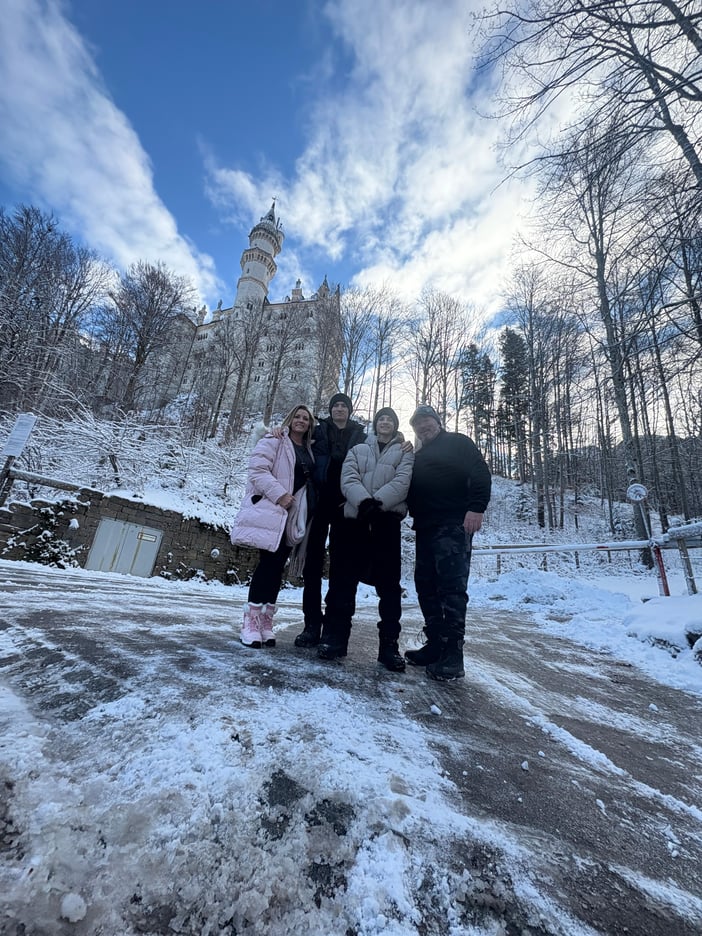
No coach runs from Salzburg to the castle, but the day trip still works: an early train to Munich, then a tour that owns the castle ticket. Here is how the hours are spent, and what decides whether they pay off.
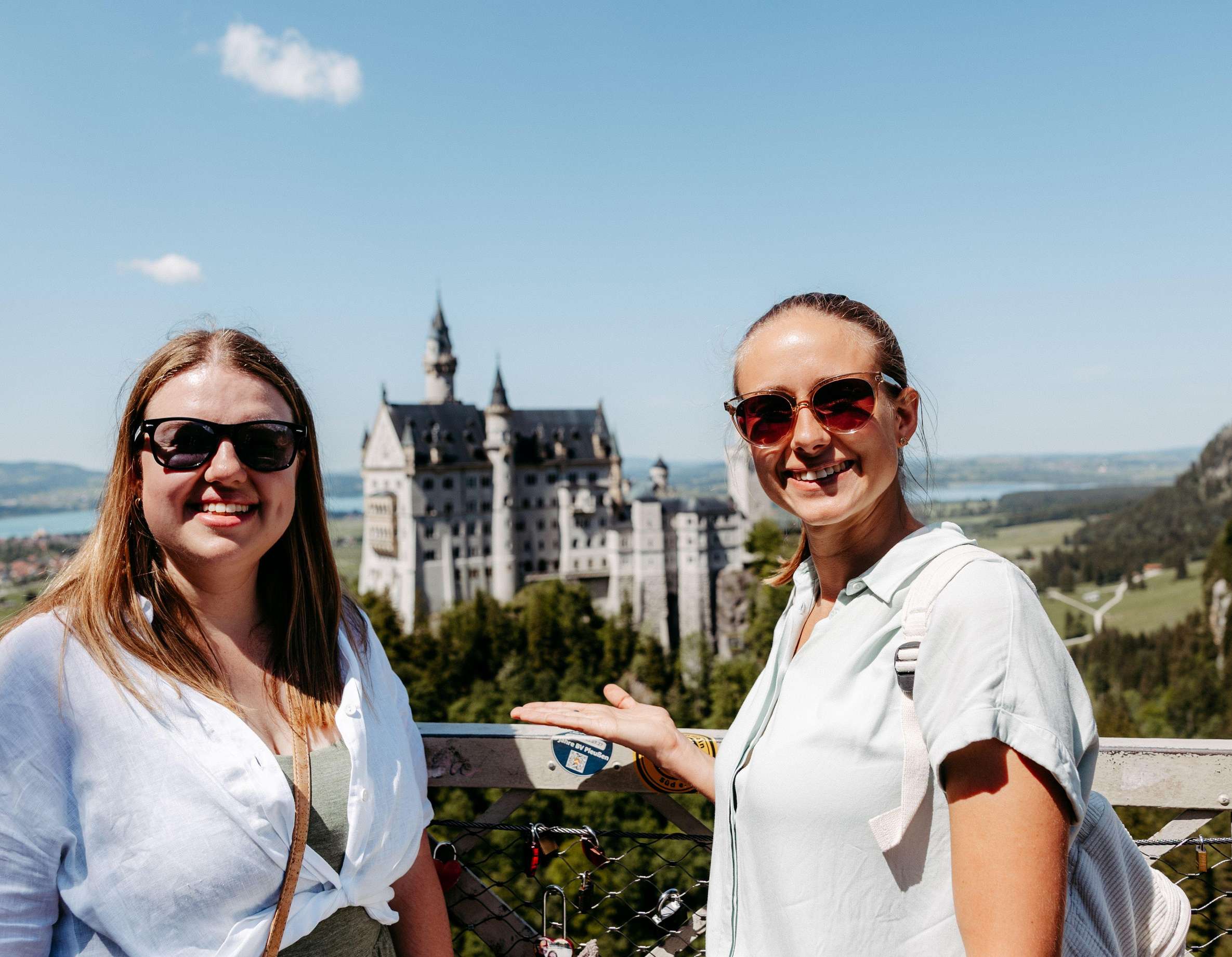
The castle tours on sale here all start in Munich: take the 7 am train north and allow 20 minutes to change trains at the Hauptbahnhof.
Book castle entry well ahead, because timed slots can sell out months ahead, and arrive late and the slot is gone.
Aim for a 2 pm castle slot and carry euros in cash for the uphill shuttle, which takes no cards.
Salzburg sits close to the Bavarian border, and the map makes the castle look like a half-day outing. It is not.
The organized castle tours on sale here all start in Munich, and the early train puts you at their meeting point in time for departure. That is the workable plan: an early ride north, then a tour that handles the castle end.
The morning leg is simple. Trains leave Salzburg Hauptbahnhof around 7:00 to 7:05 am and reach Munich Central Station in about two hours.
From there, the tour that fits this plan best is the From Munich: Neuschwanstein & Linderhof Castle Full-Day Trip, a 10 to 10.5-hour day on a comfortable coach with a toilet on board, a guide throughout, and entry tickets to both Neuschwanstein and Linderhof when you pick the ticket option.
A schedule you can predict, connections that hold, and entry that is guaranteed decide whether this cross-border day works. All three are won or lost in Munich. The full-day trip wins them because coach, timing and tickets arrive as one booking.
The raw travel numbers look daunting: a round trip near 10 hours 42 minutes by train, about 6 hours 34 by car. Those figures describe doing it alone. Hand the Bavarian leg to a tour and the hours stop being your problem; the train is the only part you have to get right.
Honesty first: this is a long day, and by train the longest version of it. Doing the whole journey yourself means roughly five hours each way to the Füssen area with at least one change, before you have even started the uphill walk.
By car it shortens to about three and a half hours each way without traffic.
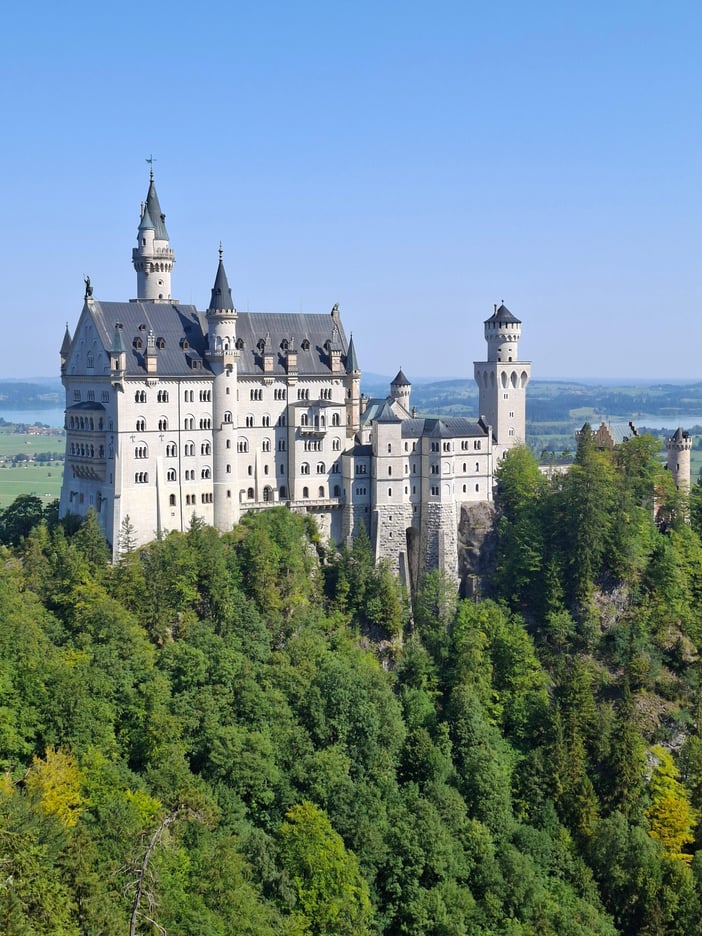
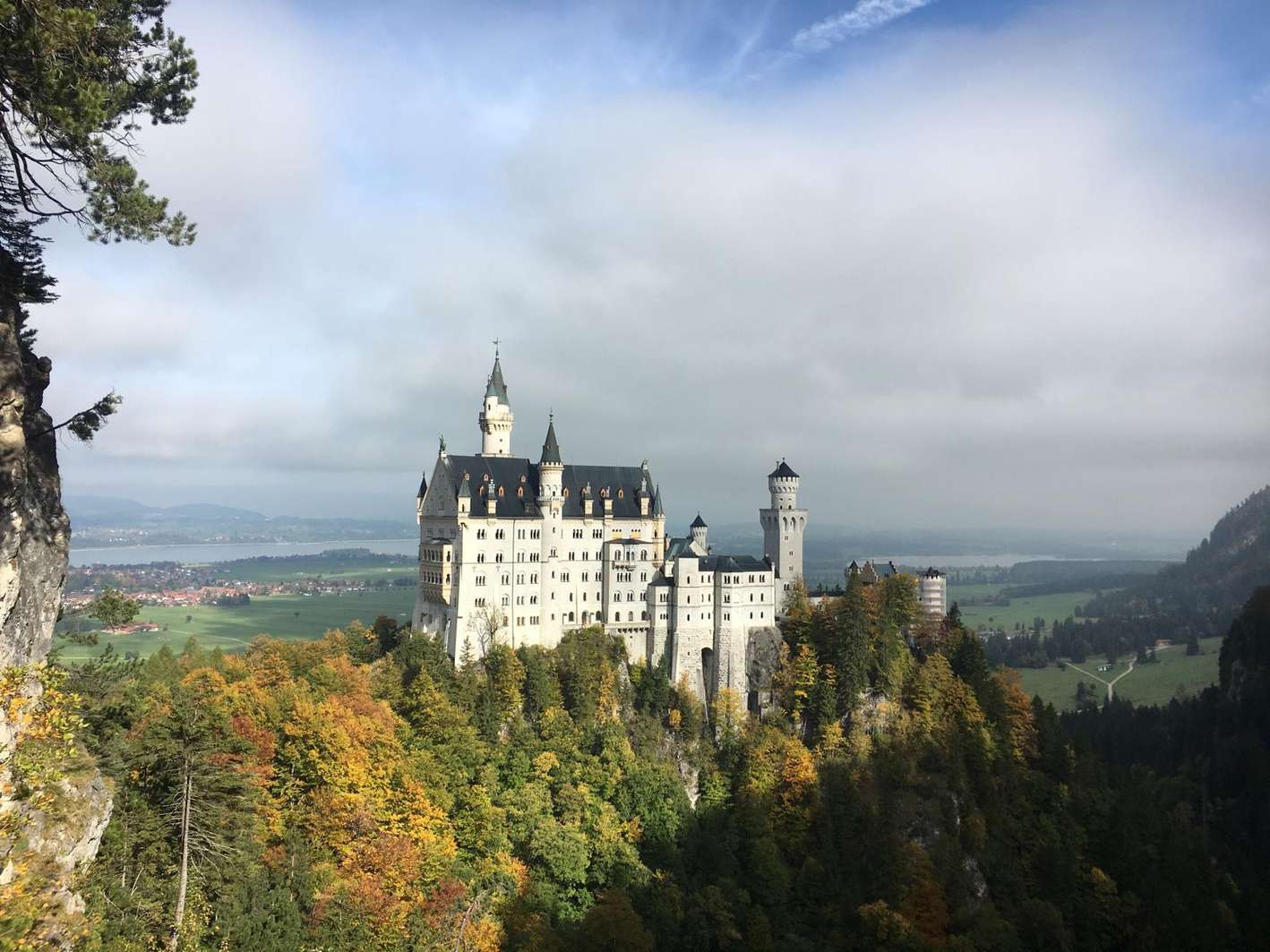
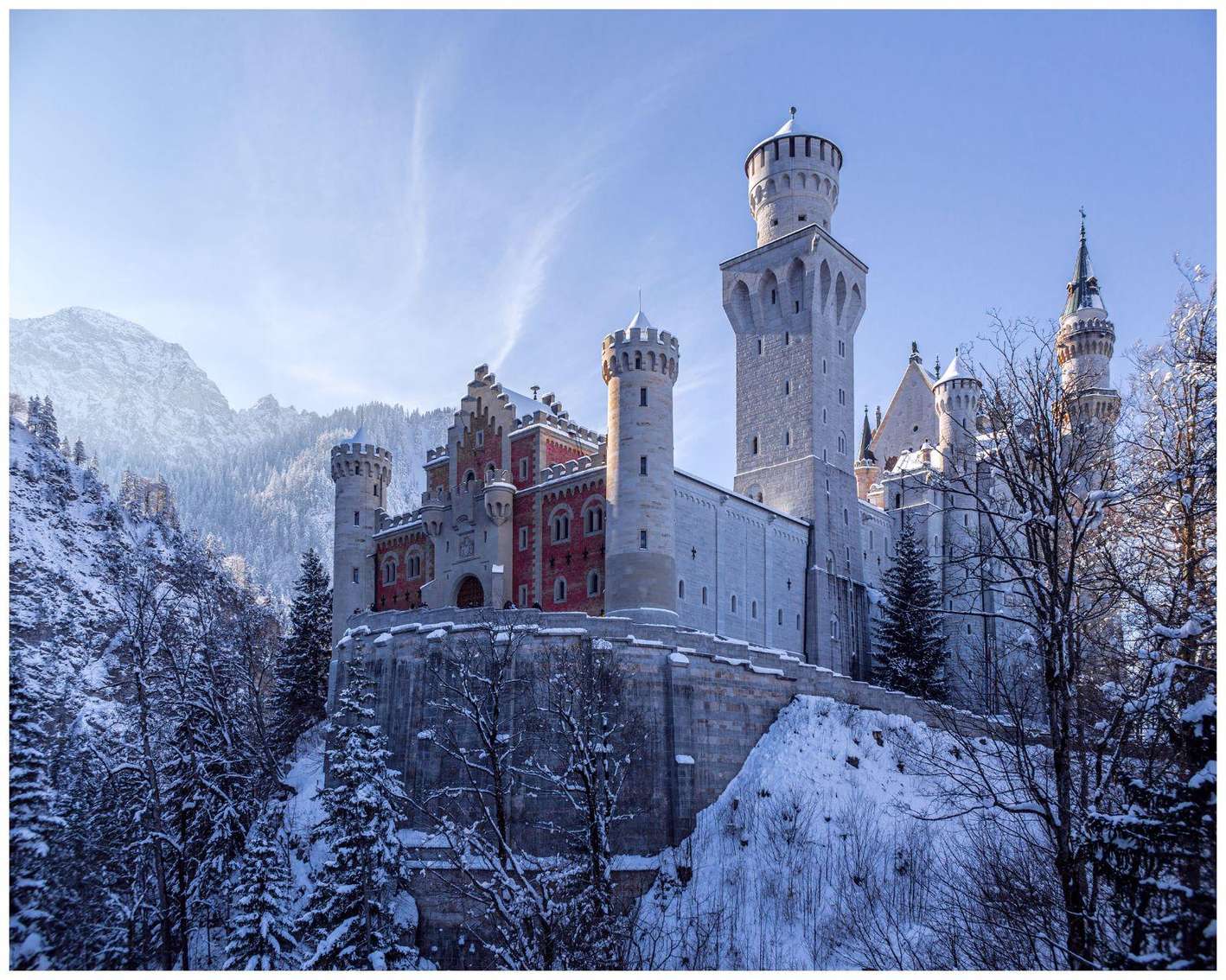
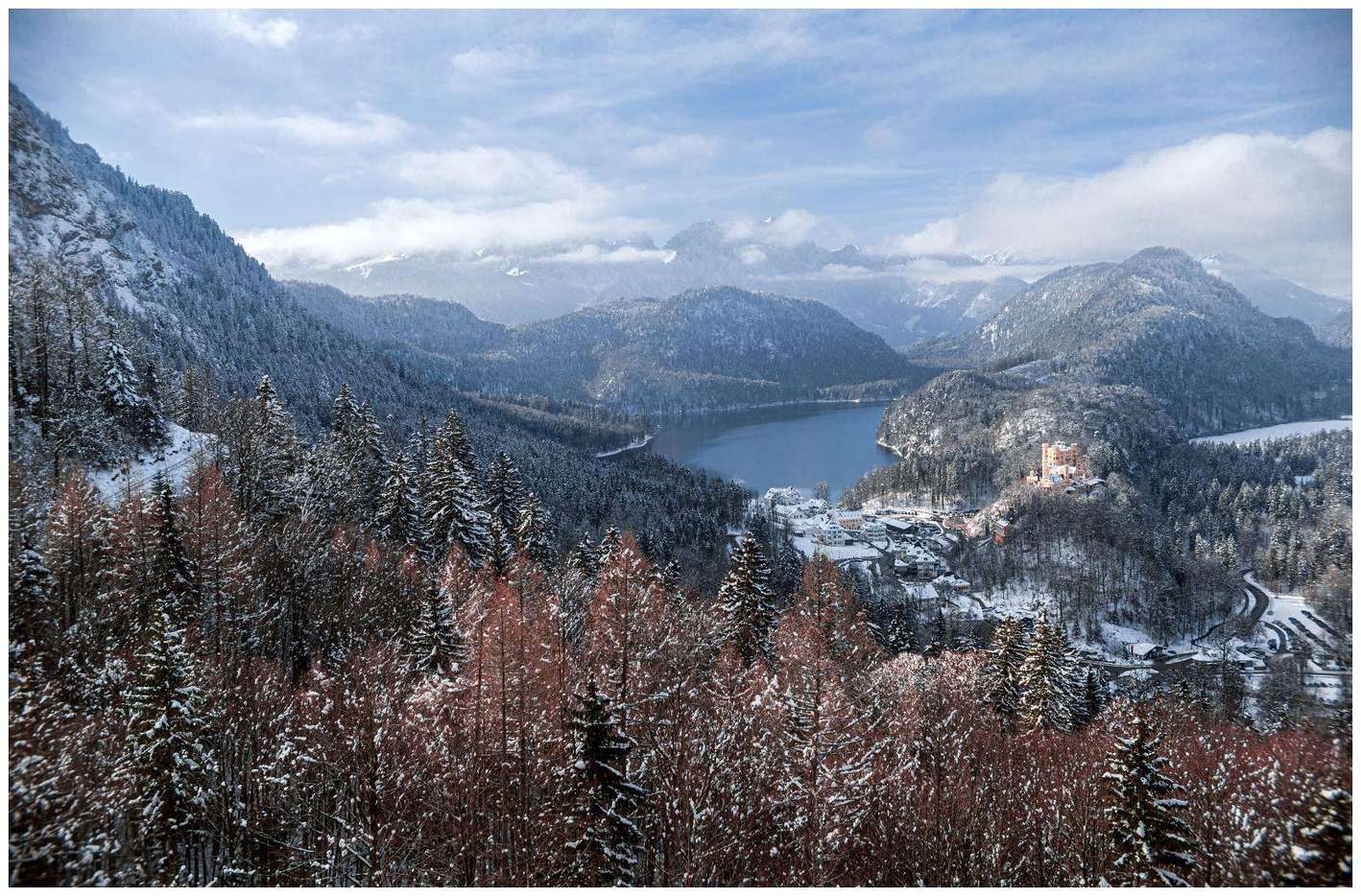
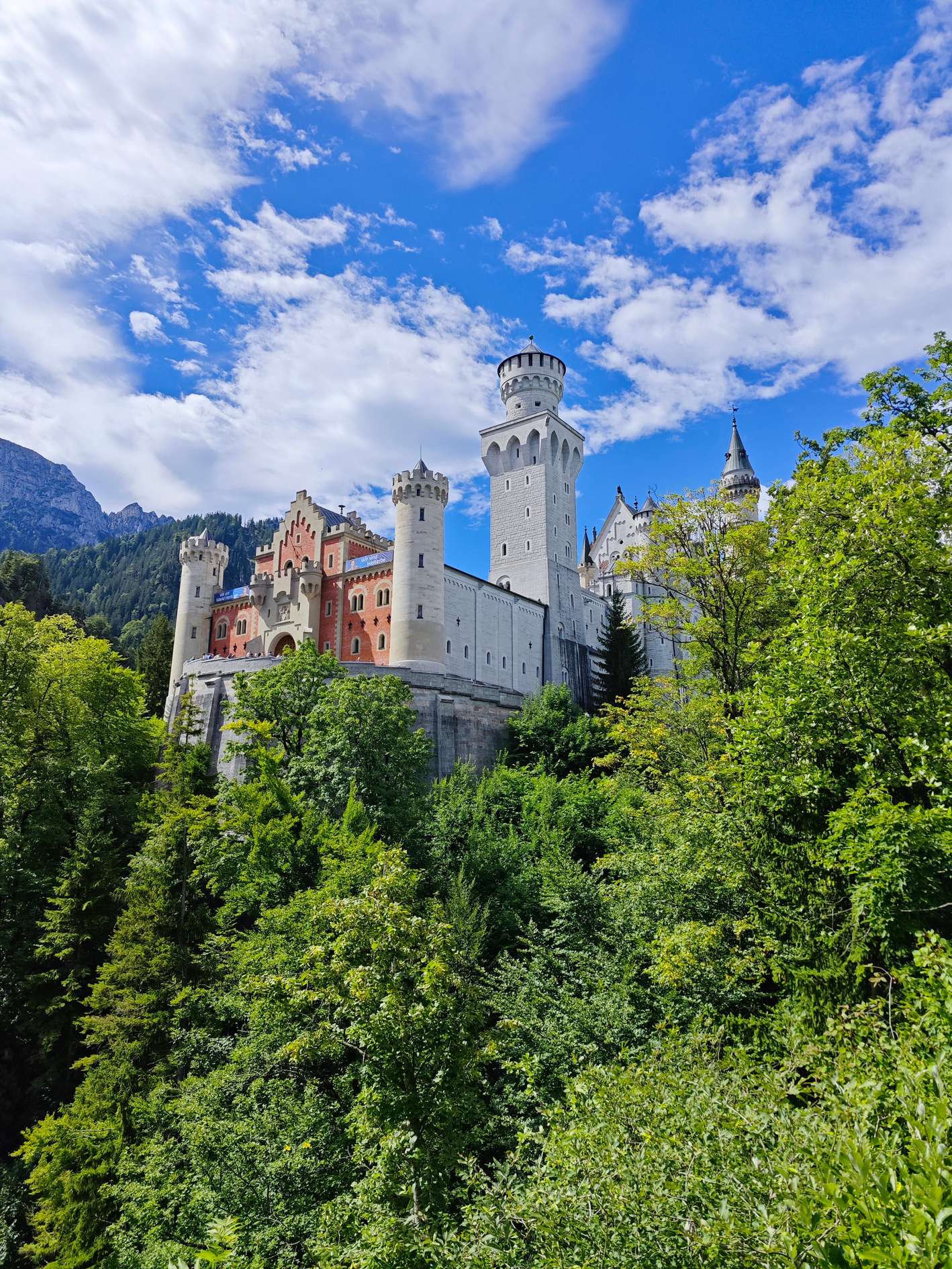
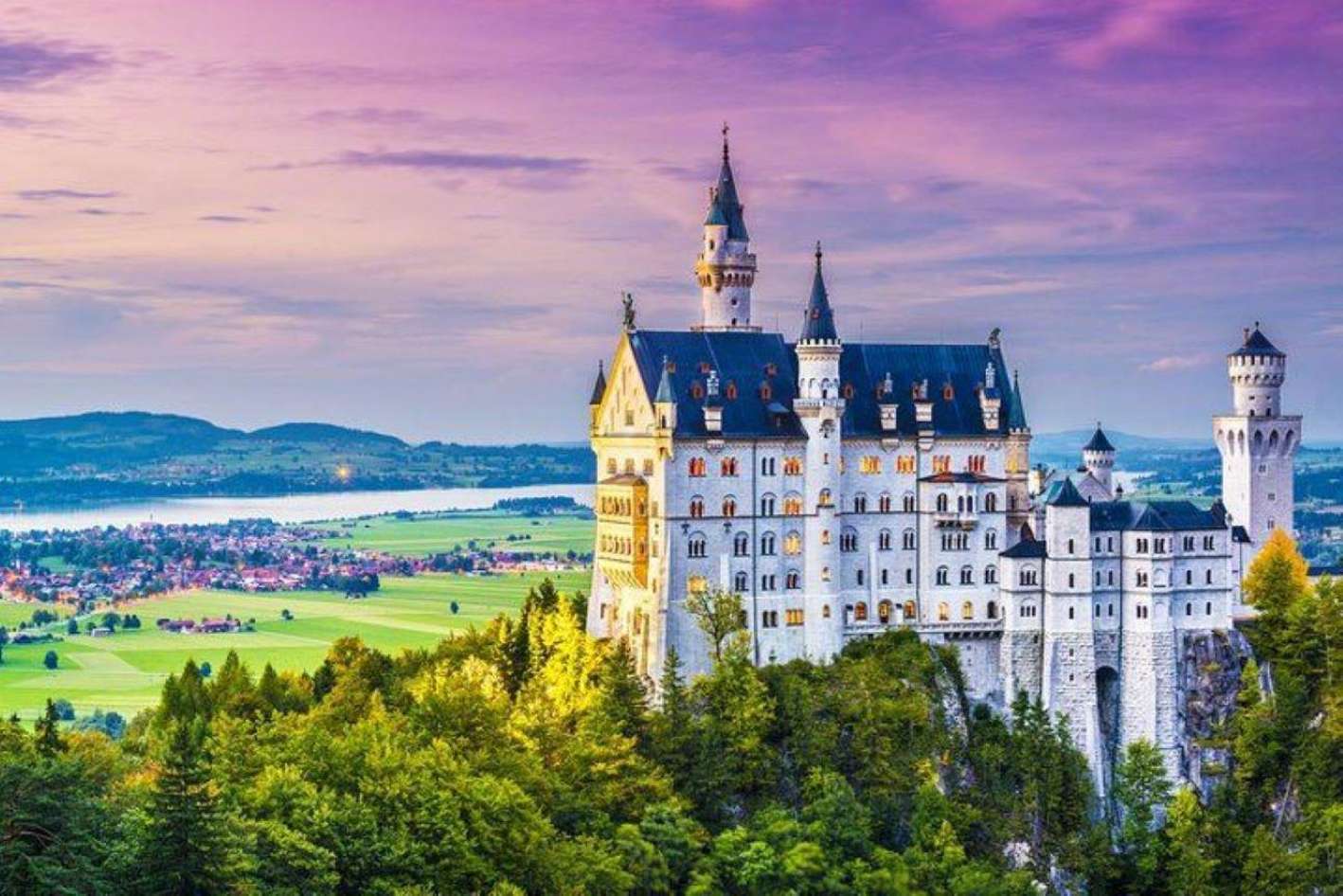
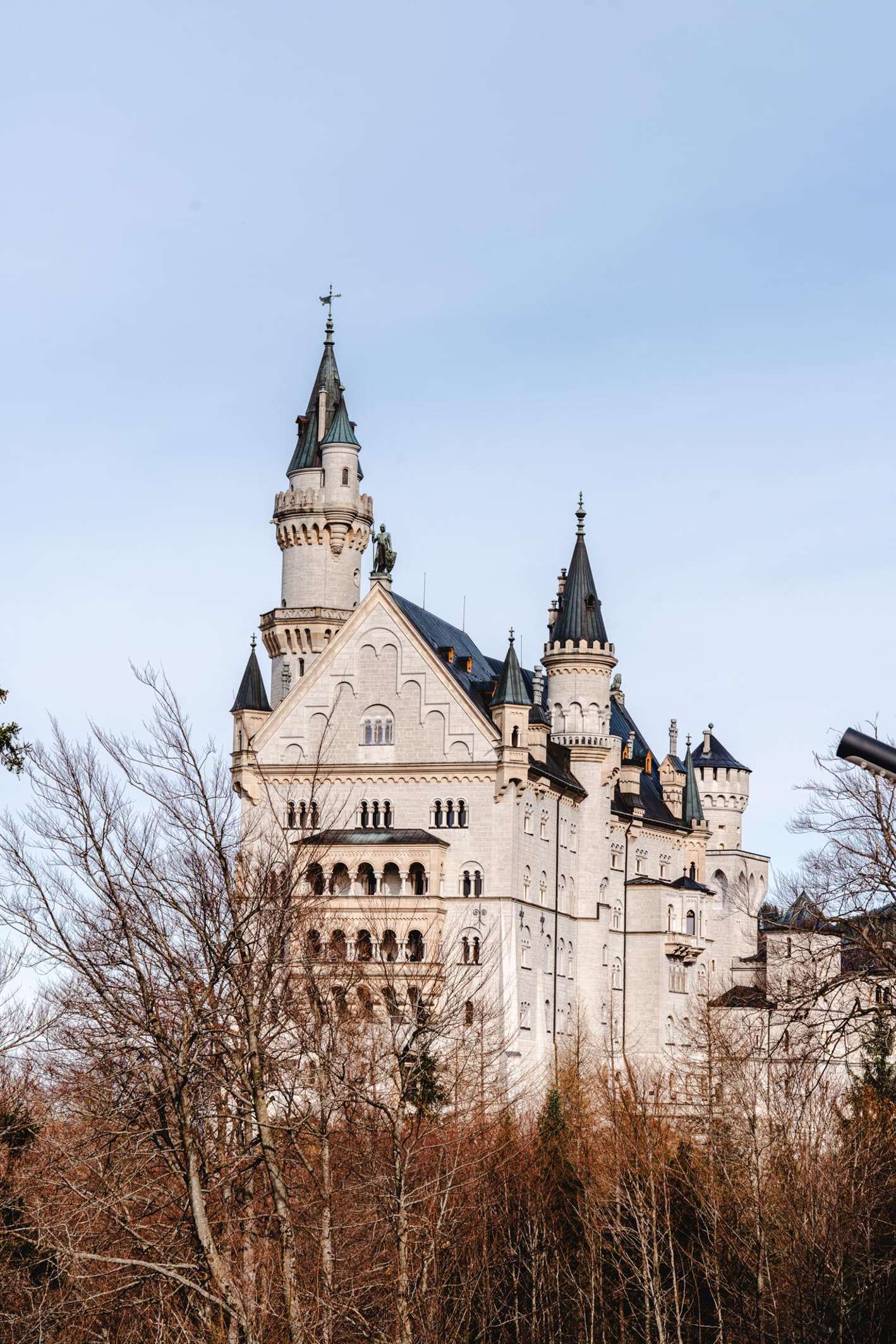
What the hours buy is real. The castle stands on a ridge above the Pöllat Gorge with the Alps folded behind it, and the guided interior lasts only about half an hour, so the outdoors carries the visit.
Travelers on a Munich tour describe an unhurried hour at a café terrace over the Alpsee after the castle, and a full castle stop runs about 3¾ hours including lunch and free time.
So who should go? Travelers whose main goal is Neuschwanstein itself, prepared to plan around a long journey and timed admission.
If you want a relaxed Bavarian day of wandering, this route will disappoint; pick another excursion or stay overnight near Füssen instead. A same-evening return to Salzburg is feasible, but it is a committed day that runs to a schedule.
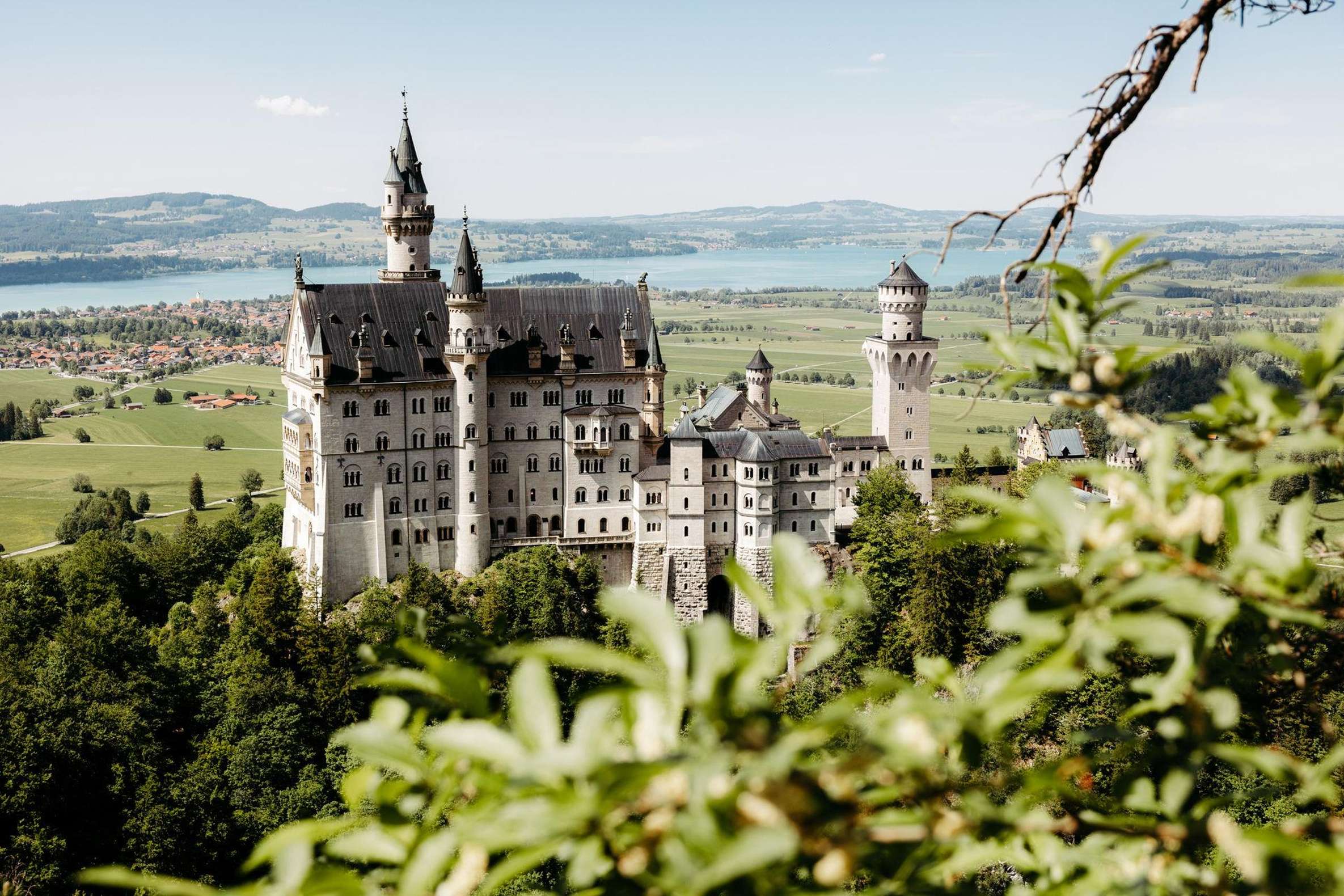
King Ludwig II picked this ridge deliberately: he wanted a secluded place worthy of Richard Wagner, whom he called his divine friend, and the ruins already there were too small for the castle in his head. So he cleared them and built anew, 90 meters above a waterfall.
Inside, the Singers' Hall carries that obsession. Its murals draw on the Wartburg's festival hall from Wagner's Tannhäuser, painted as the sacred forest around the Castle of the Holy Grail, a monument to medieval knights built without any thought of banquets.
The castle's own staff run the tours, in German and English, and they last about 30 minutes.
No photos inside the rooms. The rule protects the palace, so take your pictures outdoors, on the approach and from Marienbrücke.
That bridge is its own story: rock anchors fixed into both sides of the gorge let it span the 90-meter drop with no pillars at all. Plan on roughly 270 to 300 stairs inside, manageable for children who like stairs, less so for tired legs.
Very good guide and day out overall. Pricey, but a good way to see the area. We skipped castle interiors and did exteriors, gardens, and boating on the lake, lovely.
That is the truth to plan around: the rooms are the appetizer. Save your energy for the bridge, the courtyard and the lake.

Summer means light and crowds in equal measure; winter trades both for quiet, cold and short days. January brings highs around 4°C, a hard frost overnight and fewer than nine hours of daylight, while July holds 22°C and more than fifteen hours of it.
Snow can give the castle a postcard setting, and it can also stop the shuttle bus and close Marienbrücke. The castle route itself stays open either way.
September: 5 out of 5 for how busy it gets.
Tap a month to read it.
Four dates a year the castle simply shuts: December 24, 25 and 31, plus January 1. Every other day it opens, and from mid-October to late March the hours run 10 am to 4 pm, which matters when your evening train home is waiting.
For a Salzburg traveler the practical read is this: June through September gives the fullest day but the biggest crowds, with September the busiest month of all.
November and late winter are quieter and the coach seats are easier to find, but pack for the cold and accept that the bridge may be shut. The castle itself does not close for the season.
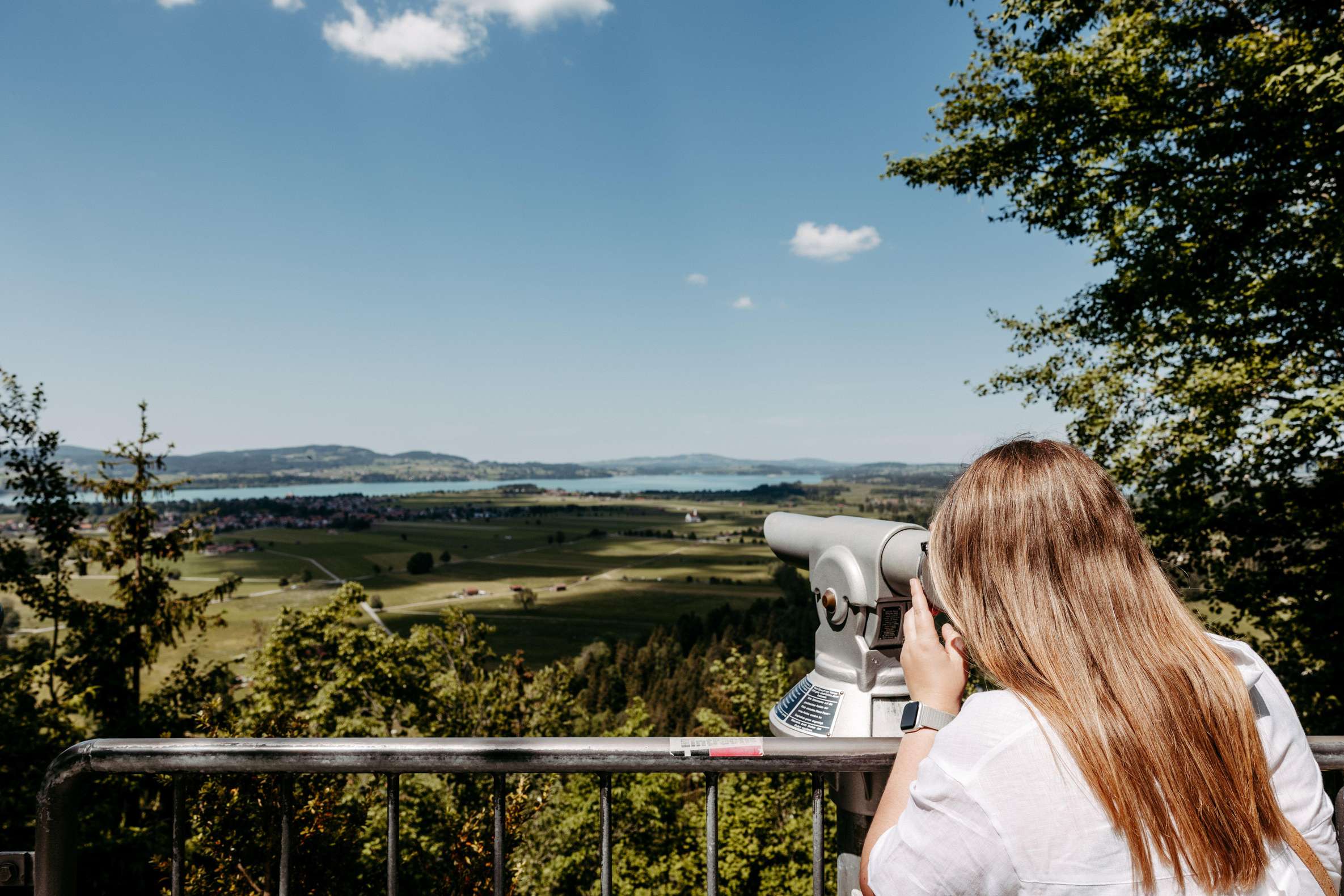
Every bookable castle tour here starts in Munich, so the choice between them decides your day. Judge them on three counts: how much of the day runs to the operator's clock, whether castle entry is handled, and how comfortable the long ride is.
The full-day coach trip leads: the lowest entry point, tickets available as an option, and a later departure for anyone whose Salzburg train runs tight. The Premium Neuschwanstein & Linderhof Tour caps the group at 28 with 2+1 seating, snacks and drinks on board, and skip-the-line tickets included.
The van tour adds hotel pickup and a cheese-farm stop, but entry is paid separately in cash. Private tours run to your clock entirely, and cost accordingly.
For readers who dread rigid coach schedules, the From Munich: Premium Neuschwanstein Small-Group Train Tour is the answer: 10 to 12 guests on a regional train, entry ticket included, and a pace that leaves room for viewpoints and even a summer swim in an alpine lake.
| Full-day coach | Premium coach | Van tour | |
|---|---|---|---|
| Schedule | Fixed, operator's clock | Fixed | Fixed, with hotel pickup |
| Castle entry | Optional, tickets on the bus | Included, skip-the-line | Arranged, paid in cash |
| Group size | Large coach | Up to 28 | Small van |
| Extras | Linderhof, audio in 8 languages | Linderhof, snacks, drinks | Cheese farm, Wieskirche |
Read the table against your own priorities. If the ticket worries you most, pick a tour with entry included; if the ride does, the premium coach or the small-group train buys the comfort back.
The morning is where Salzburg day trips are won. Trains leave Salzburg Hauptbahnhof around 7:00 to 7:05 am, arriving Munich Central Station with time to spare if the buffer is planned right.
Allow 20 minutes to change trains or walk across the Hauptbahnhof; the official eight-minute minimum is a timetable figure, not a delay buffer, and luggage or children eat it fast.
Meeting points sit inside that station's orbit. One coach tour gathers at Karlsplatz 21, next to the Buddy Hotel and reachable from underground exits G or F, while another uses Platform 27 in the station itself, with a 7:15 am meeting time.
Carrying a suitcase from a longer trip? Lockers at München Hauptbahnhof take it off your hands, though construction can limit how many are free.
About two hours to Munich
Twenty minutes minimum, more with luggage
Karlsplatz 21 or Platform 27 at the Hauptbahnhof
The Bavarian leg the tour handles
The timing that fits this route
Back the same night
One aim shapes the whole timetable: take a 2 pm castle entry slot, because the early trains put you in Schwangau near midday and the two hours after that are your margin.
The fear is real: five hours of travel ending at a gate that says sold out. Here is how entry actually works.
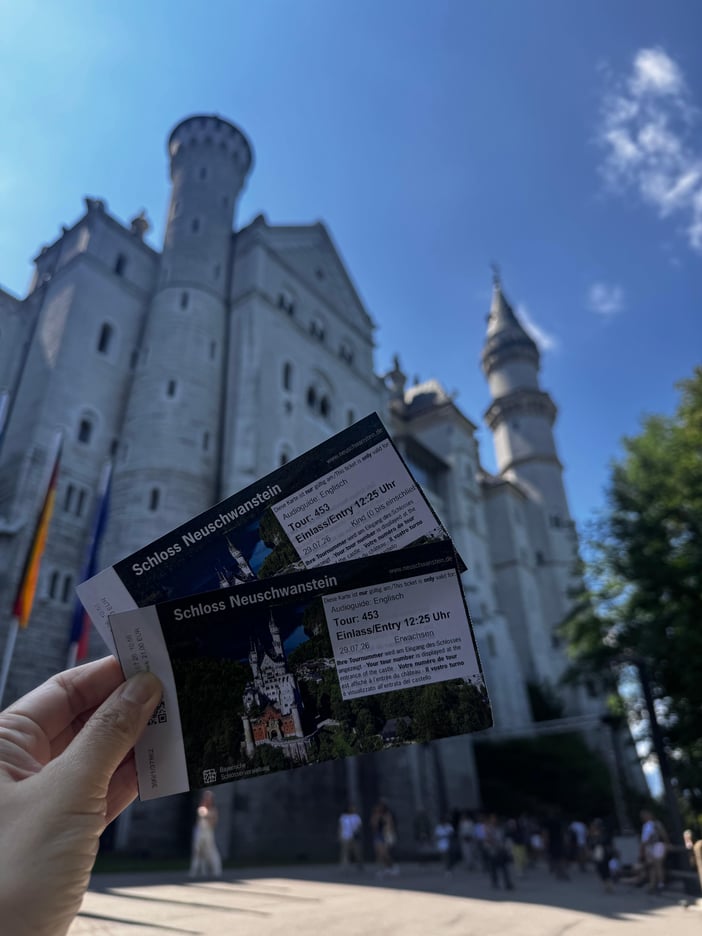
Every visit is a timed slot with the castle's own guides, and a skip-the-line ticket does not mean walk in whenever you like; it means admission at the time printed on your ticket. Neuschwanstein slots can sell out months ahead in summer and autumn, so book early.
The tours help most exactly there. Organized groups can secure official castle tickets after public allocations run dry, including on days the online shop shows nothing, which is why putting your castle ticket through the tour operator matters on this route.
Prefer to arrange it yourself? The official Hohenschwangau shop sells timed tickets, and a limited number go on sale at the Ticket Center from 8 am, though they can be gone by late morning.
Tickets are valid only for the printed time slot; late arrivals are denied entry, times cannot be changed, and travel delays are the visitor's own risk Build the buffer: 20 minutes at Munich Hauptbahnhof, and a tour booking that owns the timing for you.
Miss the slot and you cannot join the guided tour, even when the delay was not your fault, and official tickets generally do not refund a missed entry. That is the strongest argument for letting the tour carry the risk.
Start with documents, because you cross a border twice. Carry a valid passport or, for EU citizens, a national identity card; checks are possible on trains even inside Schengen, and a driving licence does not count. Children need their own papers too.
Then cash. The shuttle bus up towards Marienbrücke does not take cards, and horse-drawn carriage fares go to the driver, so euros are worth carrying.
On foot, the 1.5 km climb is paved but steep, so supportive shoes with grip earn their place in the bag, alongside layers and a waterproof shell for the rain that falls roughly every other summer day.
The surprises are what you cannot bring in. Rucksacks, prams and child carriers stay outside; strollers can be left in the castle courtyard or the designated room, bulky bags in your bus or car. Online ticket holders skip the Ticket Center entirely and show the QR code at the gate.
Show the QR code on your phone at the castle entrance and go straight up
No cards on board, so carry euros before you queue
Ride the cycle path that branches off after about 100 metres instead
Several Munich tours arrange entry, so check your booking before buying twice
Nearly three hundred stairs inside the castle is one more reason light bags beat big ones.
Winter does not cancel the castle; it changes how you reach it. Snow or ice stops the shuttle bus, and Marienbrücke may close when it is icy, at the castle administration's discretion.
Neither touches the castle route or the guided tours themselves. The horse-drawn carriages run all year, and if both ride options are down, the walk from the ticket centre is 30 to 40 minutes uphill.
The trains misbehave more often than the weather. Construction work has been causing schedule changes, cancellations and replacement buses on the Munich, Füssen and Augsburg, Füssen rail lines, and heavy snow has disrupted the Füssen route before.
If your Salzburg train runs late into Munich, that twenty-minute buffer at the Hauptbahnhof is what stands between you and a missed departure.
| If this happens | What happens then |
|---|---|
| Ice or snow closes Marienbrücke | The castle tours and transport go ahead; the bridge is just one viewpoint on the route |
| Snow stops the shuttle bus | Carriages run year round, or you walk the 30 to 40 minute uphill road |
| Your Salzburg train is late | The twenty-minute buffer at the Hauptbahnhof is your protection |
| Fog hides the mountain | The guided tours and transport go ahead; the photos wait for another day |
| Heavy rain makes the paths slippery | Wear the waterproof shell and take the shuttle instead of the slope |
None of these ends the day. The one that could, a missed castle slot, is the one the tours are built to prevent.
Driving it yourself is the shortest round trip on offer. One estimate puts the drive at about three and a half hours each way over the 217.5 km direct route past Chiemsee; the stricter no-traffic calculations that produce a 6 hour 34 minute round trip count about 3 hours 17 minutes per leg.
Either way, the car beats the train on hours, and the B17 through Peiting and Steingaden drops you straight into Hohenschwangau.
The paperwork is the price of the speed. Austrian motorways beyond the Salzburg bypass need a vignette, and from November to mid-April the rules tighten: winter tyres on all four wheels in wintry conditions, chains advisable on alpine roads, and Germany expects winter tyres when ice or snow prevails too.
The endgame is the part people underestimate. In summer the Hohenschwangau lots can be full by 9:30 am, cars cannot climb to the castle, and the guidance is to be in the village 1.5 to 2 hours before your entry slot.
Pick P3 for a car-only lot, P2 if you travel in a camper, and note that the shuttle departs from P4 by the Alpsee.
Weigh that against the coach tours: you gain flexibility and lose the guaranteed entry and the timing that someone else owns. On a one-day visit from abroad, the tour usually wins.
If the day stretches beyond the castle, the valley around Hohenschwangau fills it well.
Hohenschwangau Castle, Ludwig's childhood home, sits a six-minute walk from the tour start, and the two castles share a King's Ticket for a single date, with at least 2.5 hours between entry times if you do both. Entry into either one is only by guided tour.
Lunch sorts itself out. Café Kainz serves regional dishes with hot meals from 10:30 am to 4 pm, and the Dorfwirt inn does hearty Alpine food with a takeaway counter beside it.
On a Munich coach tour, travelers describe nearly an hour on a terrace over the Alpsee, the part of the day people keep mentioning afterwards.
For a longer stay, Zugspitze lies 59.8 km north, about 69 minutes by car without traffic, and private tours pair the two mountains in one day. Closer to hand, the full Alpsee loop takes 1.5 to 2 hours, a walk worth its own morning if you stay overnight instead of racing the evening train.
The Salzburg day trip works, but only with the Munich tours doing the heavy lifting. Take the early train, keep twenty minutes of buffer, and let a coach or train tour own the castle ticket and the timing. Do that and you are inside Ludwig's rooms by mid-afternoon, with the evening free for Salzburg.
The eight things travelers ask before setting out from Salzburg for the castle, answered plainly.
 Schwangau2026
The timetable minimum between platforms is 8 minutes, but that leaves no room for delay. Allow at least 20 minutes for the transfer, and more if you travel with heavy luggage, children, or a large group.
Admission is tied to the time slot on your ticket. If you arrive after the slot, you cannot join the guided tour, and the entry time or date cannot be changed. Build a generous buffer into your morning.
Carry a valid passport or ID card. EU citizens can use a national identity card, and checks at the internal Schengen border are possible even though they are not routine.
Yes, it is feasible, though it makes a long day. Round-trip travel runs roughly ten and a half hours by train, and the drive covers about 217.5 km each way. The Munich tours sold here, like the full-day Neuschwanstein and Linderhof trip, fill the day well, but expect a late return.
The exterior, the grounds and the walk to Marienbrücke are free, and the bridge needs no admission ticket, though it can close in winter weather. The courtyard and the rooms inside require a ticket, and the interior can only be seen on a guided tour.
Three ways: a steep uphill walk of about 1.5 km that takes 30 to 40 minutes, a shuttle bus, or a horse-drawn carriage. The shuttle and carriage run on demand, so many visitors simply start walking early and wear shoes with good grip.
The castle's own staff lead the interior visits in German and English, and each one lasts about 30 minutes. Audio-guide tours cover other languages, and the Munich day trip sold here runs with an English-speaking guide for the journey itself.
Restaurant Café Kainz serves regional and international dishes from 10 am to 5 pm, with hot meals from 10:30 am to 4 pm. Dorfwirt is an Alpine-style inn with hearty traditional food and a takeaway snack bar if you are short on time.
The road trip page maps the drive from Salzburg to Hohenschwangau, with vignette and winter tyre rules for the route.
The Munich page lines up every departure your early train can catch, from full coaches to a small-group rail tour.
The Füssen page handles the last stretch once you reach Bavaria: local buses, the uphill path and the shuttle.
Heading into the Alps afterwards? The Garmisch page covers the express tour that runs by scenic rail through Austria.
Extending your stay in Austria? The Innsbruck page sorts out the border paperwork and private options from there.
Coming later from Switzerland? The Zurich page lays out the long cross-border day, drive times and private tours.
Wondering whether you need a guide inside at all? The castle tour page explains how the state-run visits work.
The group tours page compares small-group days, including a train tour capped at 12 guests with entry included.

The skip-the-line page explains timed slots and how pre-reserved entry fits a journey as long as yours.
Fancy the lakes under your own steam? The bike tour page covers hire and cycle paths around Füssen.
The Linderhof page compares day trips that pair both of King Ludwig's palaces in a single long day.
For every rail connection and transfer window in one place, the getting-there page maps train, bus and car routes.
The tickets page breaks down timed entry, where to buy, and what happens when a date sells out weeks ahead.
The best-time page sets out opening hours, the four closed days in winter and when the crowds peak.
Traveling with children? The family page covers stroller rules, the 270 to 300 stairs inside and parking lots P1 to P4.
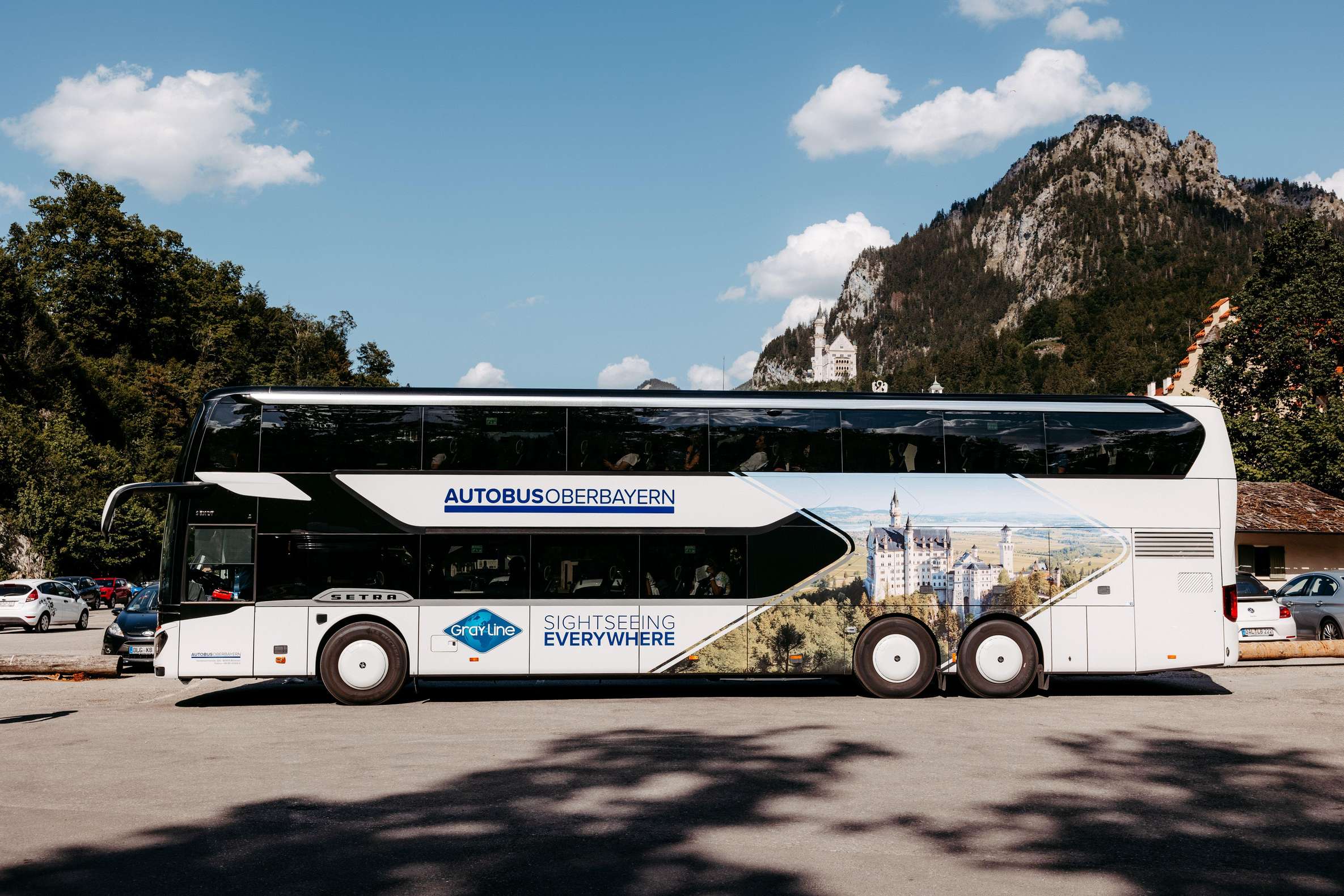
Ride from Munich to Neuschwanstein and Linderhof in one day by coach, with castle tickets available and free cancellation up to 24 hours in advance.