
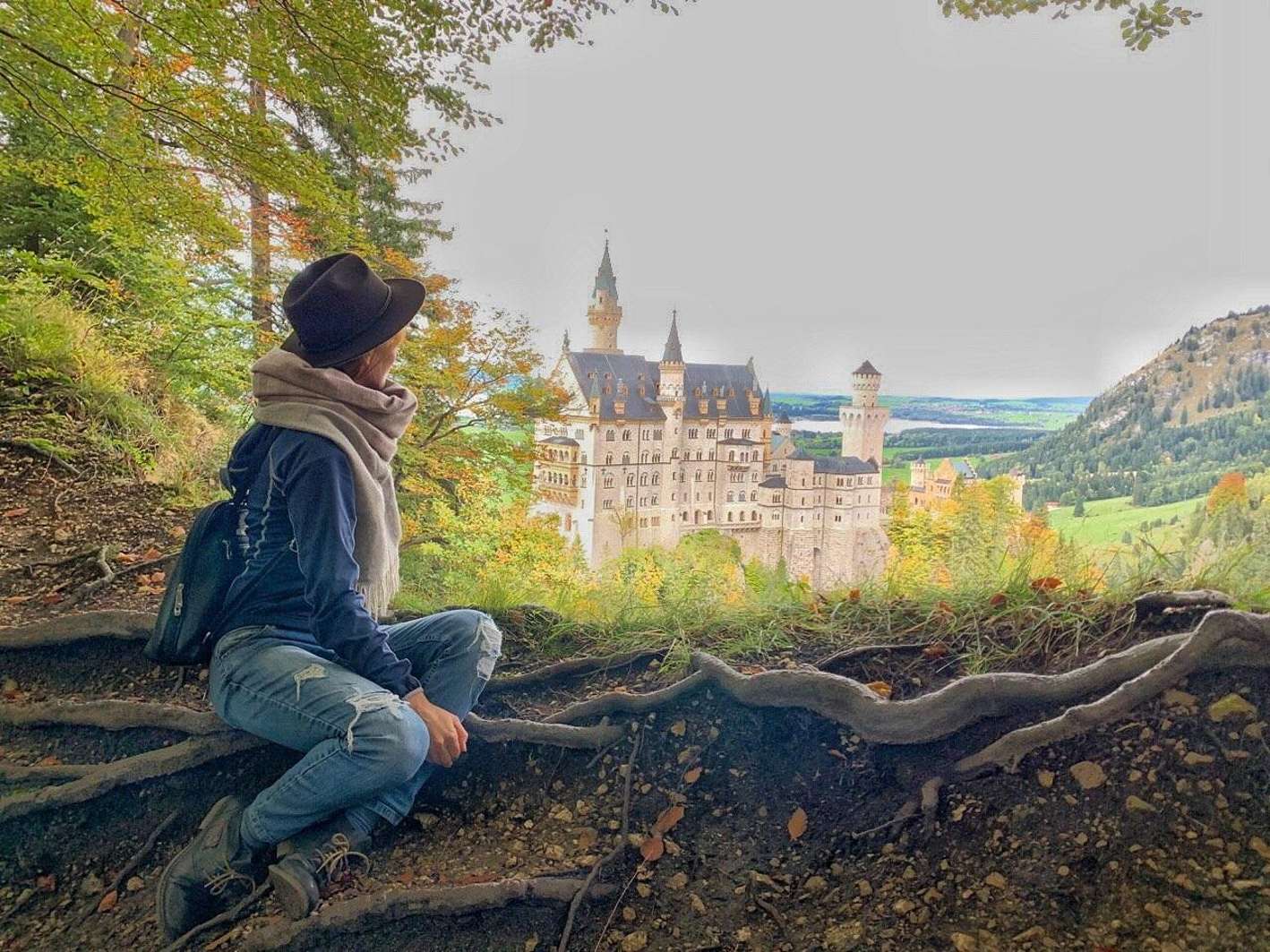
 Our top pick
Private tour: Neuschwanstein castle and Alps from Innsbruck
Private transportationPrivate guide/driverBottled water
From$401 /person
See dates and book Free cancellation · Hotel pickup
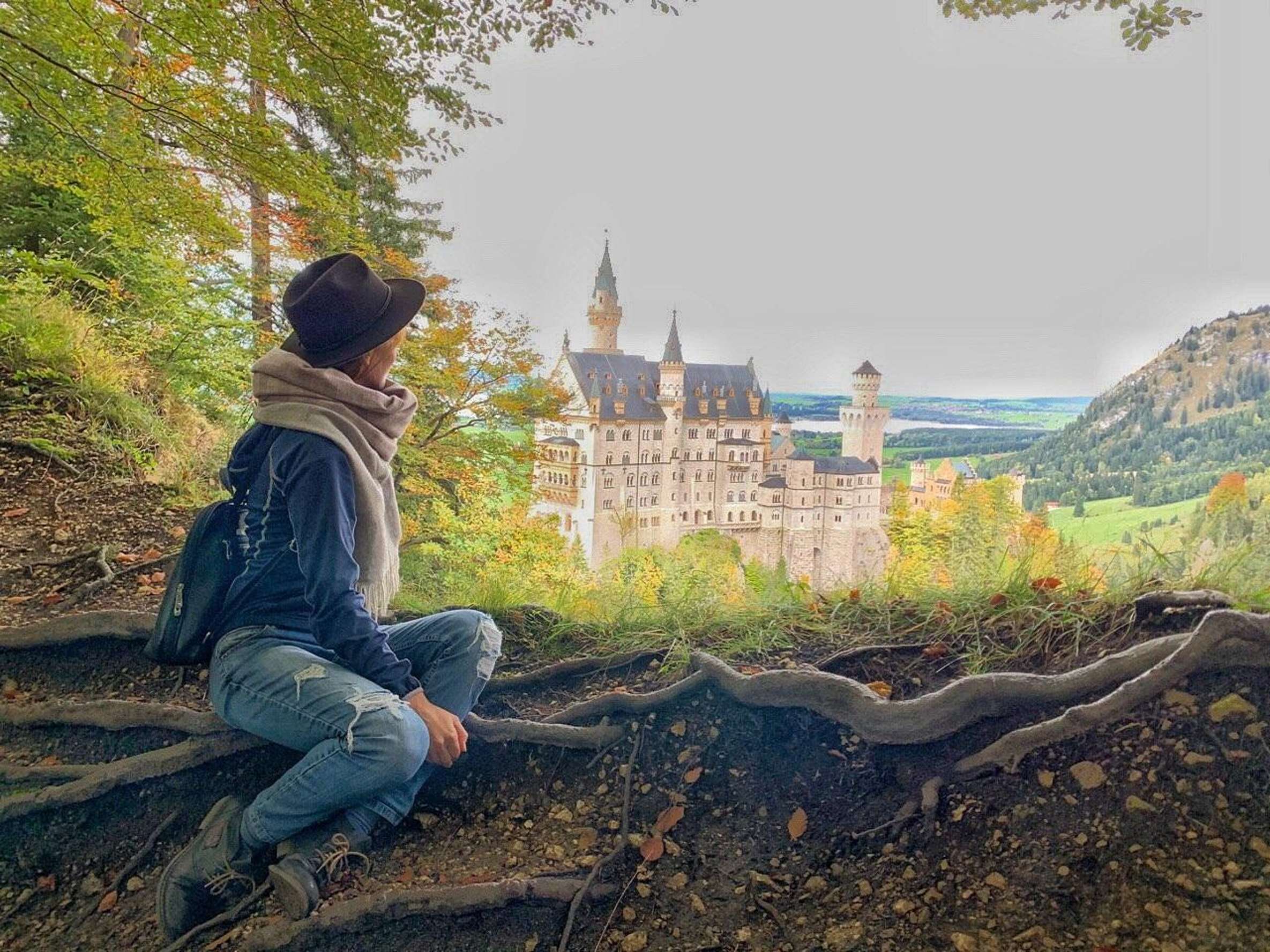
Book the castle day without the train-and-bus puzzle. Ride straight from Innsbruck through the Alps with a private guide, skip the ticket scramble with a pre-reserved entry, and stand on Marienbrücke by midday. Guides who tell King Ludwig's story well make the drive part of the day.
“Anna made our trip truly special. Kind, personable, and so knowledgeable about everywhere we went. She even captured a special moment for us. Don't think twice, book with her!”
One tour makes this trip from Innsbruck: a private day out with your own driver and guide, hotel pickup included, that pairs the castle with alpine stops such as Highline 179 and Blindsee lake on the way back.
Our top pickMost reviewers credit their guide by name, saying the drive and stops came alive through stories.
Several travelers loved that their guide took photos of special moments they would have missed alone.
Many reviewers wished the fun had lasted longer, asking others not to think twice about booking.
Choose your travel date and book early. Castle entry slots can sell out months ahead in summer and autumn, so locking in the tour date first is what secures your place.
Select the private tour: Neuschwanstein castle and Alps from Innsbruck. It runs a full day, includes pickup, and covers the reservation for skip-the-line castle tickets, with Highline 179 available as an optional extra.
Complete the booking and wait for the confirmation message with your tour details. Cancel up to 24 hours in advance for a full refund, and note that the scheduled day runs in any weather.
The tour reserves your castle entry slot, but you pay for the castle tickets themselves on the day of the tour, so have the euro amount ready for each adult and child in your group.
Check your voucher for the exact pickup point and time, typically the central coach parking on Kaiserjägerstraße behind the Hofgarten. Arrive a few minutes early and keep your passport on you for the border crossing into Germany.
Innsbruck sits about 110 kilometers from the castle, and by road the trip takes roughly 1 hour 50 minutes each way when traffic behaves. The private tour drives it direct, with no train changes, and stops at Highline 179 near Reutte if you want the suspension bridge walk along the way.
Your other two options trade money for planning. A rental car gets you there in about two hours via the Fern Pass, but wintry roads can need winter tyres or chains, and you handle parking in Hohenschwangau yourself. Public transit costs least and takes longest: nearly five hours each way, with a transfer in Garmisch-Partenkirchen.
However you go, the castle rules stay the same. Entry is by timed slot, late arrivals are turned away, and the interior tour lasts about 30 minutes with no photography allowed.
Markthalle Innsbruck, Bahnhofcenter Innsbruck
Markthalle Innsbruck, Bahnhofcenter Innsbruck
Walk, Scenic drive (30 minutes)
Visit (1 hour)
Bahnhofcenter Innsbruck, Markthalle Innsbruck
Bahnhofcenter Innsbruck, Markthalle Innsbruck
Crossing from Austria into Germany means carrying a valid passport or identity card for every traveler, including children; a driving licence does not count.
Pack a passport or national ID card for each person in the car before you leave Innsbruck, and check that yours is still valid for travel to Germany.
The Alpine crossing takes about 1 hour 52 minutes by private tour in ordinary traffic, with no train or bus changes. The castle visit itself is brief indoors, so the time you leave around it matters: allow room for the uphill approach, the views and a meal before the drive back.
The *Private tour: Neuschwanstein castle and Alps from Innsbruck* handles the cross-border drive and reserves your castle entry slot.
The reservation is paid for on the day, and the uphill bus is included if it is available and you want to take it. Check the tour’s itinerary and timings before booking, especially if you want time for optional stops.
A direct drive is the simplest route, whether you book a private tour or rent a car. Public transport takes much longer and involves a connection; there is no direct bus from Innsbruck to the castle.
For a tour or rental car, the drive to Hohenschwangau takes about 1 hour 52 minutes without traffic. The train-and-bus route takes about 4 hours 51 minutes, with a change in Garmisch-Partenkirchen, followed by the trip from Füssen to Hohenschwangau. Either way, arrive in time for your reserved castle entry.
The route comparison shows how much longer the train connection takes and where the transfer falls.
If you travel by public transport, leave room for the connection and the final trip to the castle. A missed connection can put a reserved entry slot at risk.
The car is direct, while the train-and-bus journey includes a change in Garmisch-Partenkirchen.
A private tour saves the transfers, while a rental car leaves the stops and pace in your hands. Public transport suits a day when you can give the crossing more time.
The choice comes down to travel time, the entry-slot buffer and how much freedom you want for scenic stops.
| Travel time | Entry-slot buffer | Scenic stops | |
|---|---|---|---|
| Organized tour | 112 minutes | Arrive well before entry | Highline 179 optional |
| Rental car | not known | 1.5-2 hours early | Plansee; Highline 179 |
| Train and bus | 4 hours 51 minutes | Arrive well before entry | not known |
The private tour gives you direct pickup and coordinated timing; driving yourself leaves more say over stops. Public transport takes the longest and needs careful connection planning.
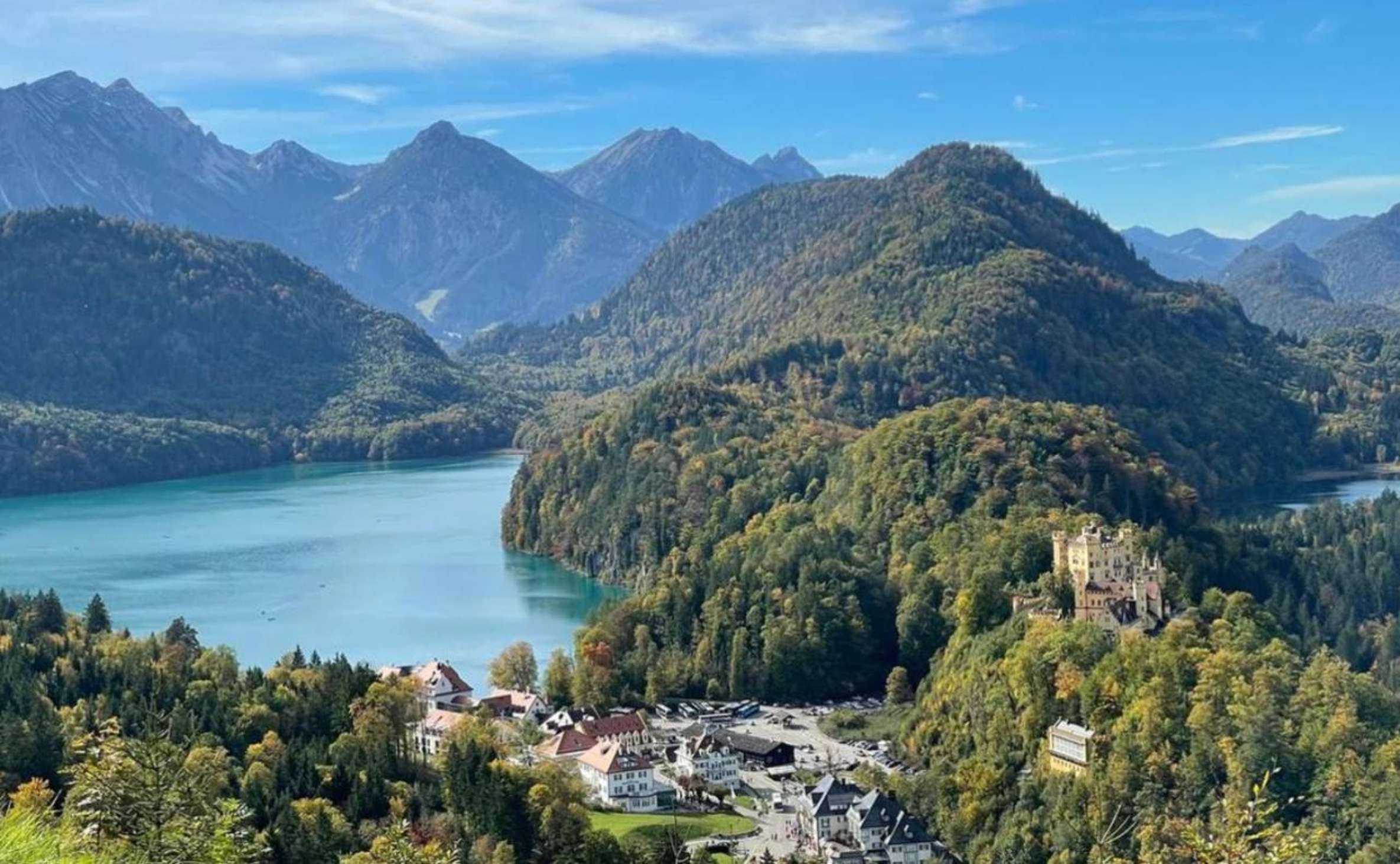
A private tour is a practical choice if you want one pickup and a reserved castle slot. The *Private tour: Neuschwanstein castle and Alps from Innsbruck* includes a private guide and driver, bottled water and private transportation; Highline 179 is an optional activity. The castle admission itself is paid on the day.
A reserved slot fixes your entry time, so plan to reach Hohenschwangau well ahead of it. Late arrivals cannot join the castle tour, even when a travel delay is to blame.
The Innsbruck coach parking lot on Kaiserjägerstraße, behind the Hofgarten, is a central meeting point for excursions, but confirm the actual pickup details and schedule for your tour.
Before booking, compare pickup, the castle reservation, optional stops and the time left to explore.
| Check | Why it matters | Our pick |
|---|---|---|
| Transport starts in Innsbruck | Avoids arranging separate cross-border connections | Innsbruck pickup is included |
| Castle entry | A reserved slot sets your admission time | A reservation is included; admission is paid on the day |
| Scenic stops | Optional activities may need extra time | Highline 179 is optional |
| Time at the castle | A fixed schedule can limit independent exploring | Check the itinerary and timings before booking |
The featured tour suits you if direct pickup and a reserved entry slot outweigh the freedom to set your own pace.
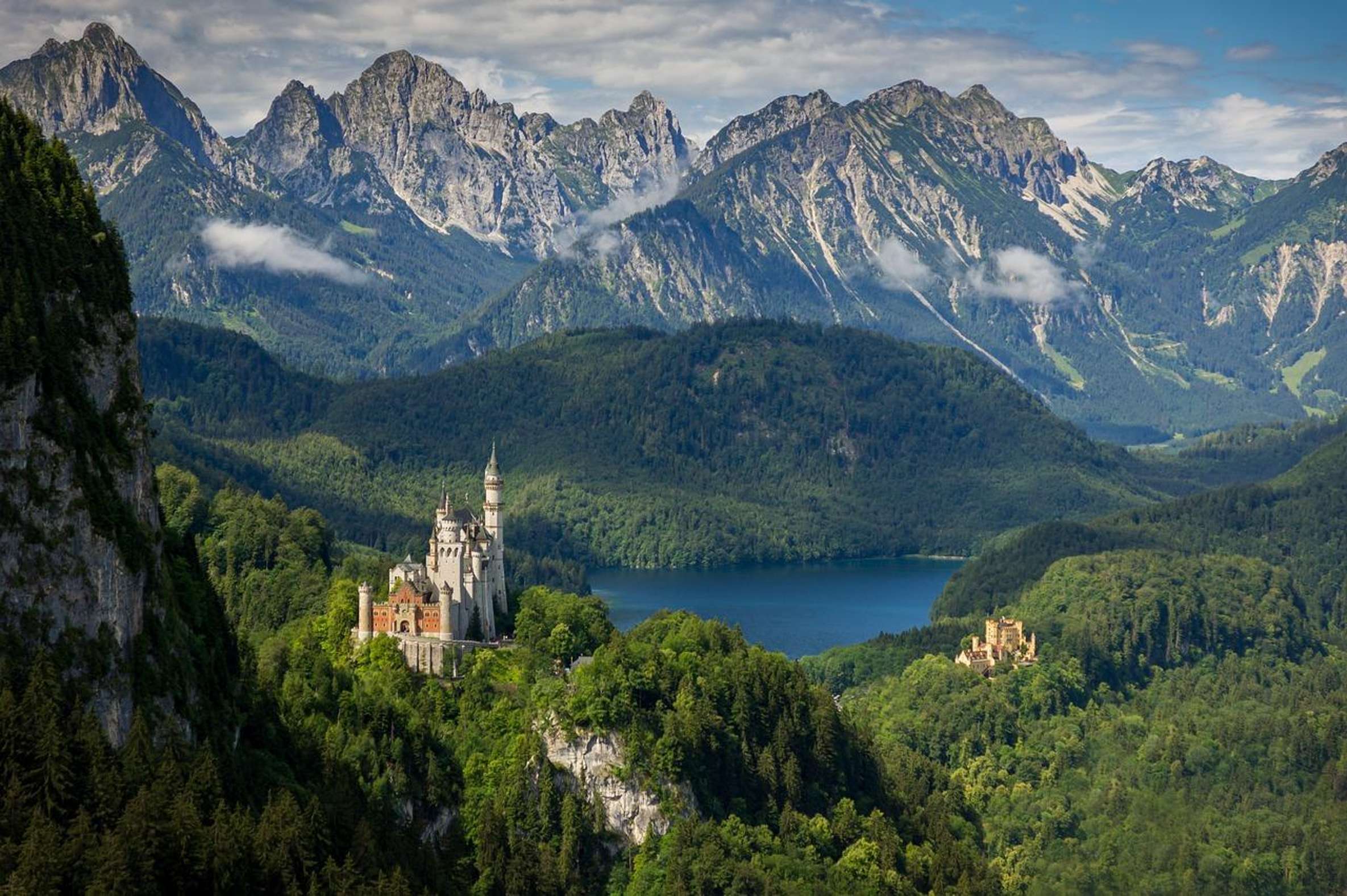
Driving gives you room to stop at Plansee or Highline 179, but holiday traffic can make the Fern Pass crossing much slower. On busy holiday routes, delays can exceed two hours. In Hohenschwangau, leave the car in one of the paid village lots; private cars cannot continue to the castles.
The route comparison weighs direct travel against connection time and the entry-slot buffer. In summer, the lots can fill by 9:30 am. The shuttle bus leaves from P4; P2 is the only lot for mobile homes, campers and motorbikes.
A rental car leaves you in control of stops, but traffic and parking are yours to manage. The organized tour coordinates the drive and castle timing, while public transport takes longer and depends on connections.
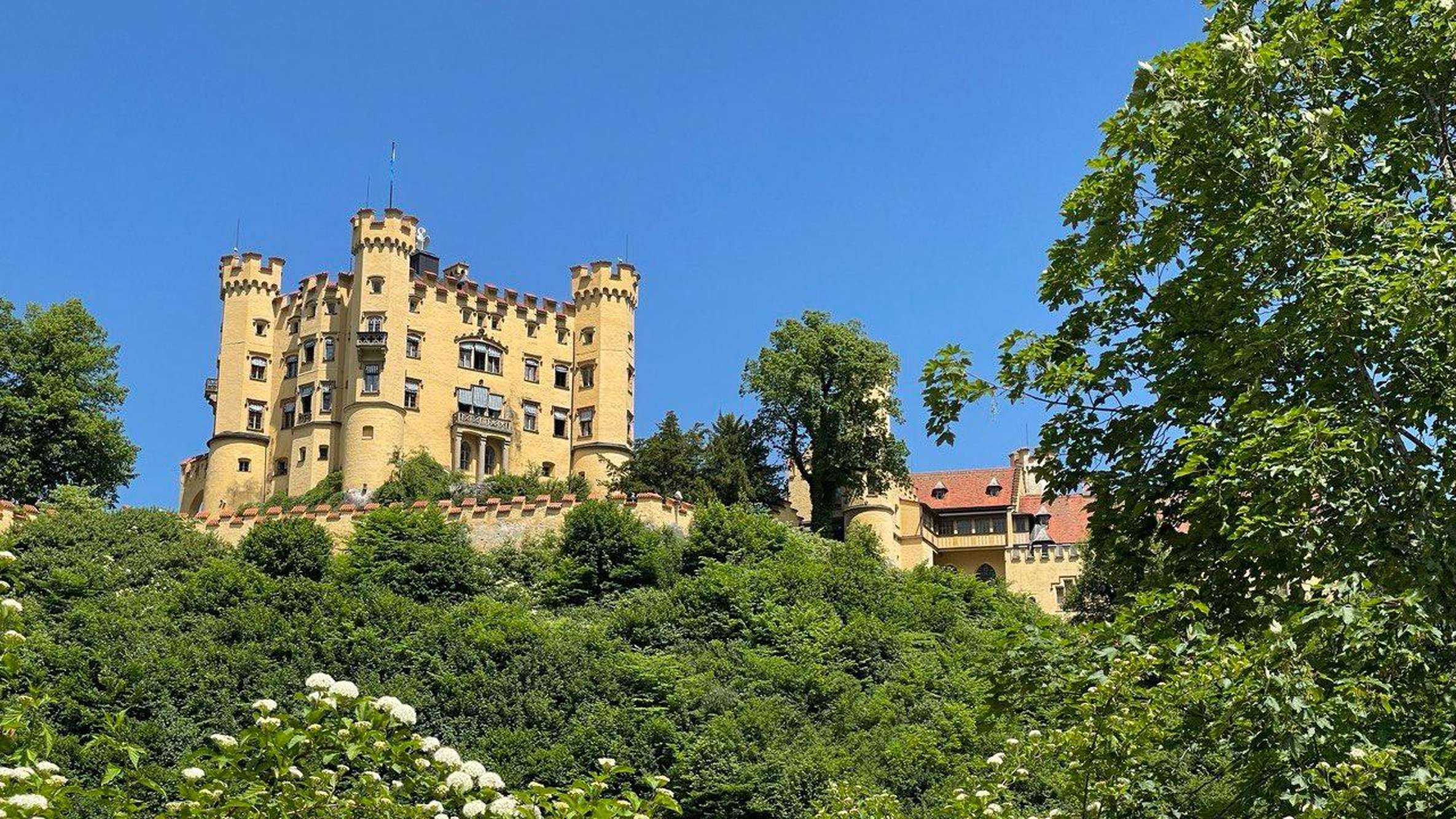
Carry a valid passport or national identity card for the border crossing. A driving licence is not a travel document. If your route uses the Austrian A12 motorway, cars up to 3.5 tonnes need a vignette; driving through Tyrol by itself does not mean you need one.
Before you set off, check the route and the road conditions. In Austria, cars need winter equipment from 1 November to 15 April when conditions are wintry.
On snow, slush or ice, use winter tyres on all four wheels; chains on at least two drive wheels are an alternative only when the road is continually or almost always snow- or ice-covered.
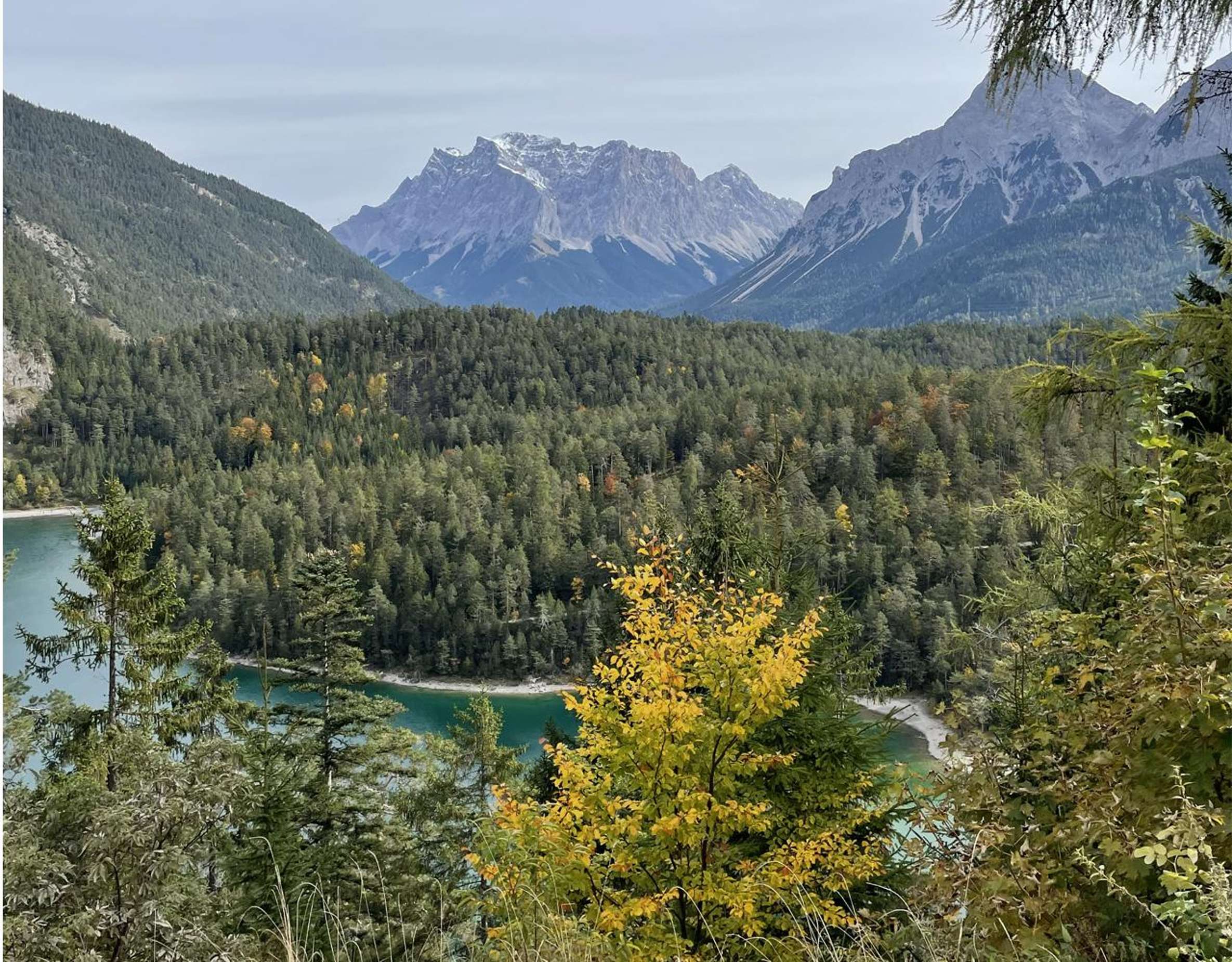
The drive has room for more than a straight run to the castle. Fernsteinsee and a valley viewpoint sit along the described route, while Plansee and Highline 179 make possible pauses on the way towards Reutte. Highline 179 gives you a mountain view, with the Ehrenberg castle ruins beside it.
The Innsbruck private tour lists Alpsee, Schwangau, Marienbrücke and Neuschwanstein Castle among its stops, and Highline 179 is optional. Confirm which stops fit the actual schedule before you count on them; extra time at one point changes how long you have elsewhere.
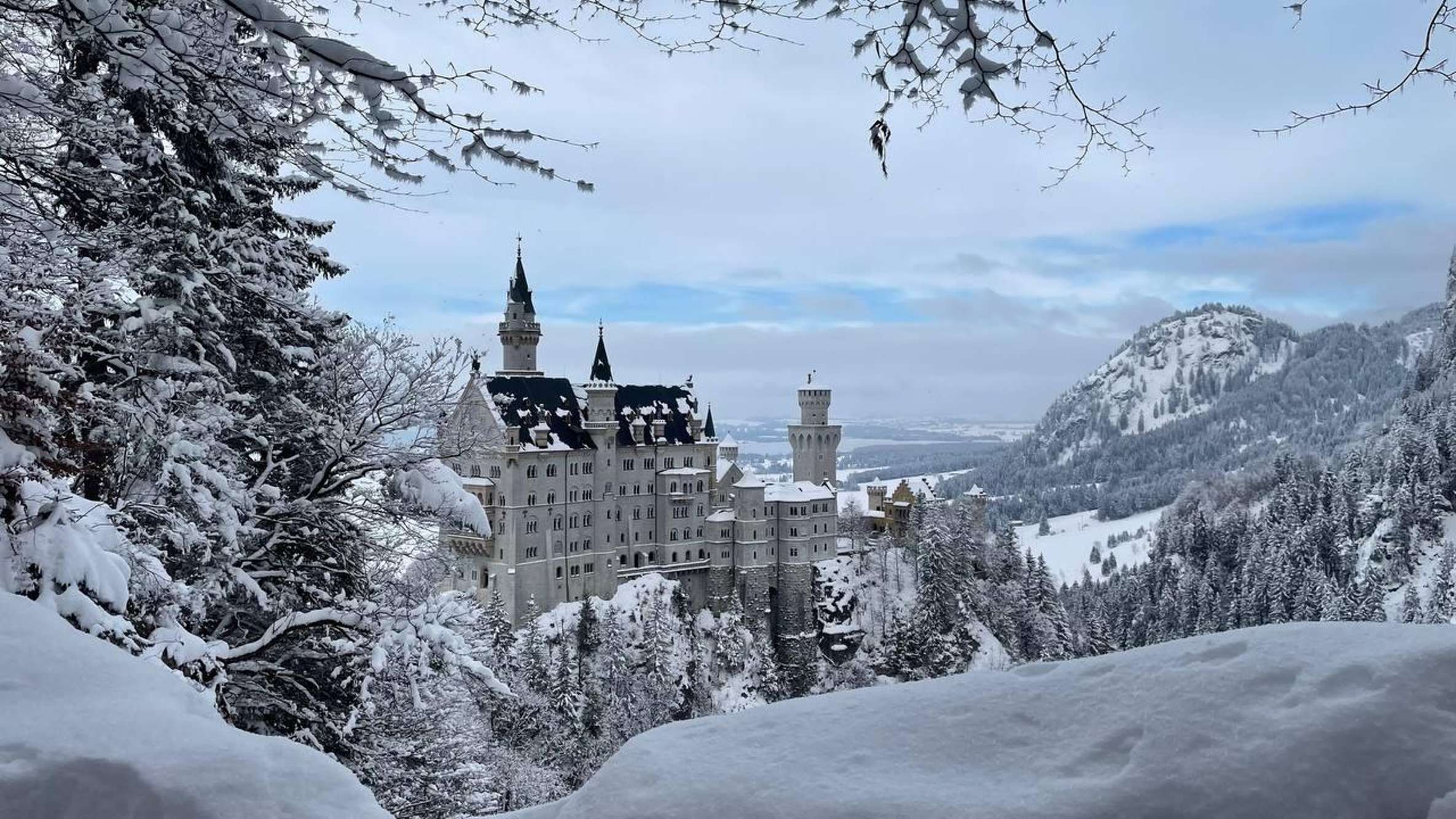
The last stretch from the village climbs about 1.5 km. Walking takes roughly 30-40 minutes, and the path is steep in places. Shuttle buses and horse-drawn carriages are alternatives, but both can have queues and each leaves a walk to the entrance.
Aim to arrive in Hohenschwangau at least 1 hour 40 minutes before your timed entry if you are walking. That figure allows about 40 minutes for the uphill walk and an hour at the castle before admission.
Add more time in summer, around holidays and at Christmas or New Year, when waits for uphill transport can grow.
Supportive shoes with good grip help on the uphill path and around the castle. The shuttle and carriage save some climbing, but you still walk from their drop-off points.
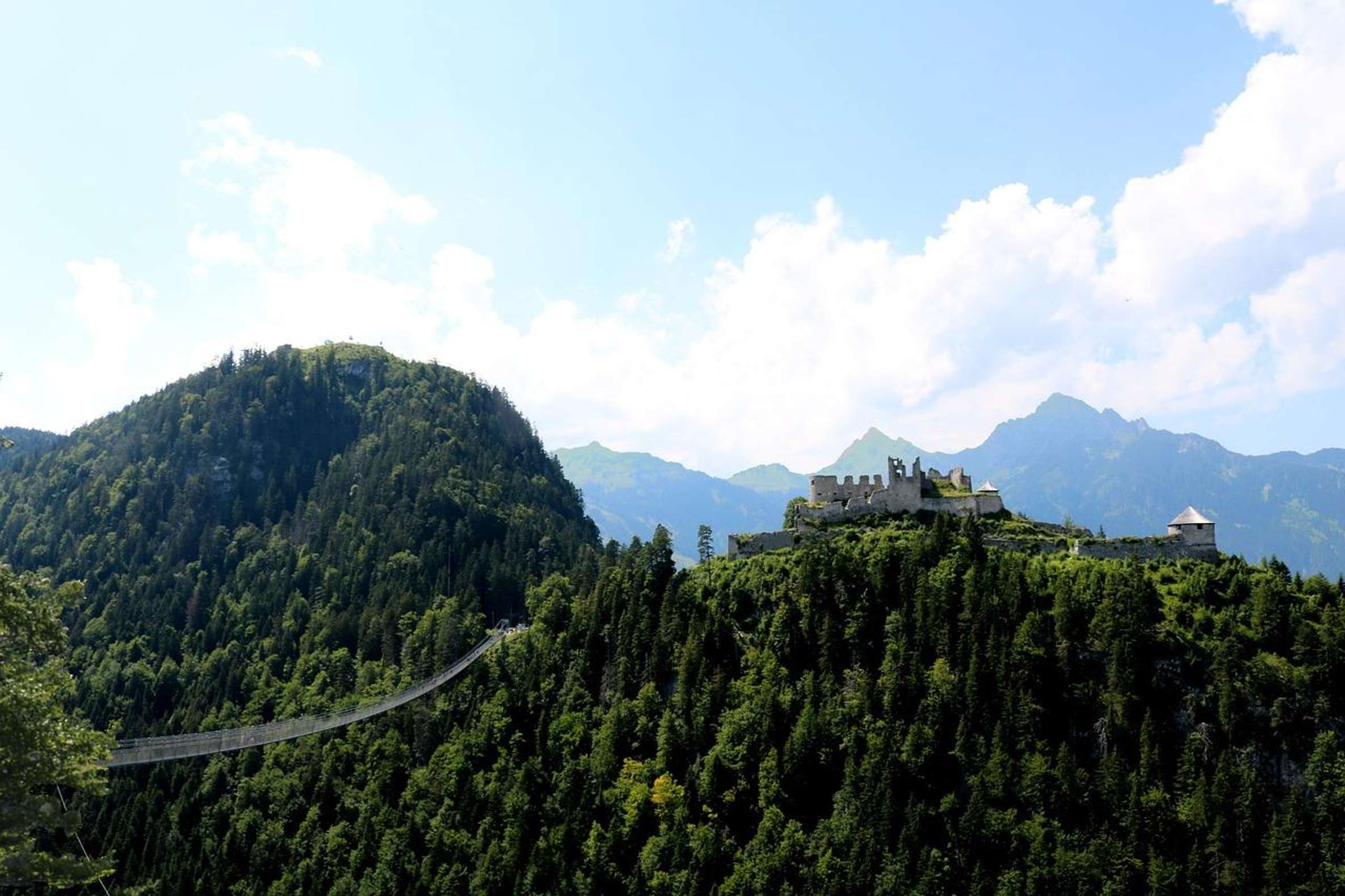
The interior is a guided visit lasting about 30 minutes. Castle staff lead the rooms, and you cannot visit them independently. Photography is not allowed inside, so save your pictures for the castle grounds and outdoor viewpoints. Leave bulky bags and large backpacks behind.
When the weather allows, Marienbrücke is a good place to see the castle from above. Ice, snow or other bad weather can close the bridge, while the castle and its guided tours remain accessible. A closed bridge changes the view, not your chance to visit the interior.
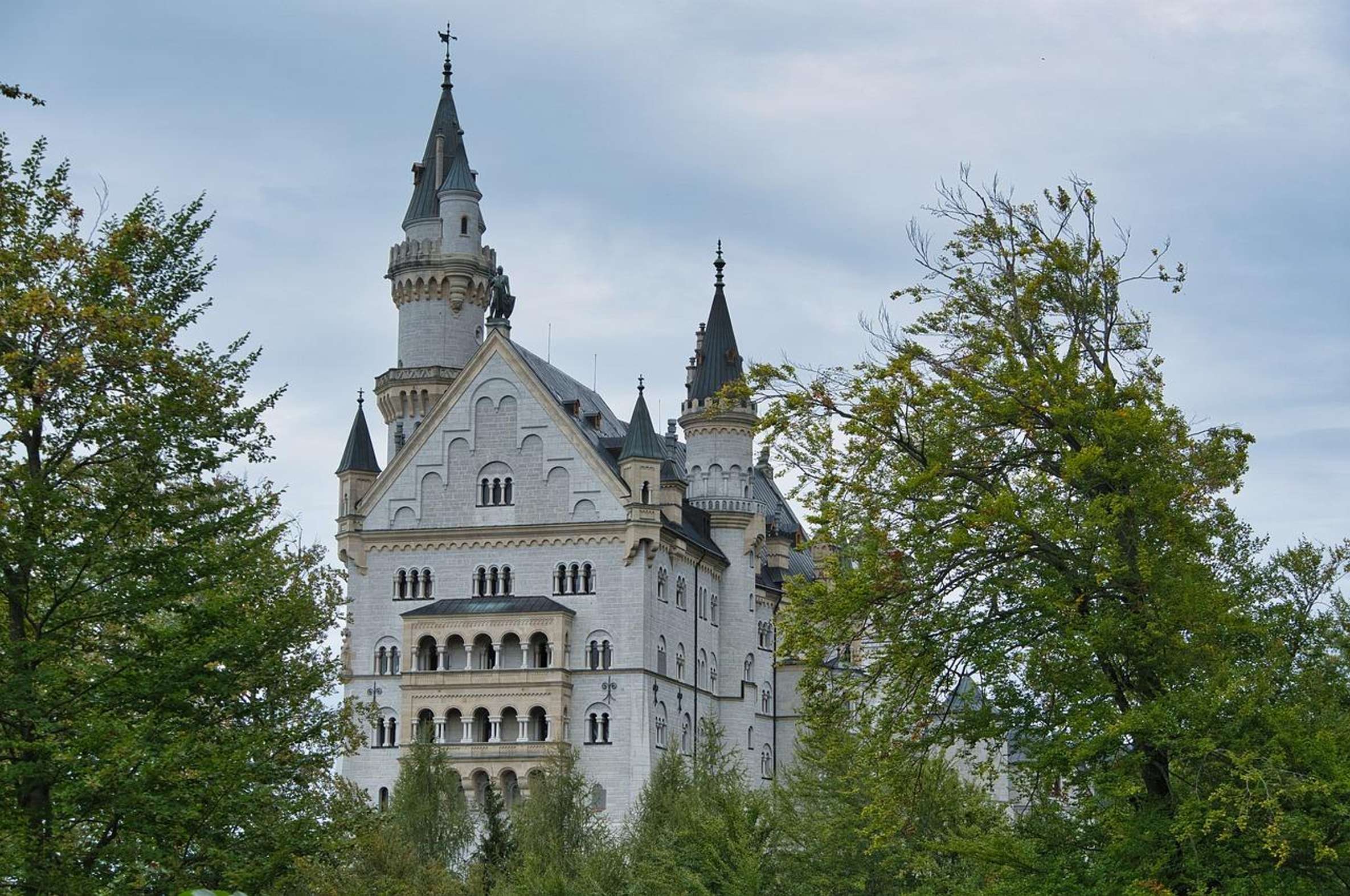
If the schedule leaves time after the castle, the nearby viewpoints and waterfall paths extend the outdoor part of the visit. Martin’s waterfall is a short walk away, and the Alpsee shore is another option; walking the full lake loop takes about 1.5-2 hours, so it needs its own time allowance.
St. Coloman’s Church and Schwansee are short drives from the castle area. Organized tours vary in how much free time they leave, so check the itinerary before planning a long walk or a meal.
Several viewpoints and waterfall paths are close enough to add on foot.
The nearby walks suit a short gap; the longer Alpsee loop needs more time than a quick stop. Check your tour’s schedule before setting out.
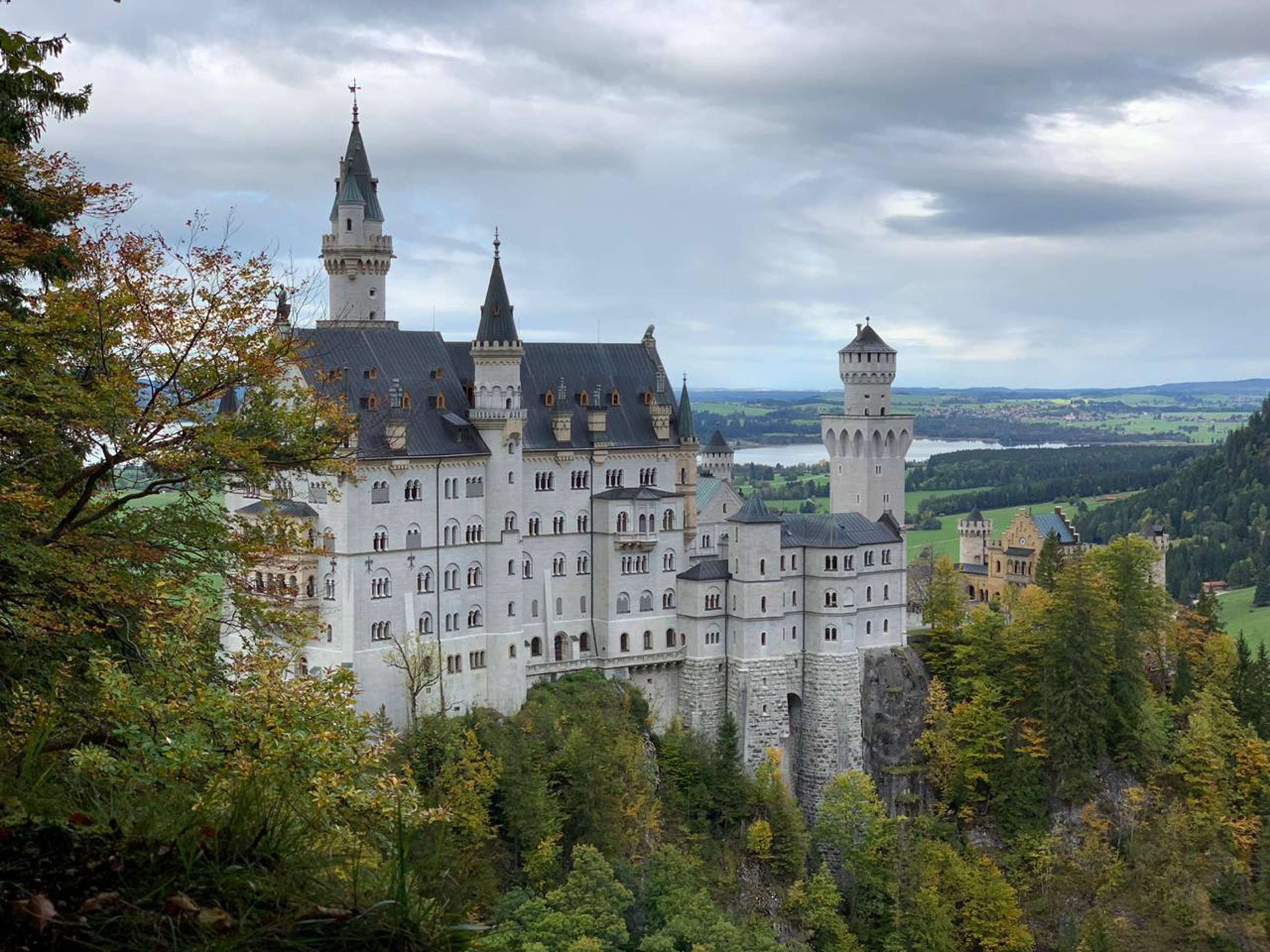
A private tour or rental car lets you set off from Hohenschwangau without working back through train and bus connections. With public transport, return to Füssen by bus and allow time for the train connection.
In autumn and winter, the listed regular bus timetable from Hohenschwangau runs as late as 7:40 pm. Later evening buses are listed only in July, August and September. Check the return connections before you start the castle visit, so the time at the bridge or lake does not leave you rushing for the bus.
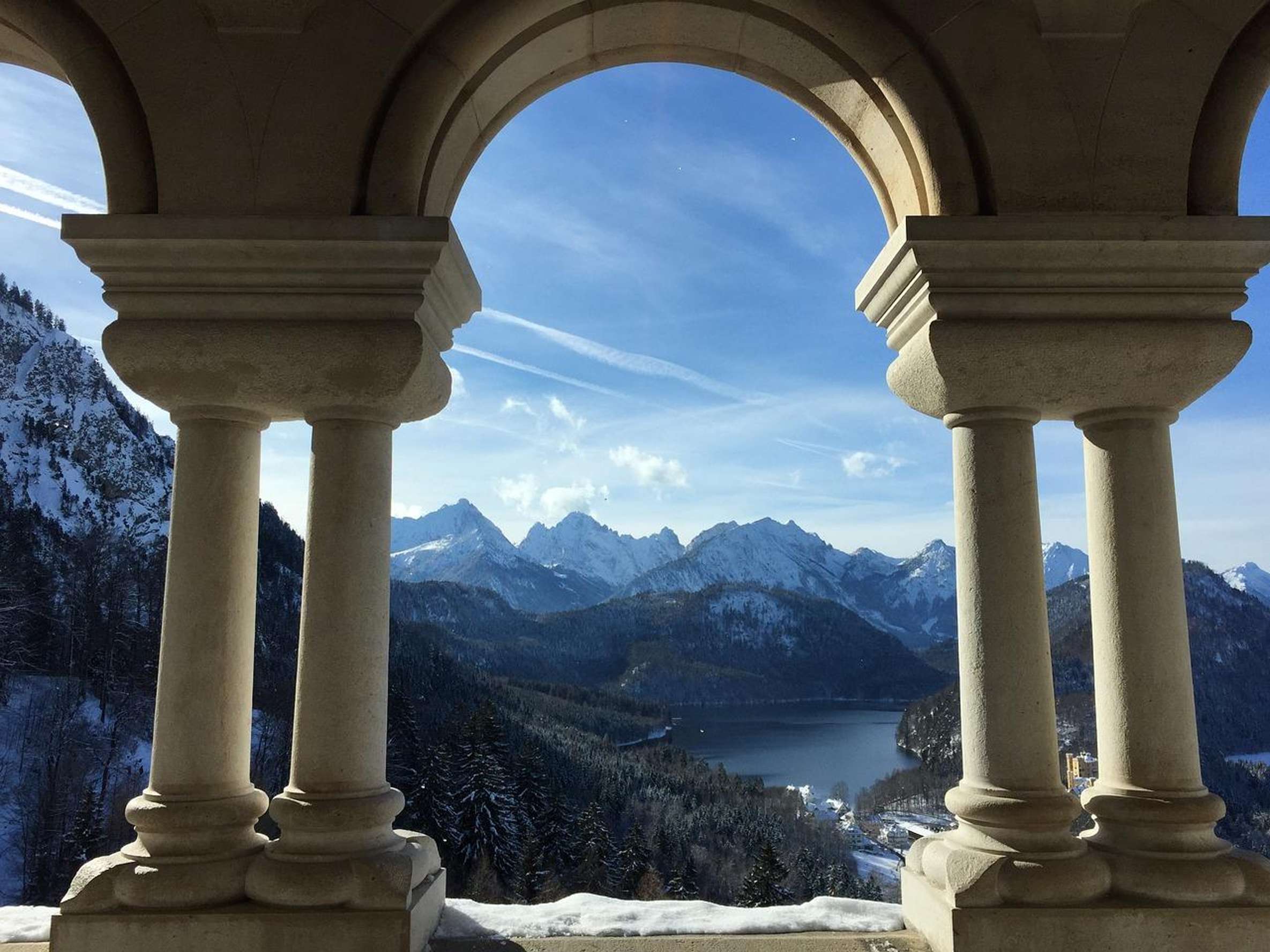
Summer brings longer days and heavier visitor numbers, while winter is quieter and colder. Tickets can sell out months ahead, so reserve early if your date matters. The castle is open daily from October 16 to March 27, from 10 am to 4 pm, except December 24, 25 and 31 and January 1.
Snow or ice can stop the shuttle, and bad weather may close Marienbrücke; the castle route and guided tours remain open. Wear walking shoes with grip, dress in layers and bring a waterproof shell. Fog can hide the mountain views, and rain can make the paths slippery.
The busiest months and quieter periods are easier to weigh when you choose a date.
July: 5 out of 5 for how busy it gets.
Tap a month to read it.
July through October are among the busiest months, while January and February are quieter. Choose winter for fewer visitors and be ready to walk uphill if the shuttle is not running.
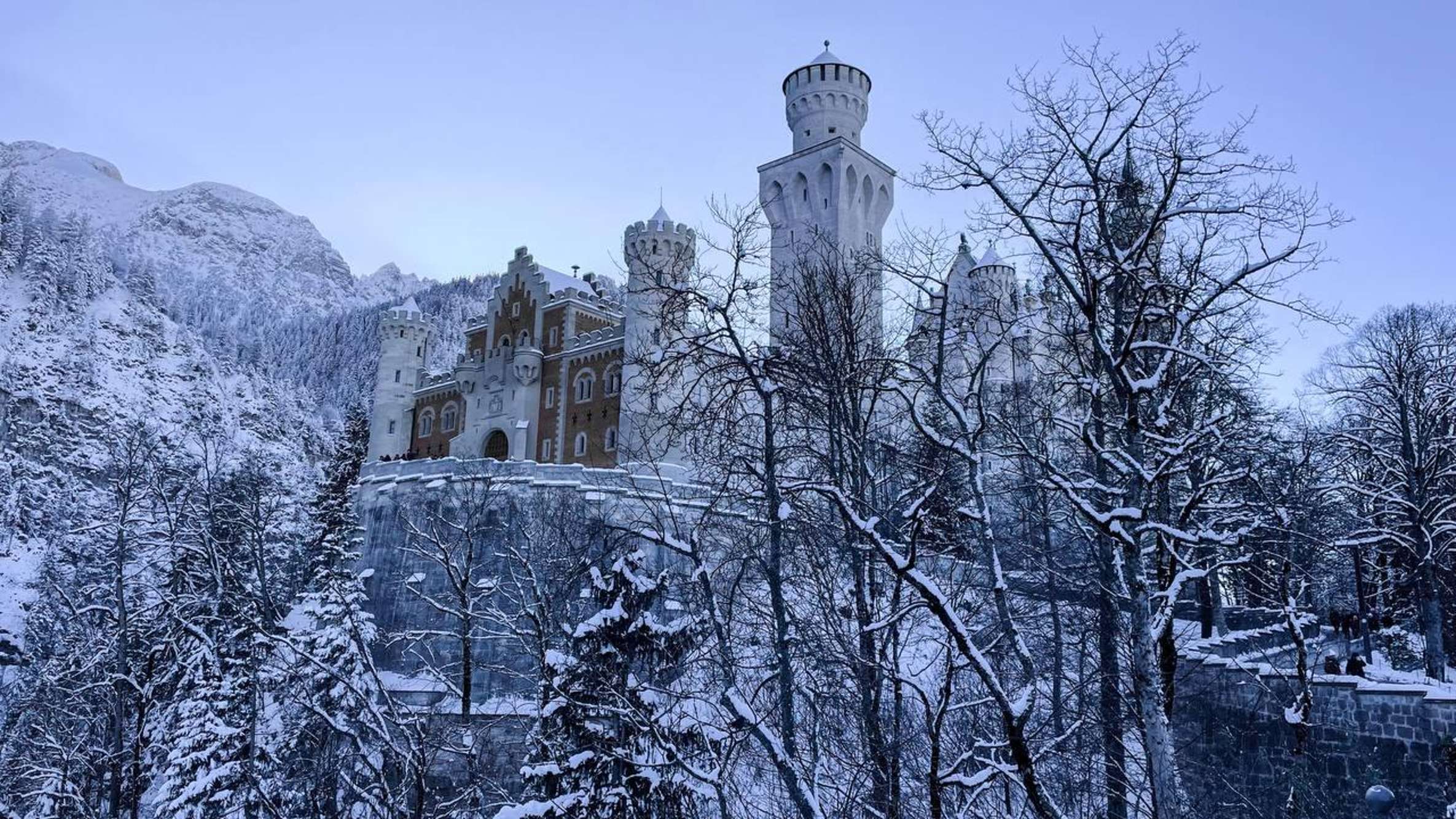
Choose an organized tour if you want direct Innsbruck pickup and a reserved castle slot without arranging cross-border connections yourself. Make the trip independently if you want to set your own pace and choose the stops, and can plan around the timed admission and uphill approach.
Driving takes roughly 1 hour 52 minutes each way, about 114 kilometers through the Alps. By public transport you need a train to Füssen and then a bus to Hohenschwangau, which can take close to five hours with a transfer. A private tour with Innsbruck pickup does the whole journey direct.
No. The transit route involves a train to Füssen followed by a bus to Hohenschwangau, and the trip runs about four to five hours each way. For a single day at the castle, a private tour or rental car makes far better use of your time.
The drive itself is part of the day. Along the route you can stop at Fernsteinsee lake, a photo point at kilometer 18 on the B179, Highline 179 near Reutte, and later Alpsee and Marienbrücke for castle views. Many visitors find these stops turn travel time into sightseeing.
The private tour reserves skip-the-line tickets in advance, so your entry slot exists before you set out. You pay for the castle tickets on the day of the tour. That reservation is what protects your interior visit, because admission is valid only at the printed time.
Plan three to four hours there. That covers the uphill transfer to the castle, the roughly 30-minute interior tour, time on Marienbrücke for views, and a lunch stop. On top of that, the drive is about two hours each way.
You cannot join the interior tour. Tickets are valid only for the selected time slot, and late arrivals are denied entry, even when a delay was beyond your control. Arriving in Hohenschwangau well ahead of your slot, which a private driver makes easier, removes that risk.
If you walk up from Hohenschwangau, allow at least 1 hour 40 minutes: about 40 minutes for the steep 1.5-kilometer walk, plus an hour at the castle before admission. Add extra time for shuttle or carriage queues in summer, at holidays and around Christmas.
On ordinary days the drive is straightforward, but holiday and weekend congestion can be heavy. On one holiday-change Saturday, delays on the Fernpass route exceeded two hours. Traffic metering runs at Reutte Süd on Fridays, Saturdays, Sundays and public holidays, so set out early on peak days.
Reaching Neuschwanstein involves an uphill walk of about 40 minutes, and the interior tour has around 270 stairs, many of them narrow. If you use a wheelchair, tell the tour in advance so a special castle service with the lift can be booked; only one wheelchair or walker user can join a tour each hour.
The exterior, the grounds and the walk to Marienbrücke are free, though the castle courtyard itself requires admission. Marienbrücke is a separate viewpoint and needs no castle ticket, but it can close in winter when there is ice or snow.
Yes. Neuschwanstein has a café and bistro on its second floor, and a restaurant sits just outside the gates. In Hohenschwangau, Restaurant Café Kainz serves regional and international dishes daily from 10 am to 5 pm, and the Dorfwirt offers sit-down dining plus a snack bar.
Bring your passport, since you cross the Austrian-German border. Wear supportive walking shoes with good grip for the uphill path and castle stairs, and dress in layers with a waterproof shell. Pack motion sickness medicine if winding mountain roads affect you.

If you would rather take the wheel yourself, the road trip routes map the alpine highways to the castle for you.

Staying in Bavaria's capital instead? The Munich day trips range from coach tours to small-group train journeys.
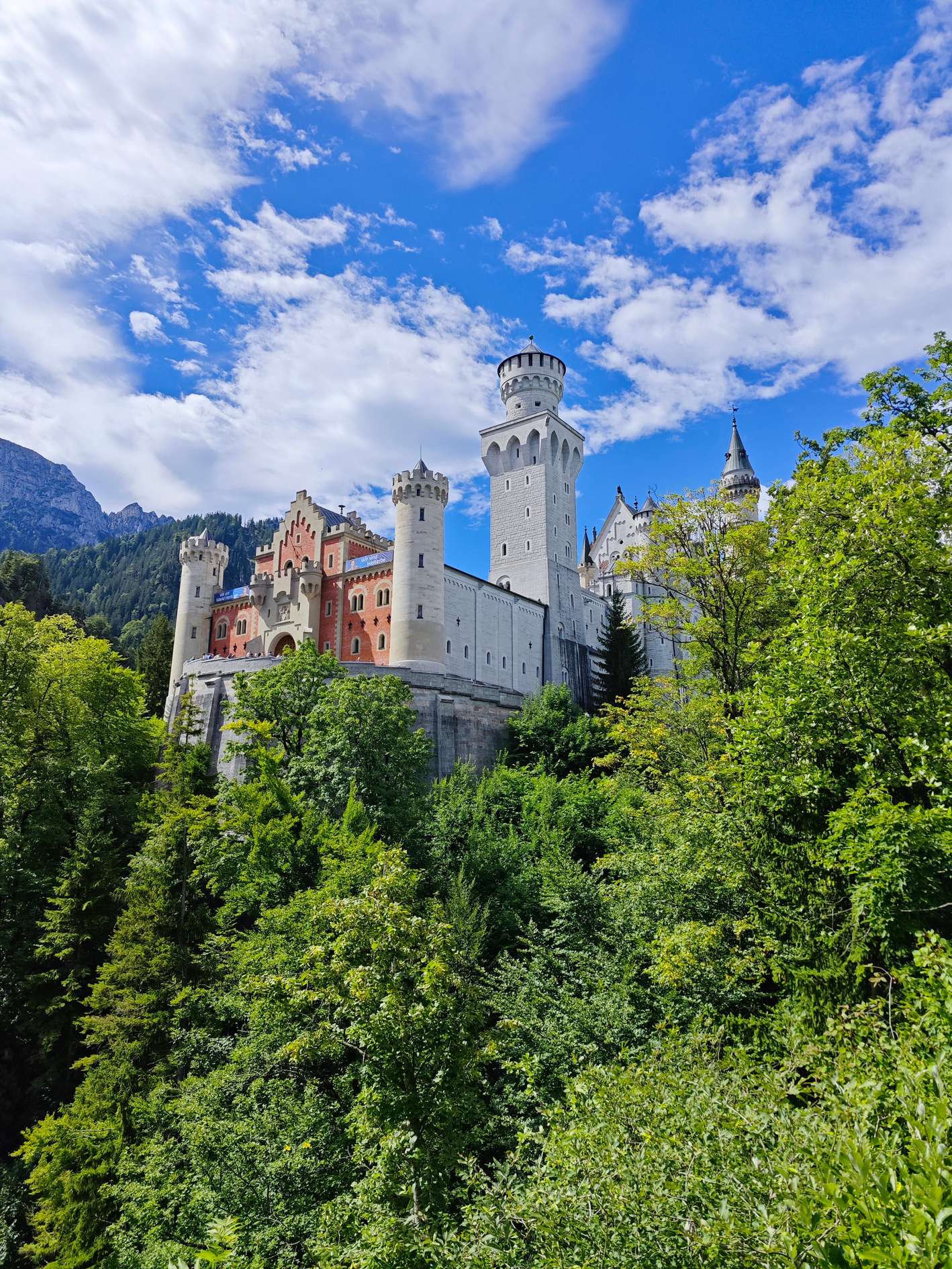
Once you reach Füssen, local buses, shuttles and walking routes take you the last stretch to the castle gate.
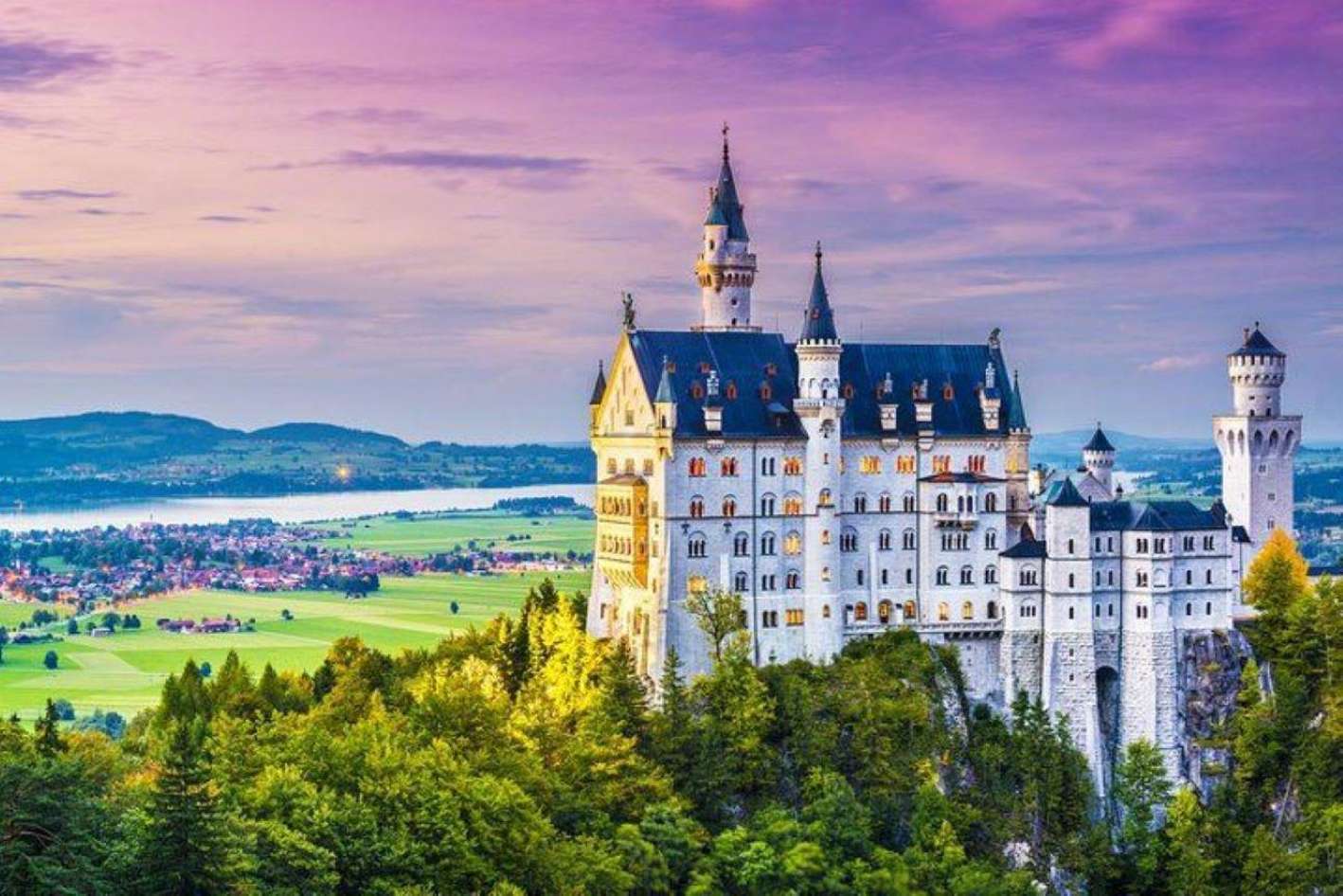
Garmisch-Partenkirchen sits closer to the castle than Innsbruck, and its express tour covers the ride by rail.
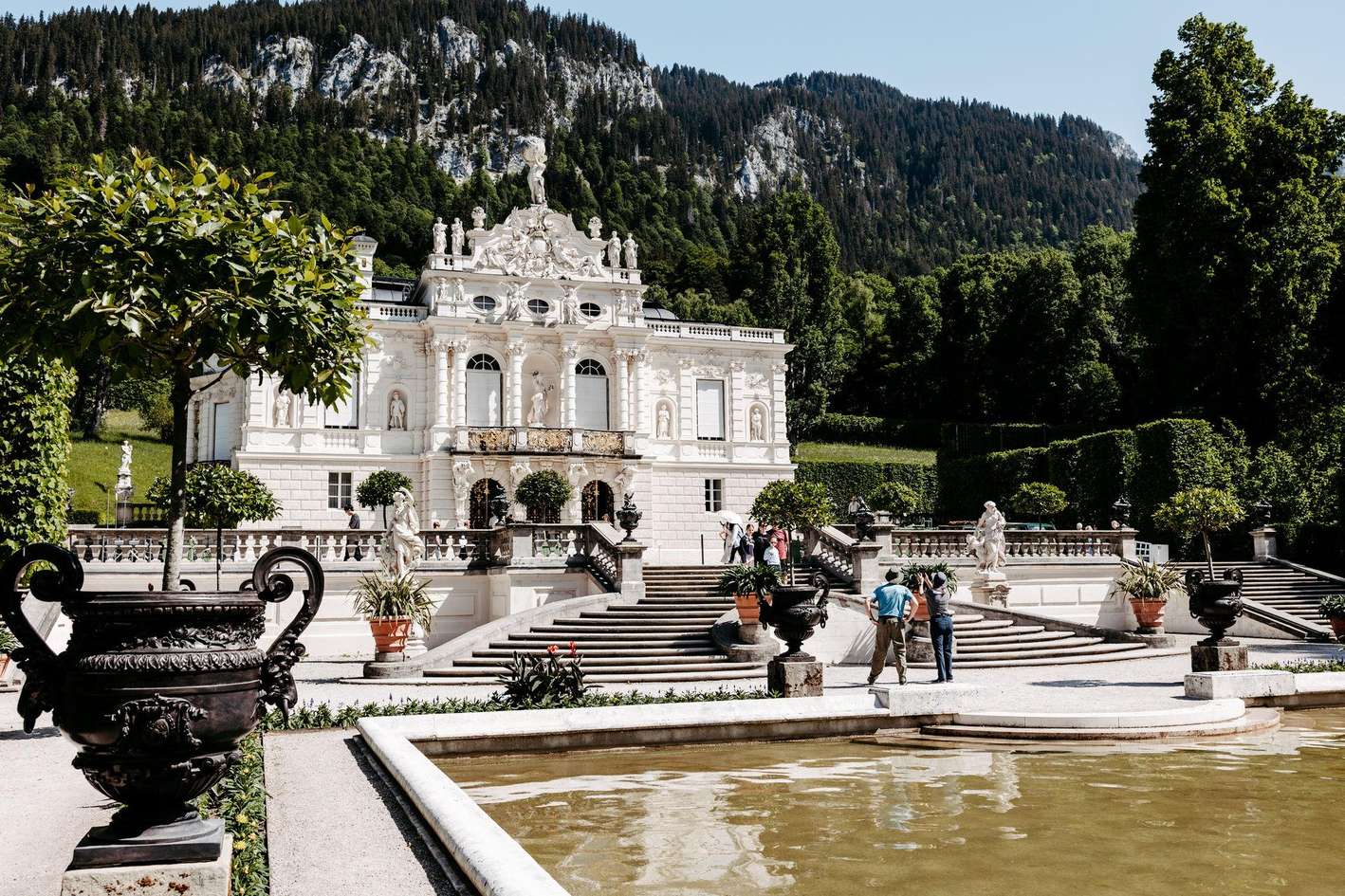
Crossing from Salzburg works differently, and that page explains which day trips actually make the connection.
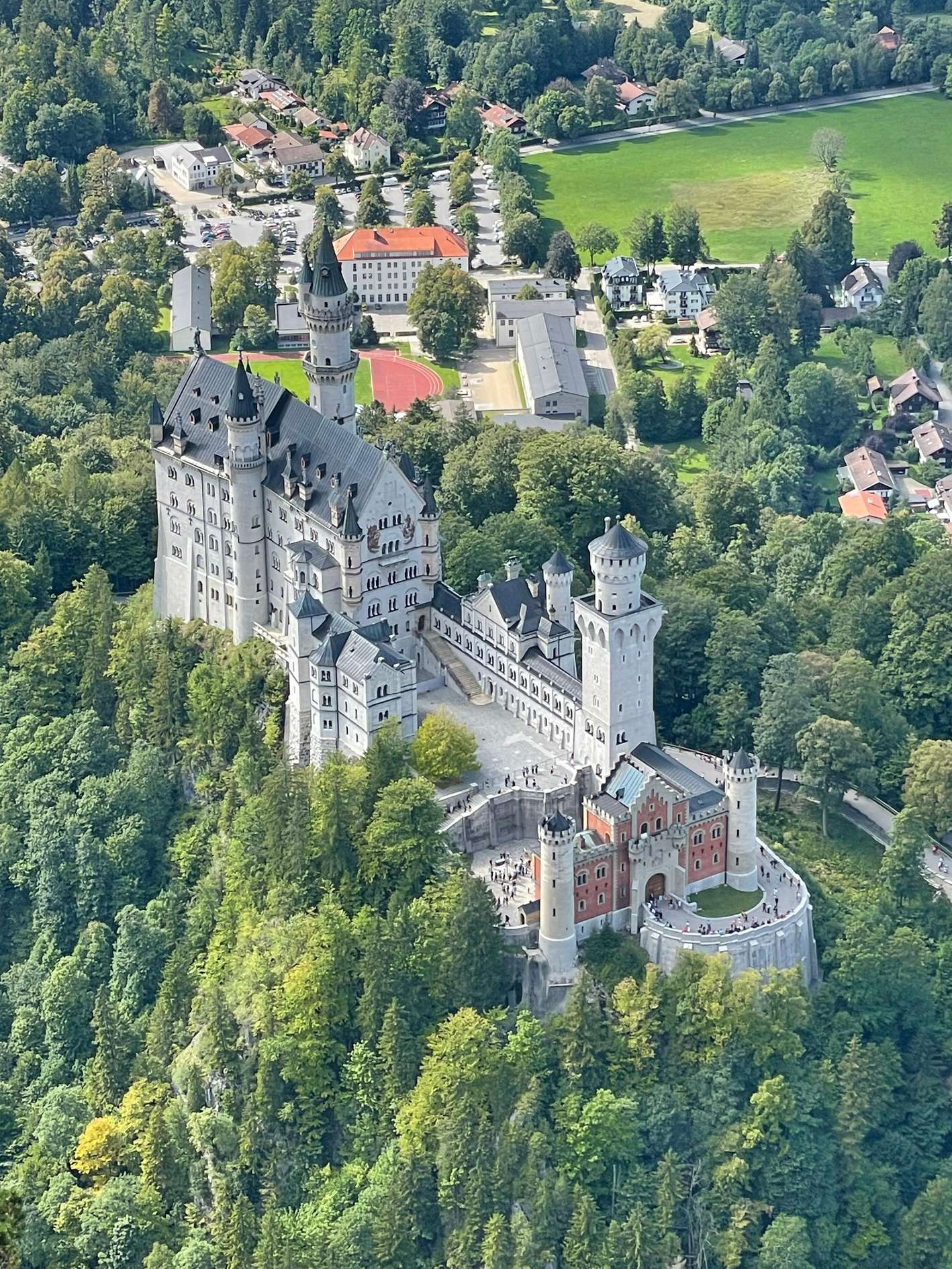
Coming from Switzerland? The Zurich options pair the castle with your Swiss stay and sort out the border drive.
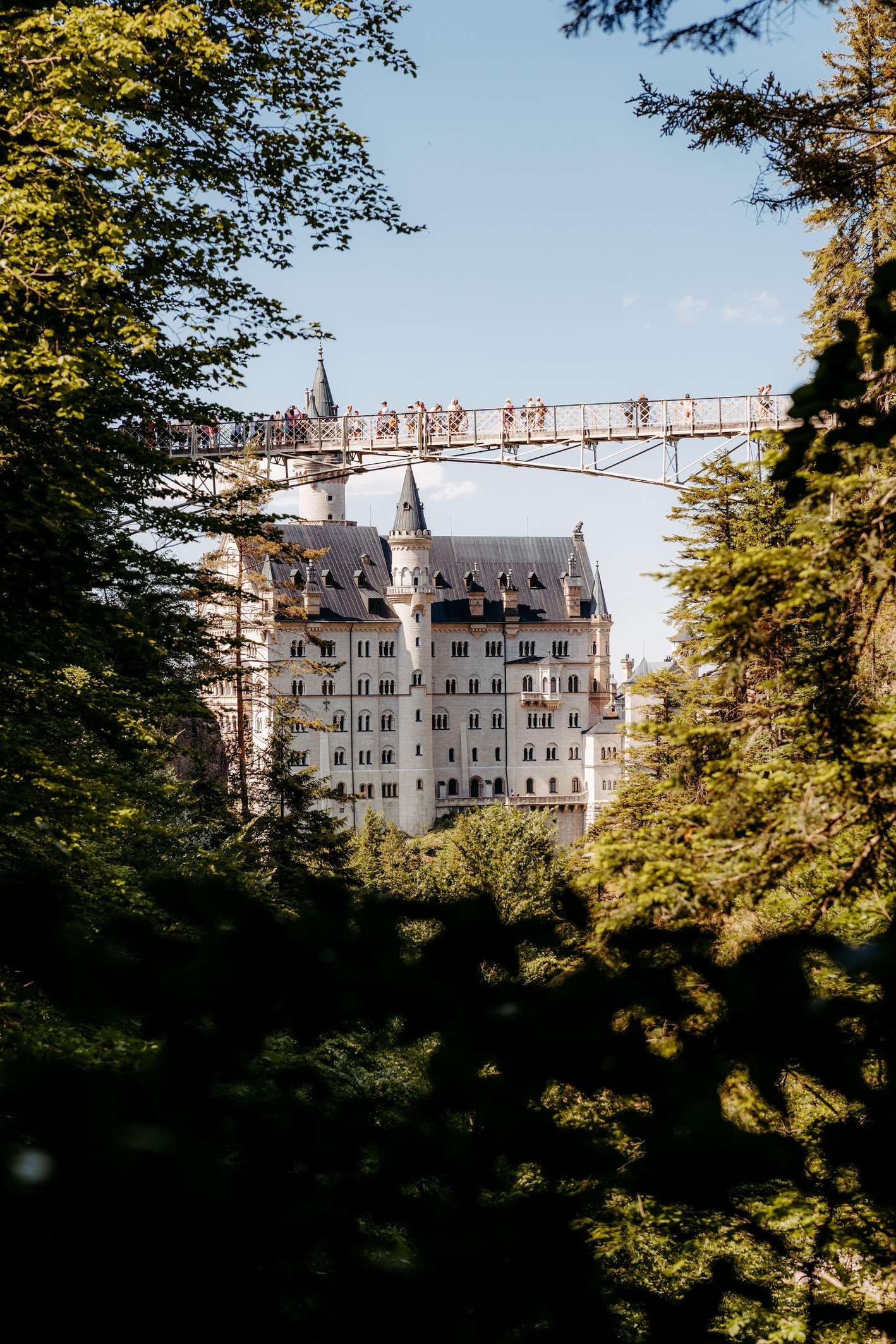
Every interior visit is a guided tour, and the castle tours page explains how the 30-minute visit inside runs.
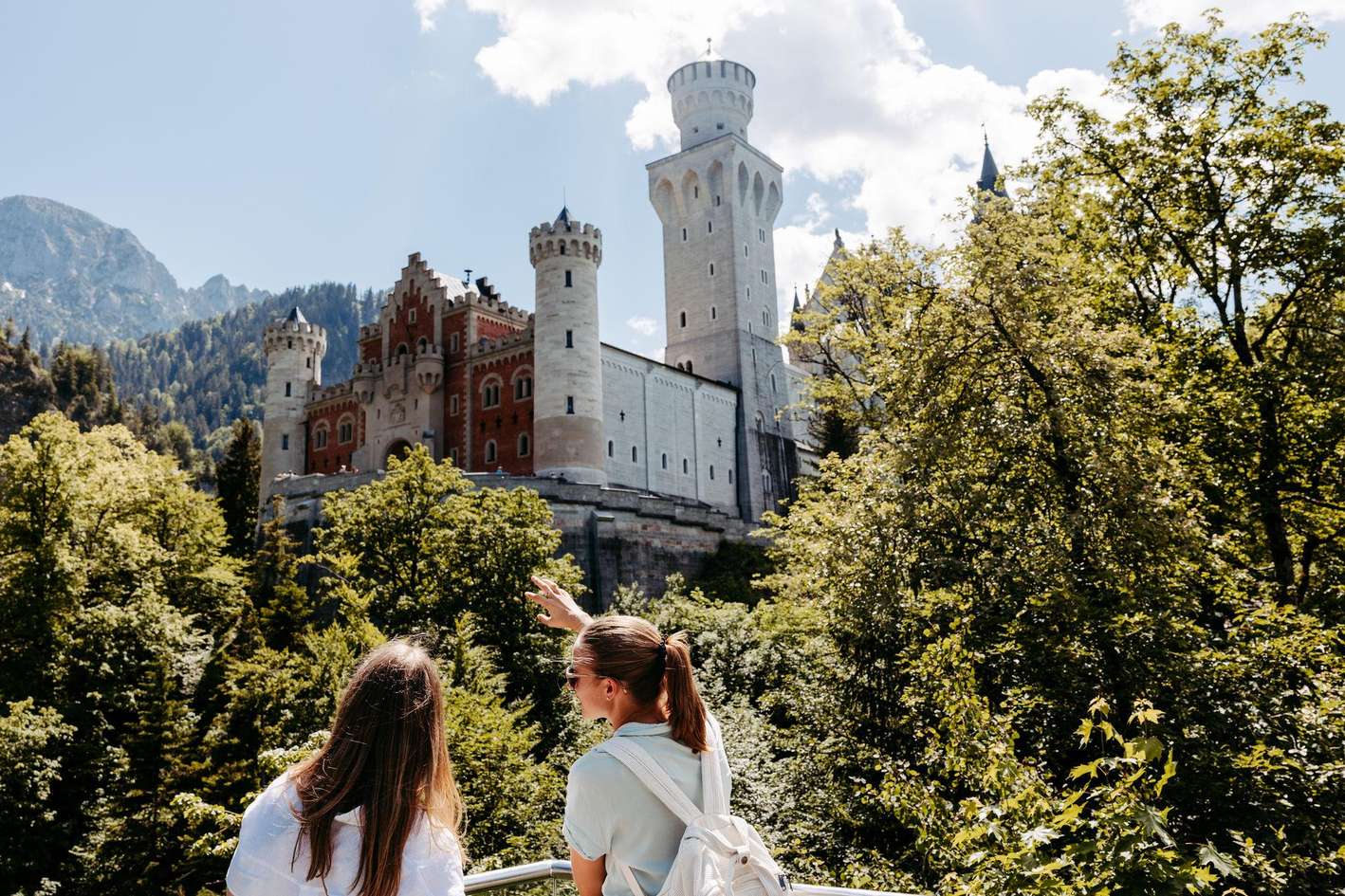
Prefer company on the road? Group tours from several Bavarian hubs bundle transport, tickets and commentary.

Timed entry slots start punctually, so the skip-the-line page shows how a reserved ticket fits a tight schedule.
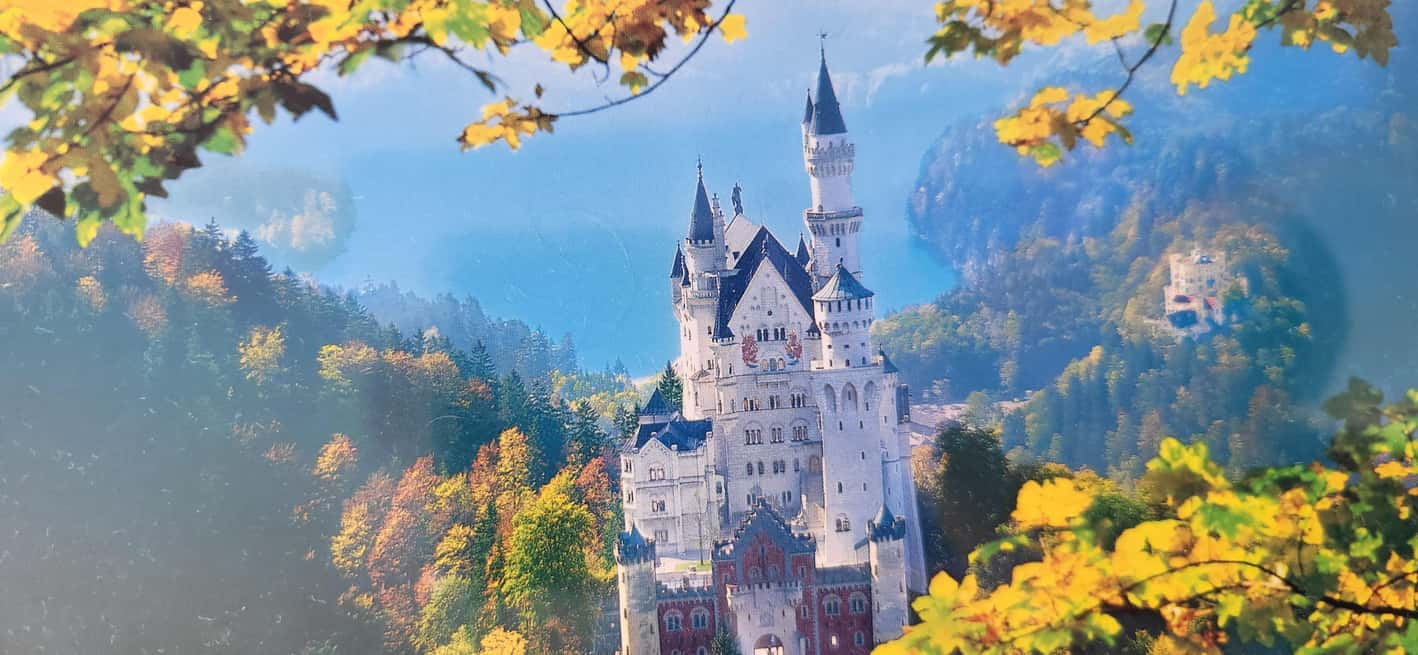
In summer you can trade the shuttle for pedals, and the bike tour page follows lakeside paths around Füssen.

King Ludwig built Linderhof too, and the combined day trips fit both royal residences into one long day.
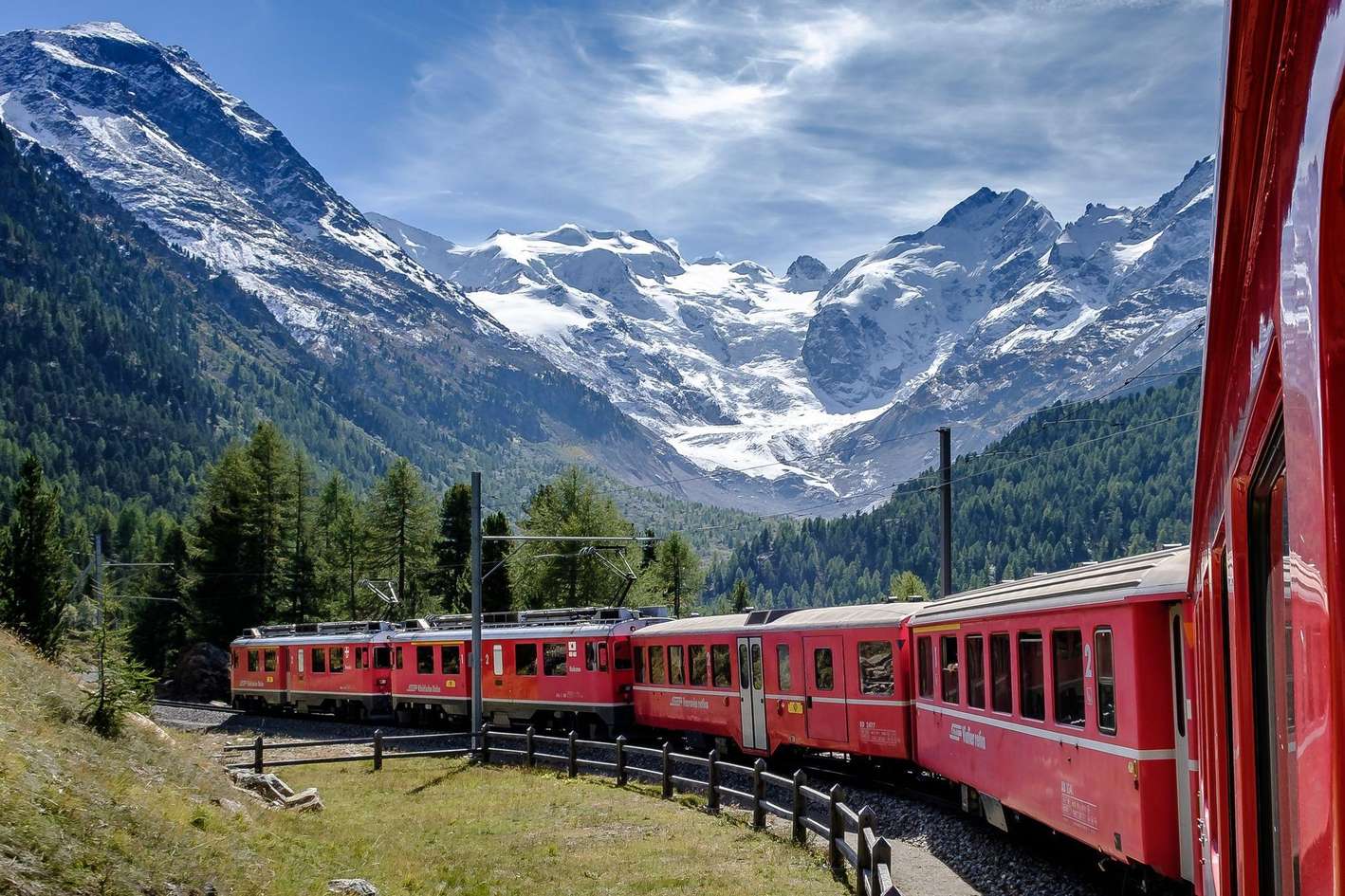
Public transit to Hohenschwangau takes several connections, and the getting-there page lays out every option.
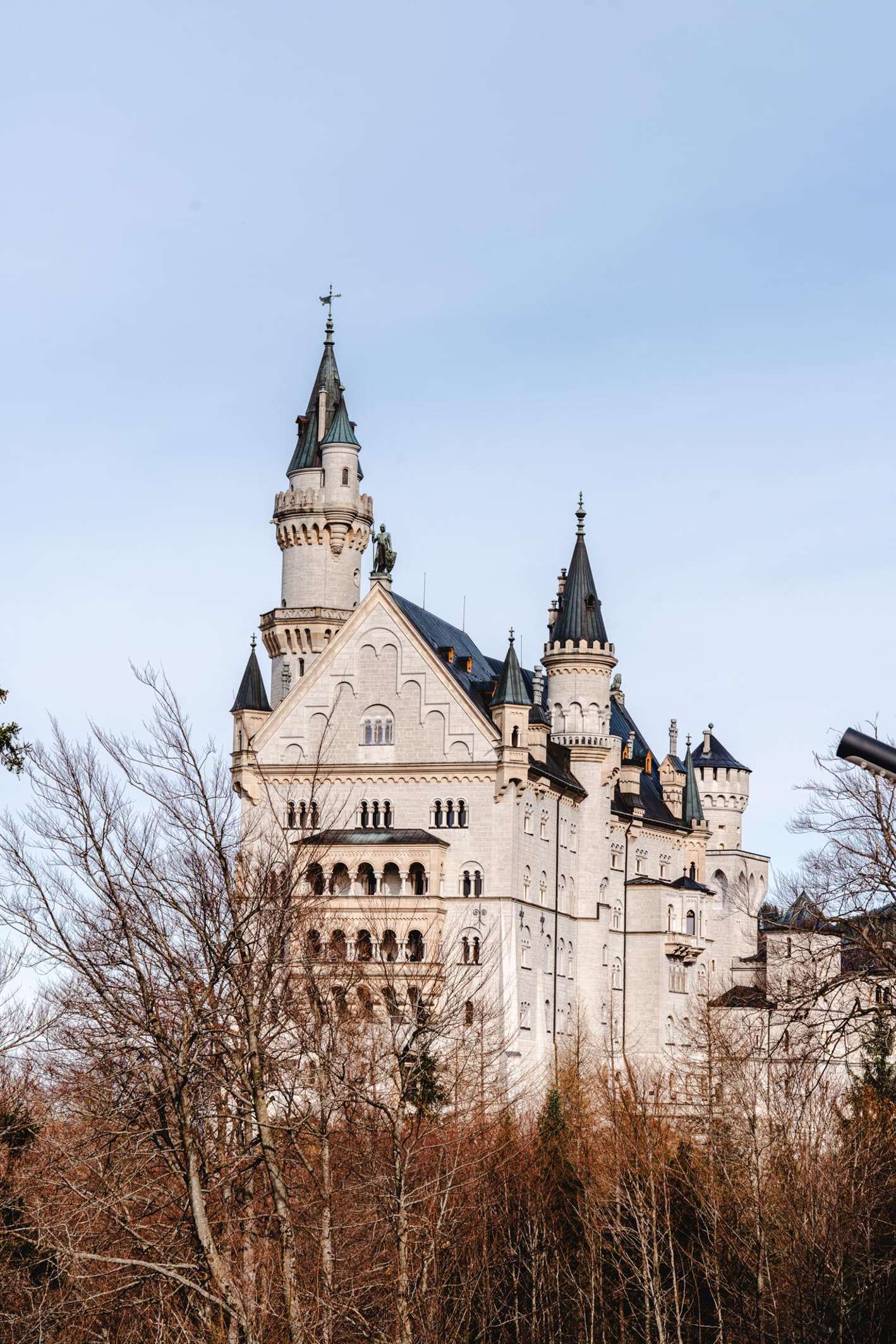
Tickets sell out months ahead in peak season, so the tickets page explains where and when to reserve yours.
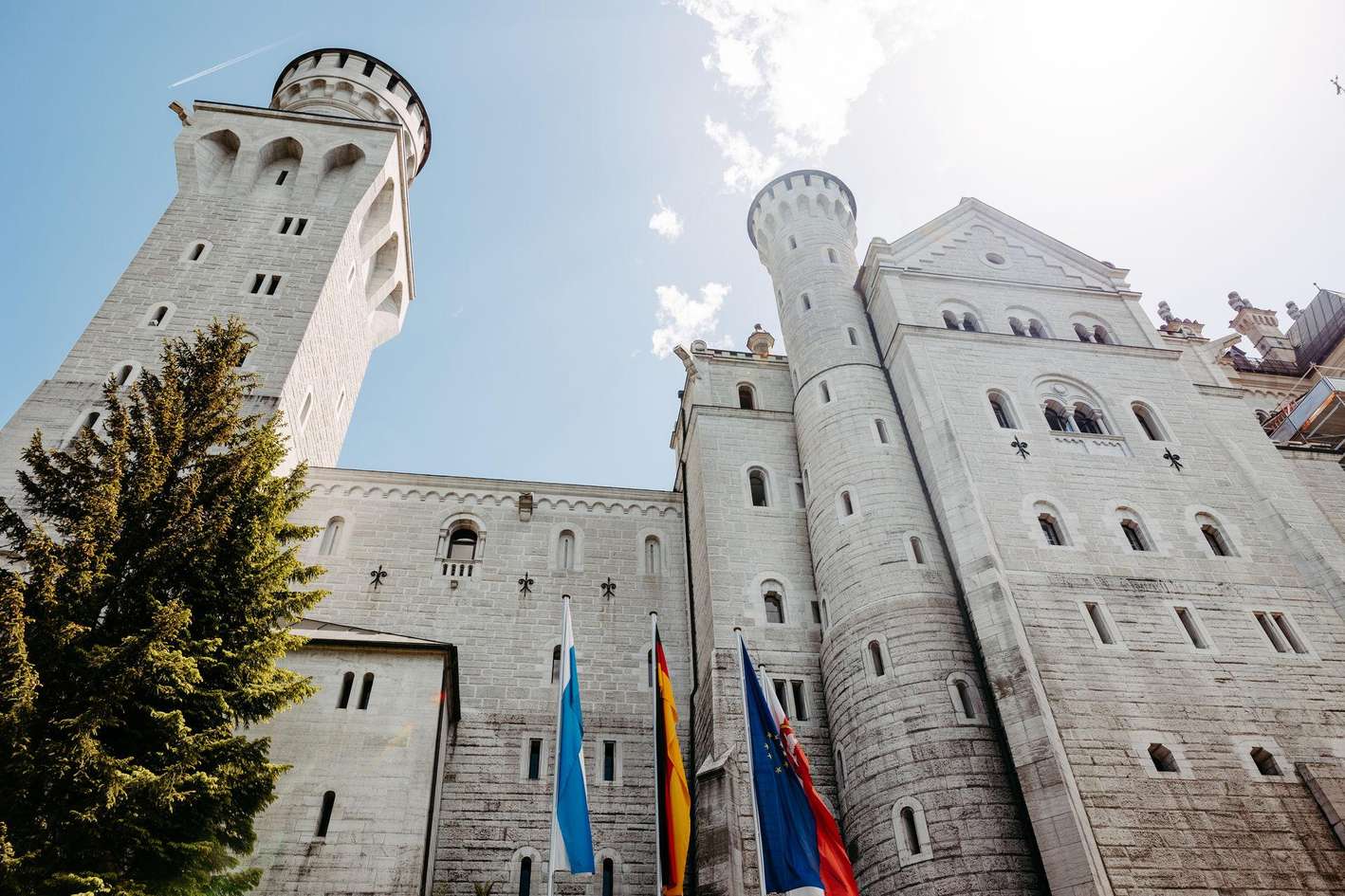
Winter visits come with colder air and shorter days, and the best time page weighs each season for you.

Strollers stay out of the castle rooms, and the visiting-with-kids page sets out the rules before you book.
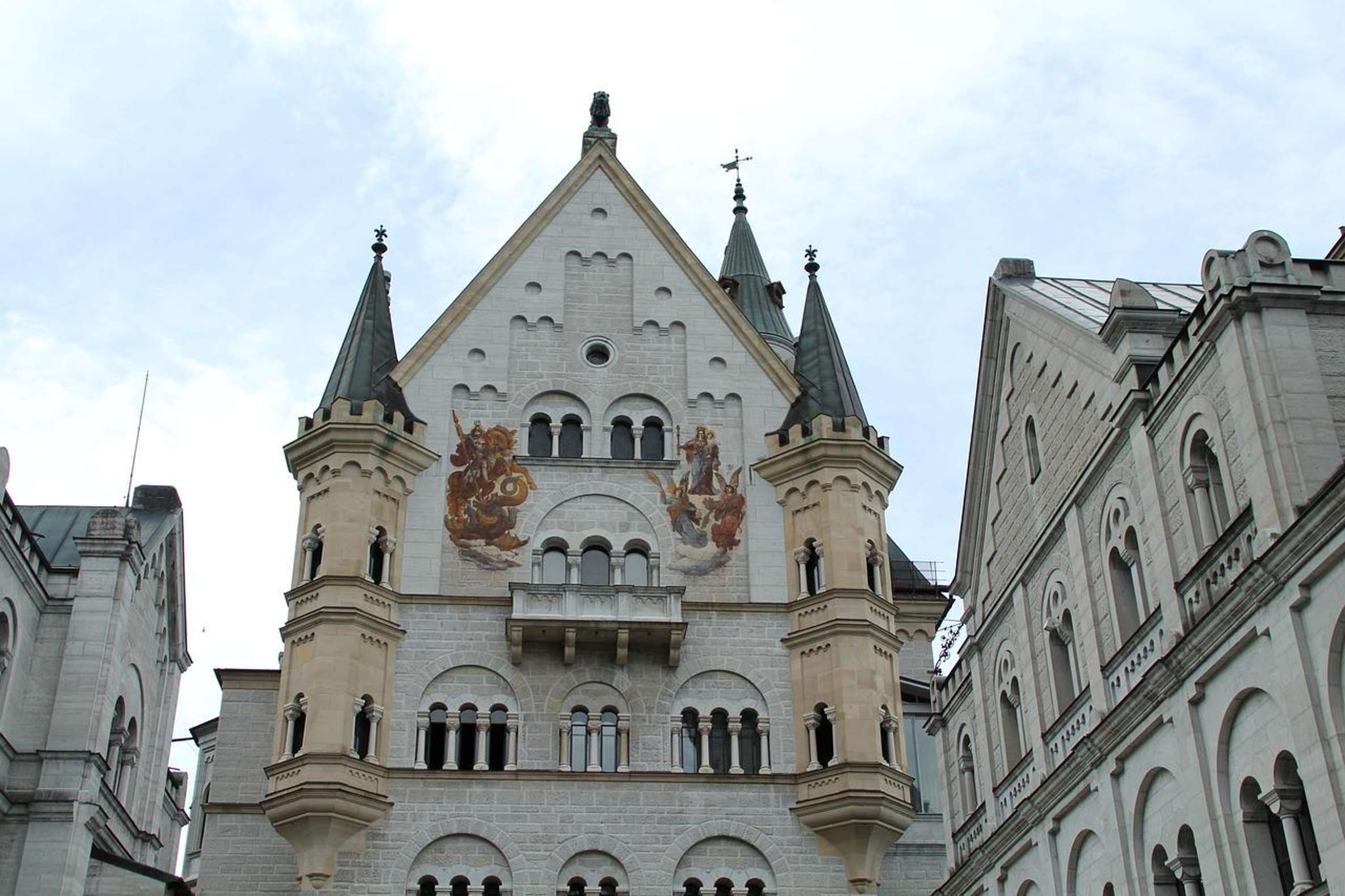
Private pickup in Innsbruck, a reserved castle slot and scenic stops like Highline 179 on the way, and you can cancel up to 24 hours ahead for a full refund.