
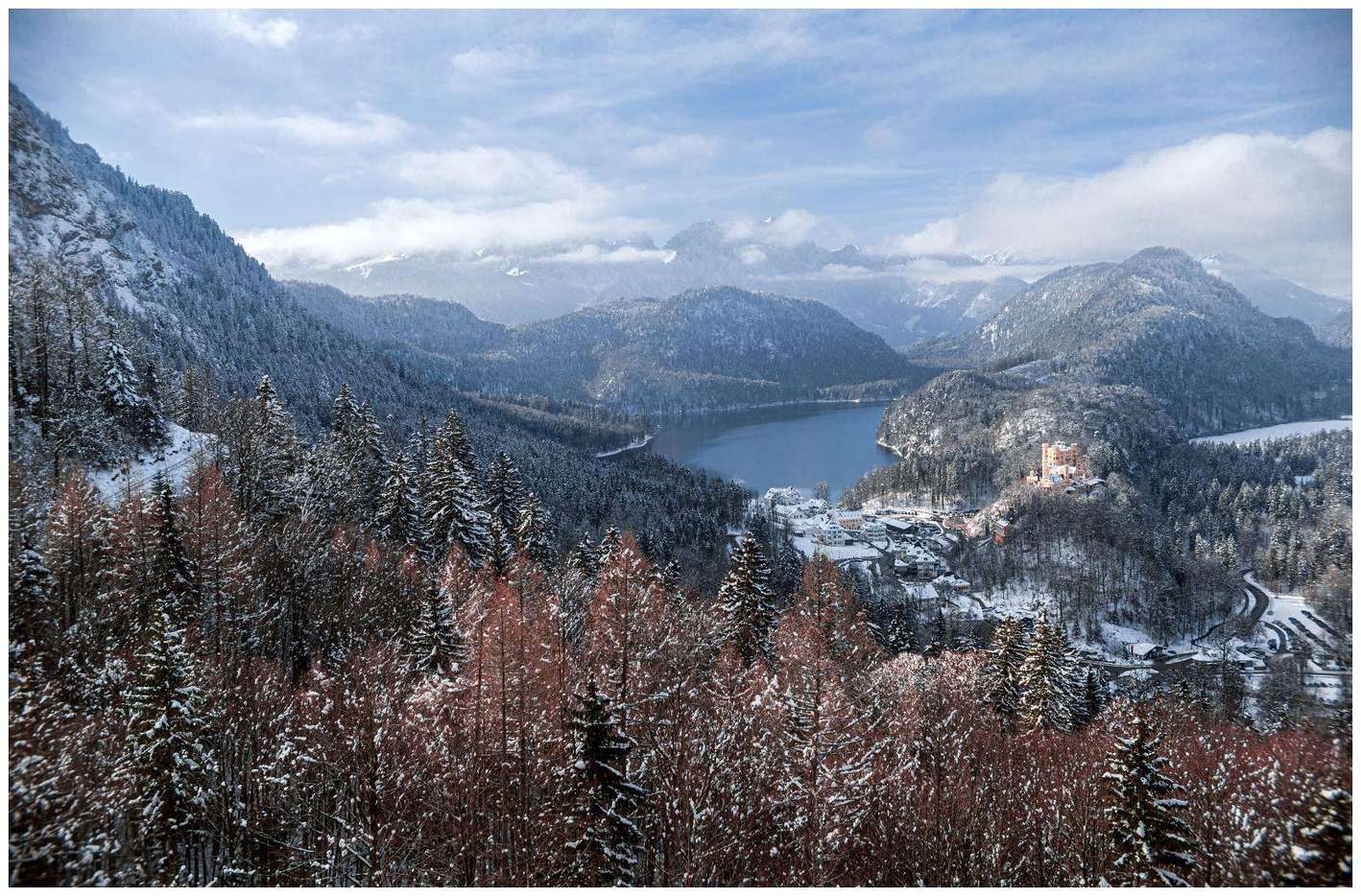
Likely to sell out
9 hours·English, Czech
5.0(24)
From Munich: Private Tour with Neuschwanstein Castle Entry
Free cancellationHotel pickup includedFull day private driver/guide
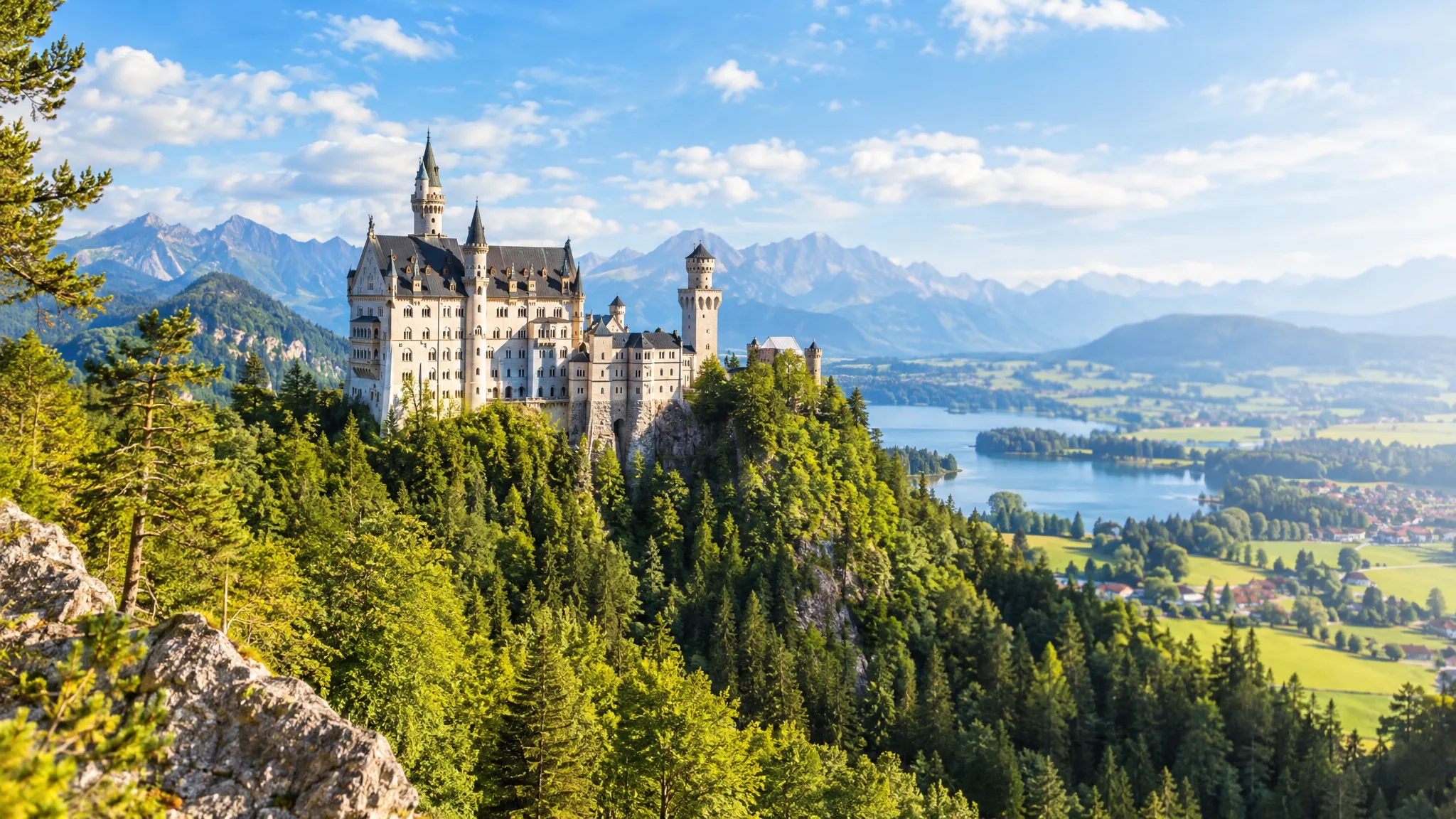
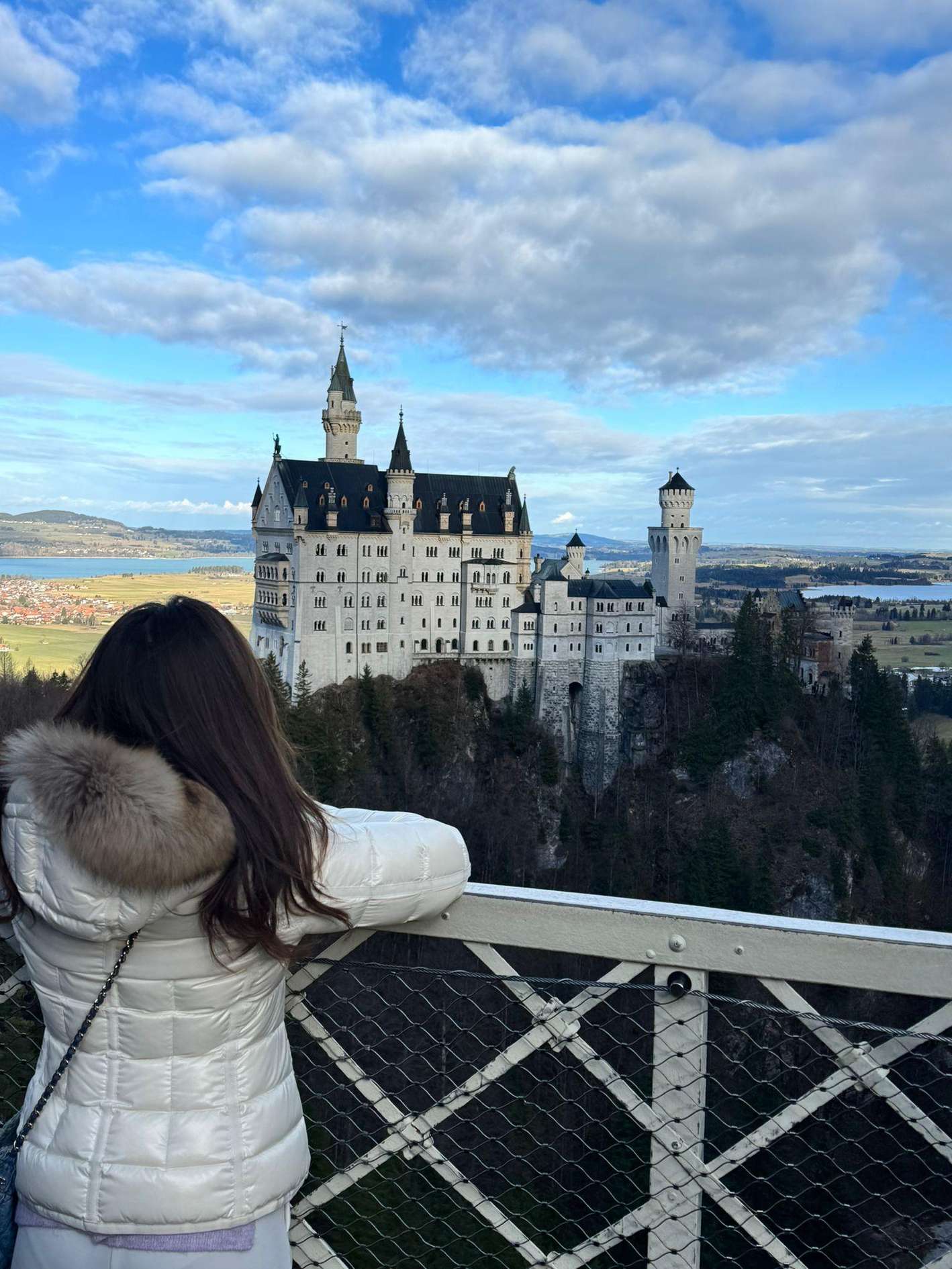
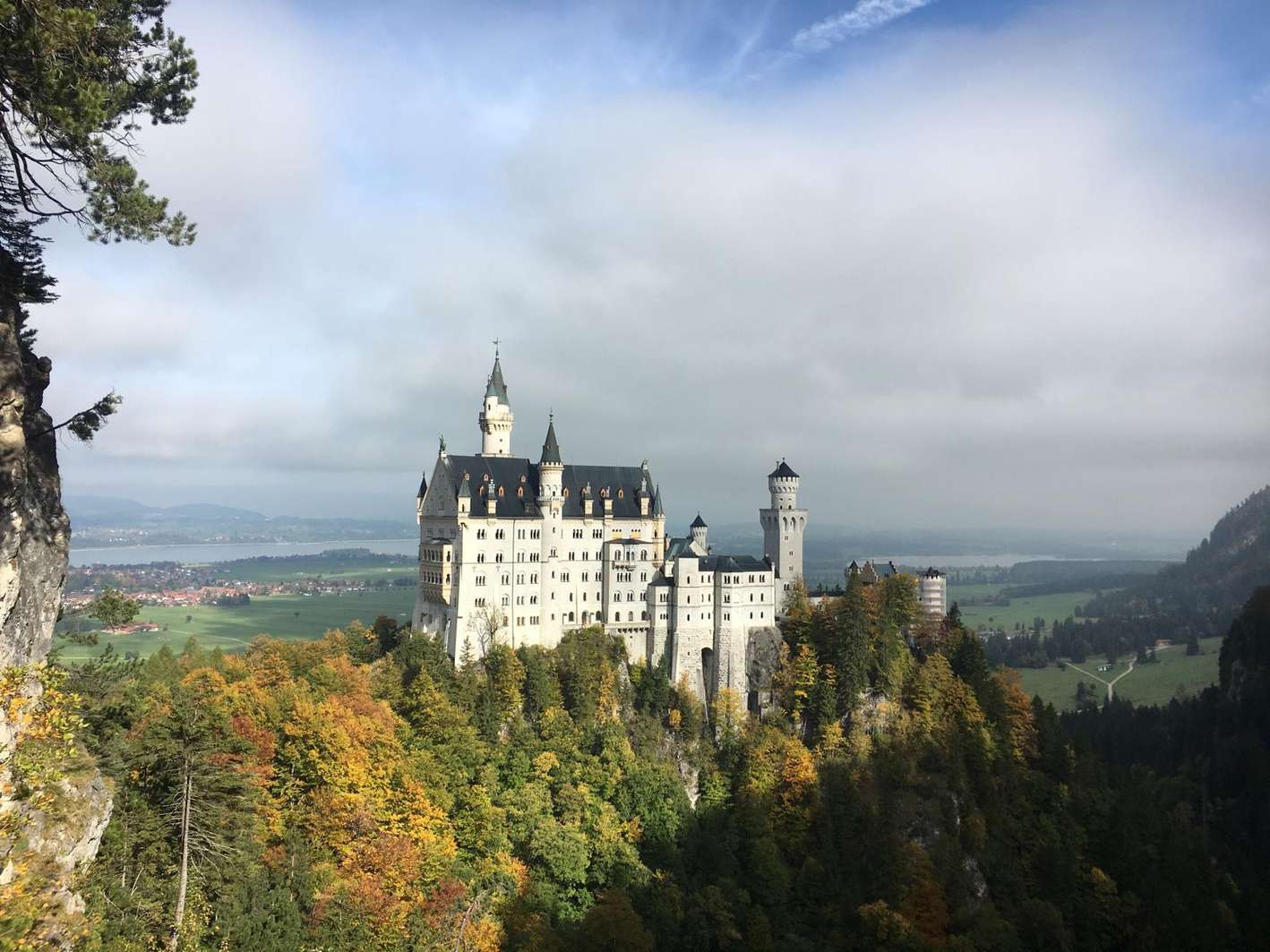
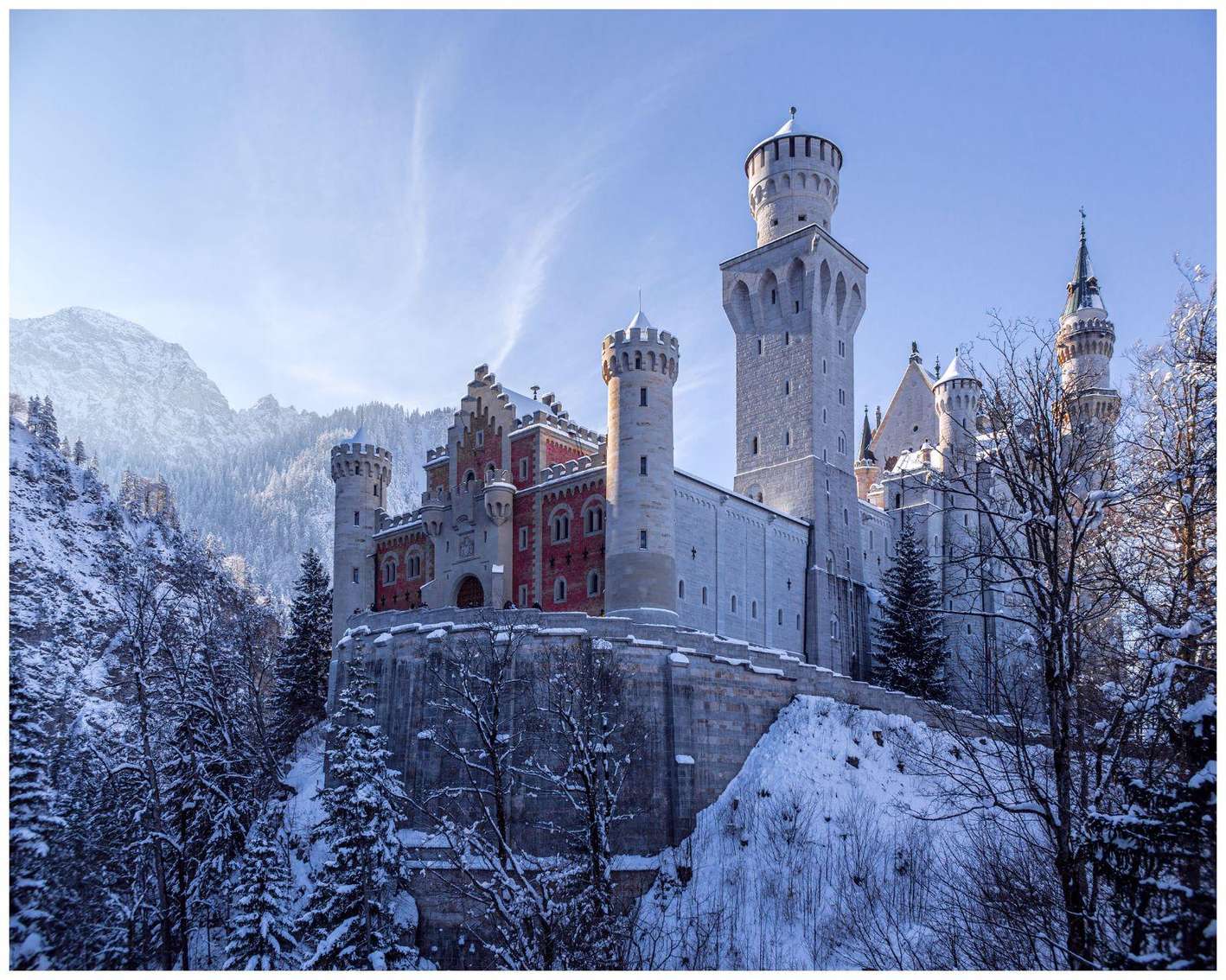
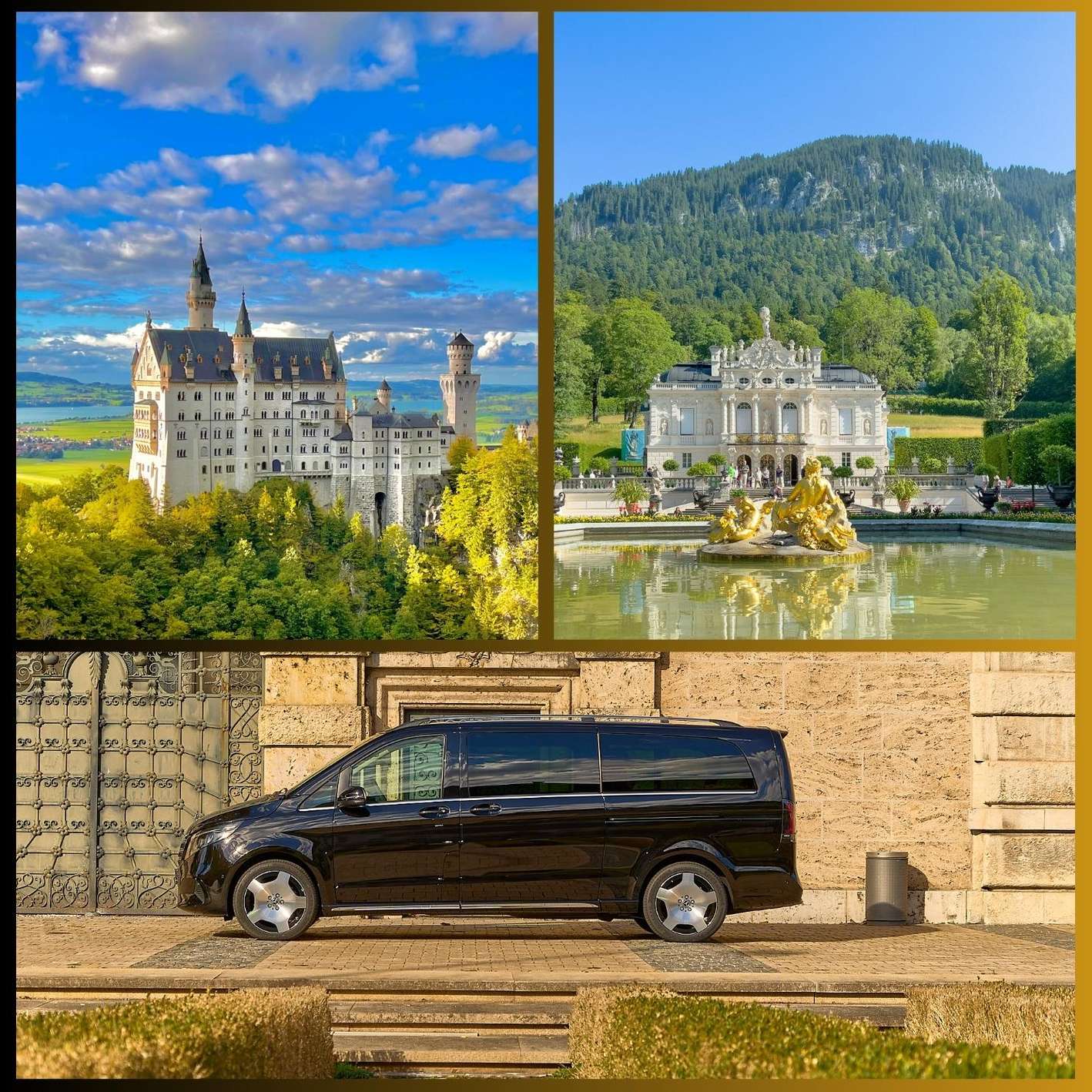
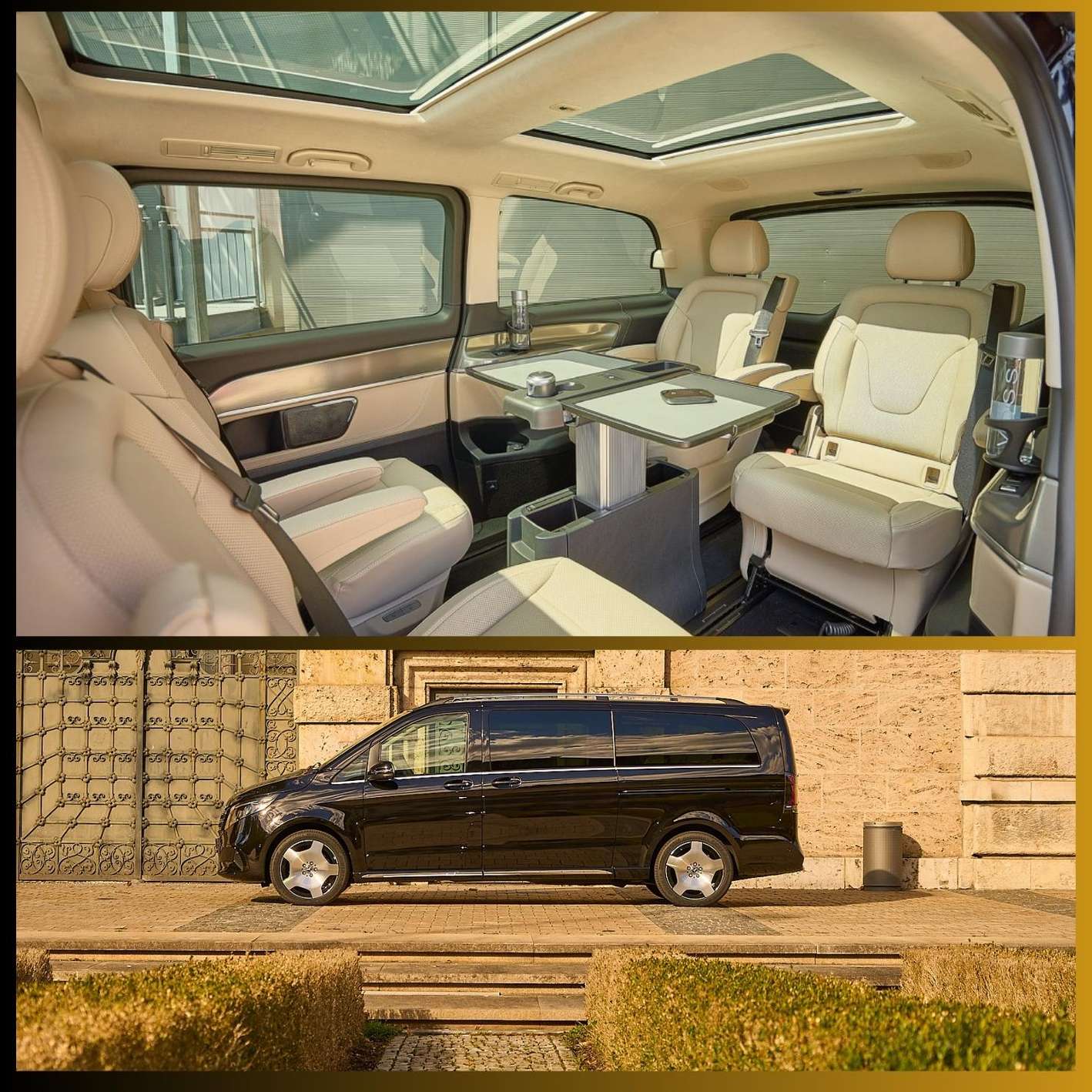
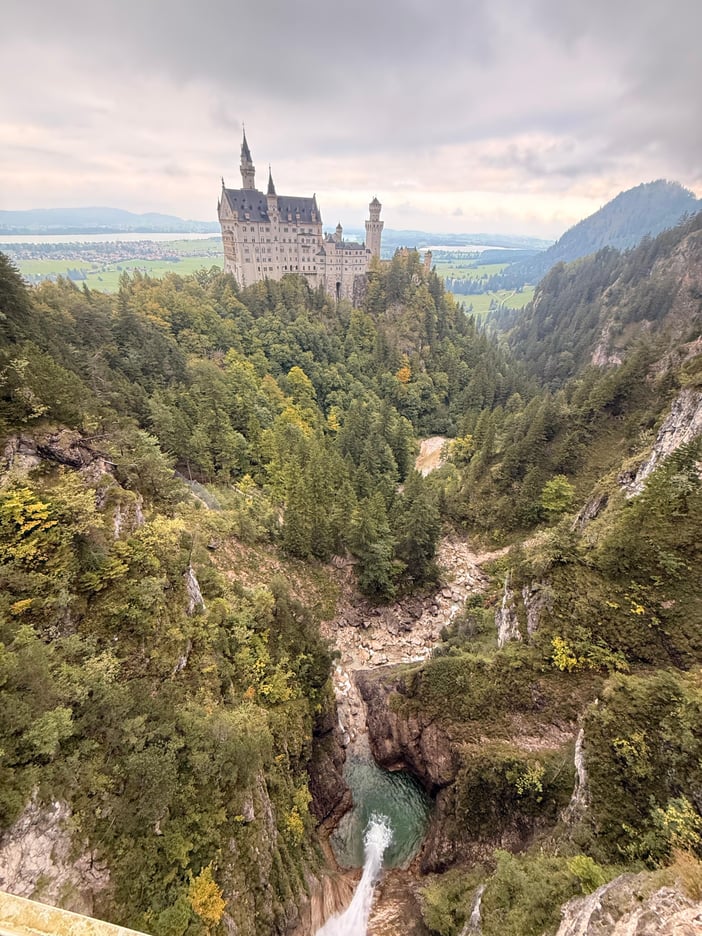
See Bavaria by road, castle first. Ride the Romantic Road with hotel pickup from Munich, cheese and sausages at a Bavarian farm, and the best picture of the day from Marien Bridge. Your guide books every ticket, so the timed entry you worried about is handled.

"Excellent trip. Our guide Aimin, a German native, spoke flawless English and was super knowledgeable. Small van tour, just 8 of us, way better than a big bus. Costs more but worth it."
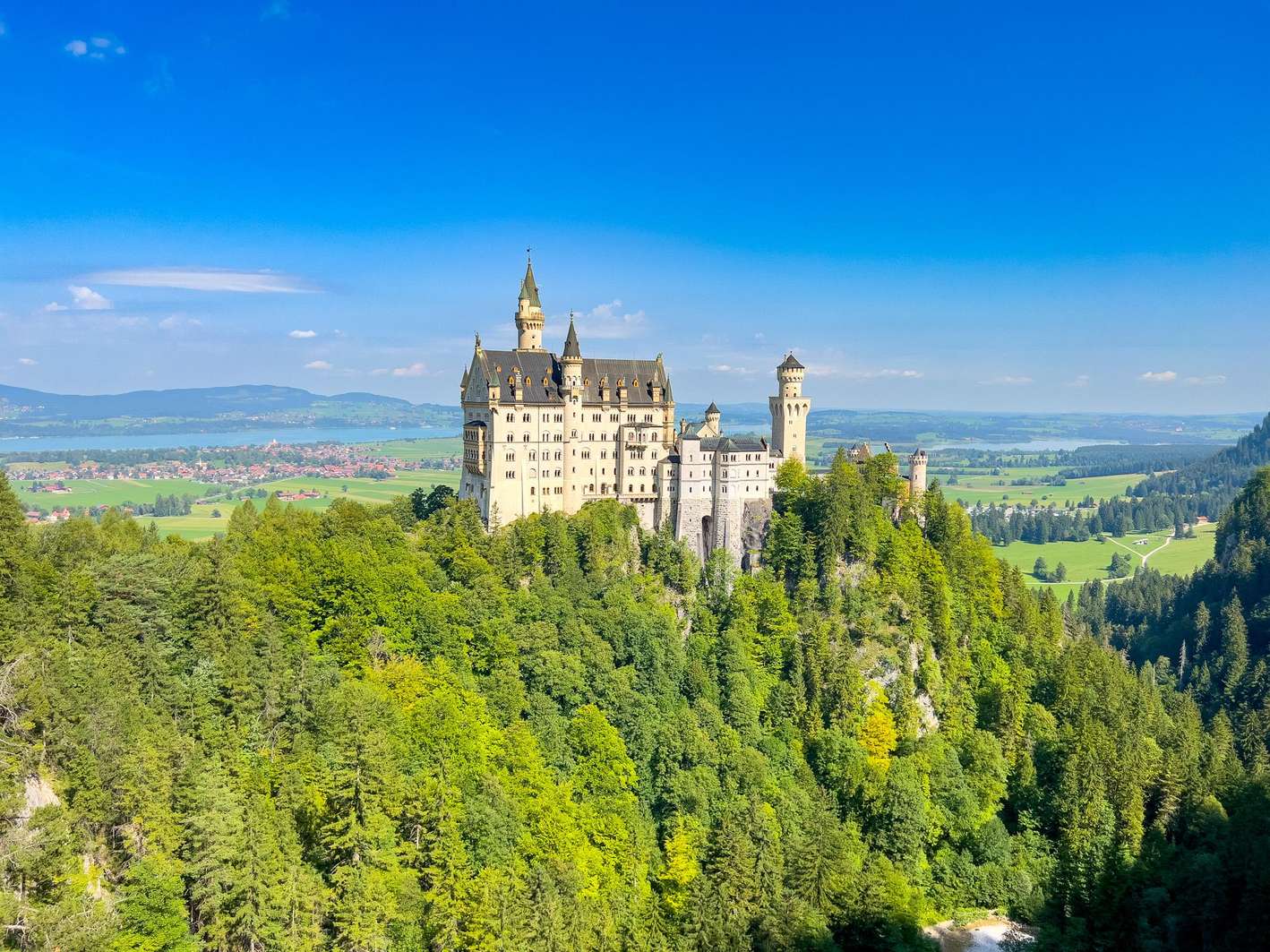
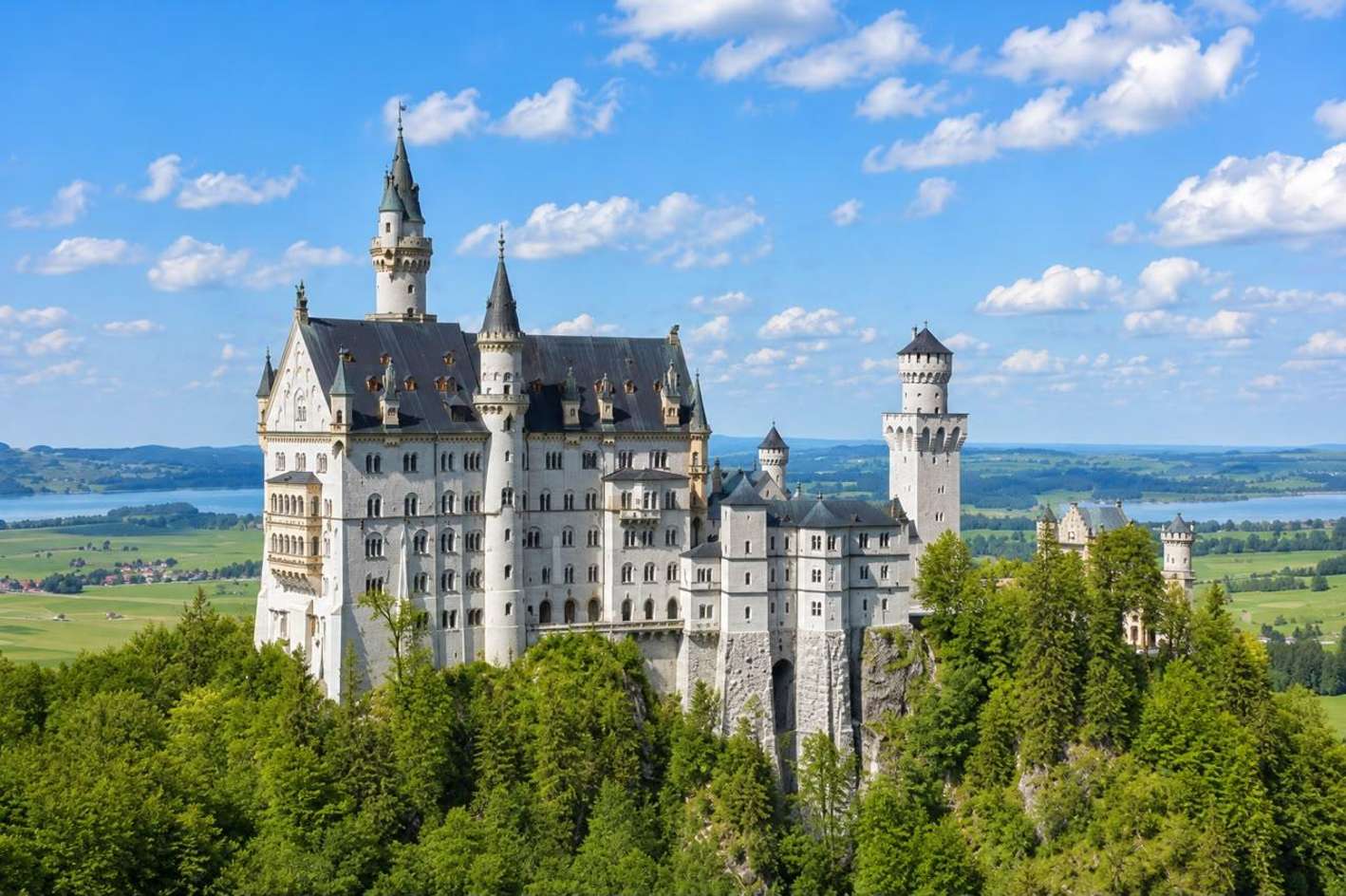
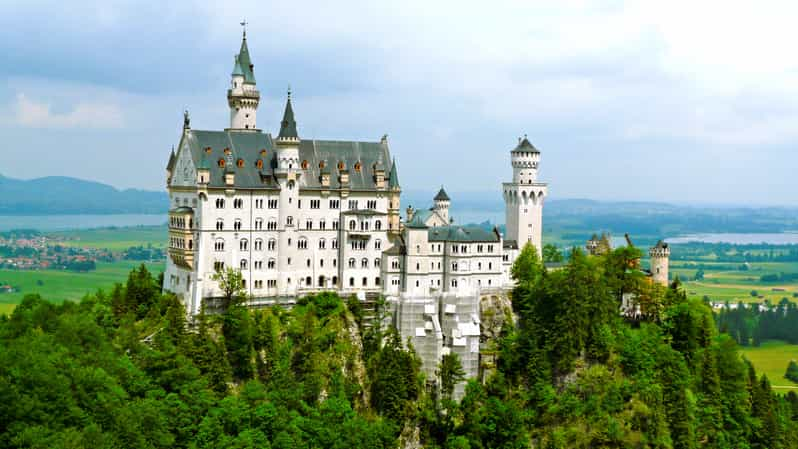
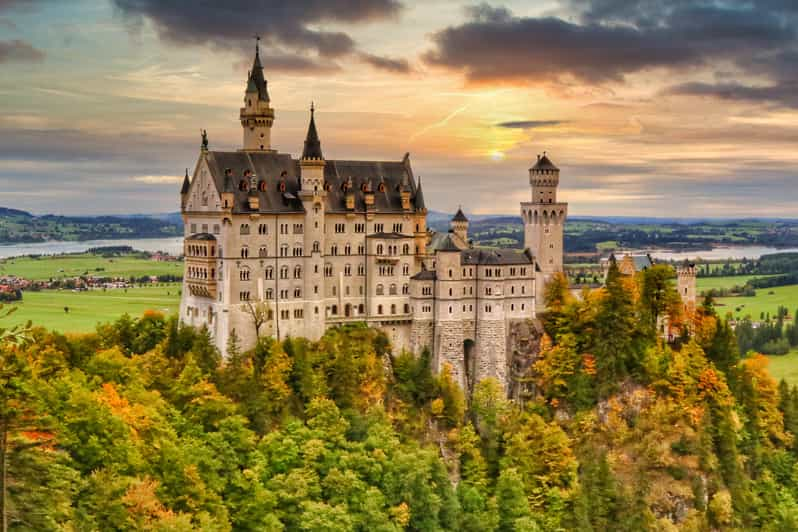

Munich sends out the most Neuschwanstein departures of any hub, and about 128 kilometres of road stand between them and the castle.
Read the guide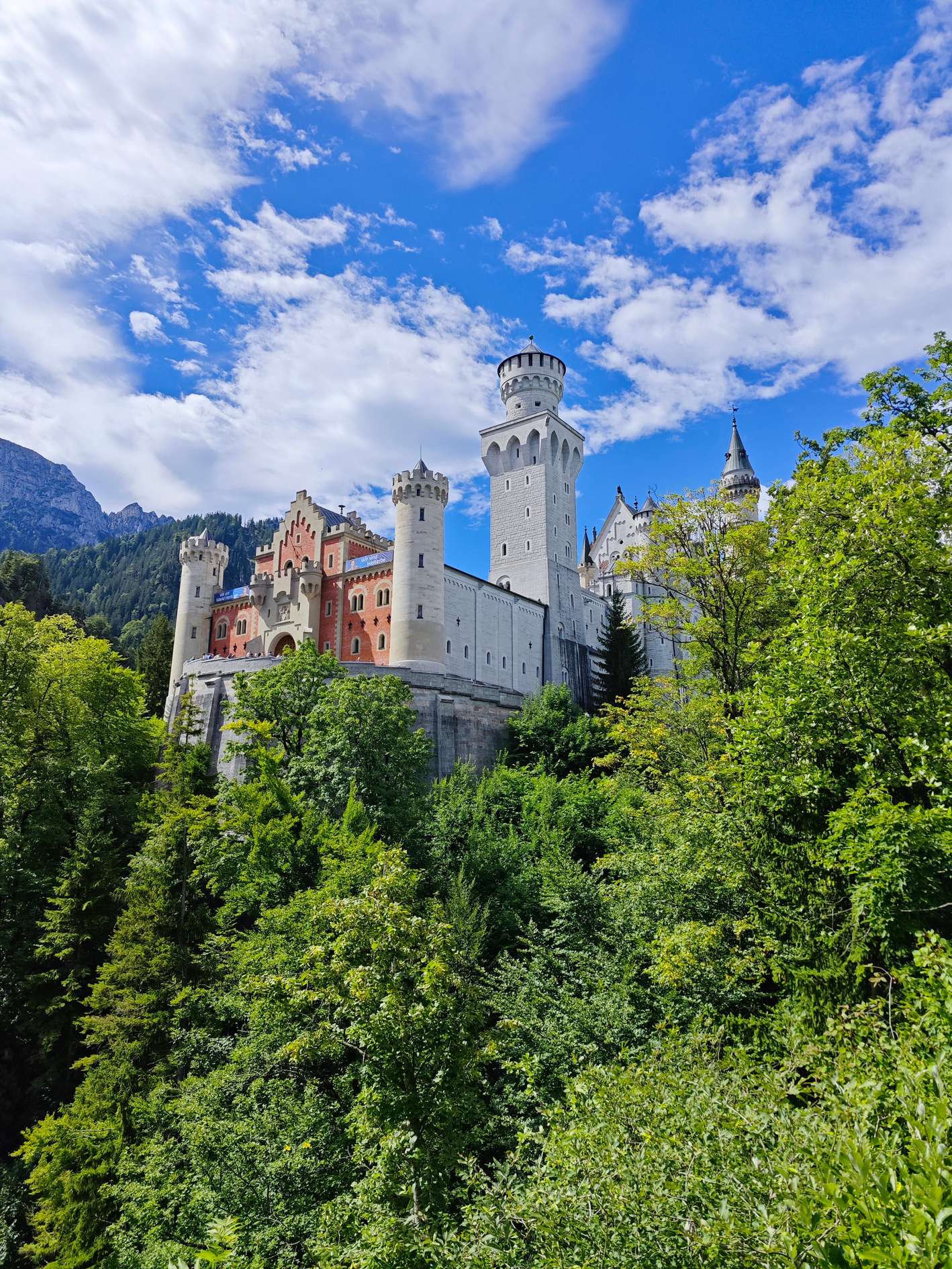
Stay in Füssen and the castle is a 13-minute drive or a flat bike ride away, before the coaches from Munich arrive.
Read the guide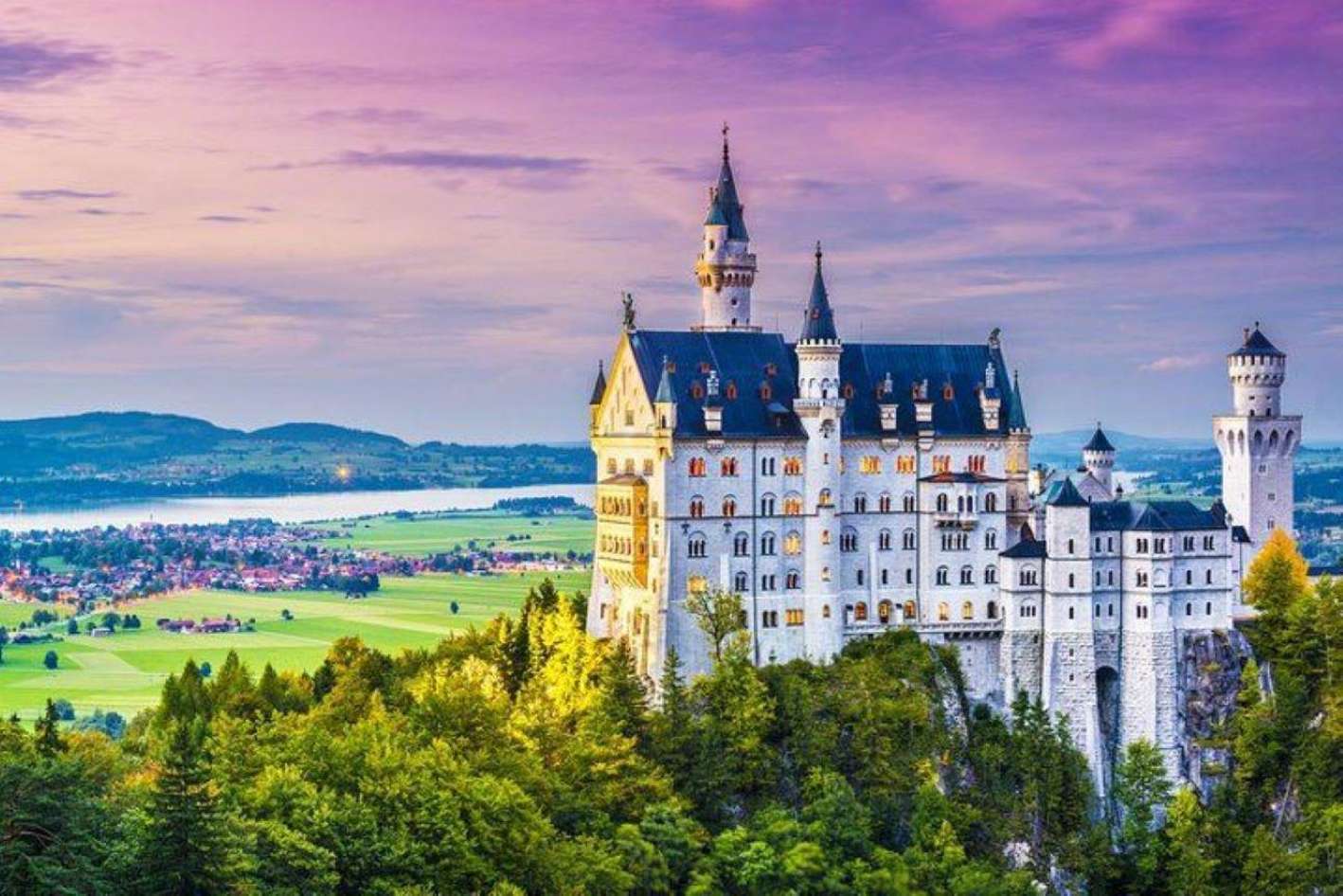
About 62 kilometres and roughly 70 minutes of alpine road separate Garmisch from the castle, and an express tour leaves from the station.
Read the guide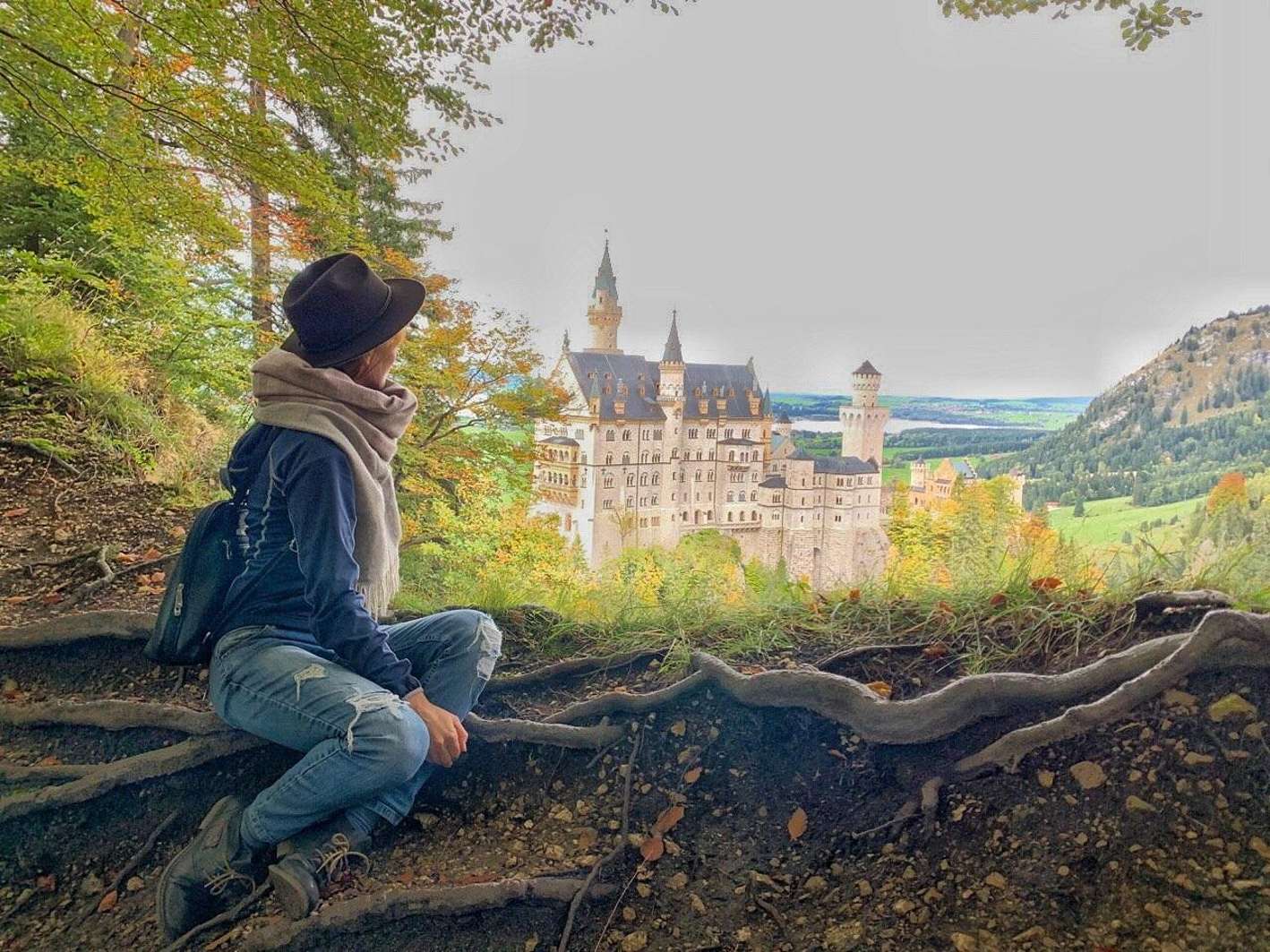
Innsbruck drivers reach the castle in under two hours over the Fern Pass; the train-and-bus route takes nearly five.
Read the guide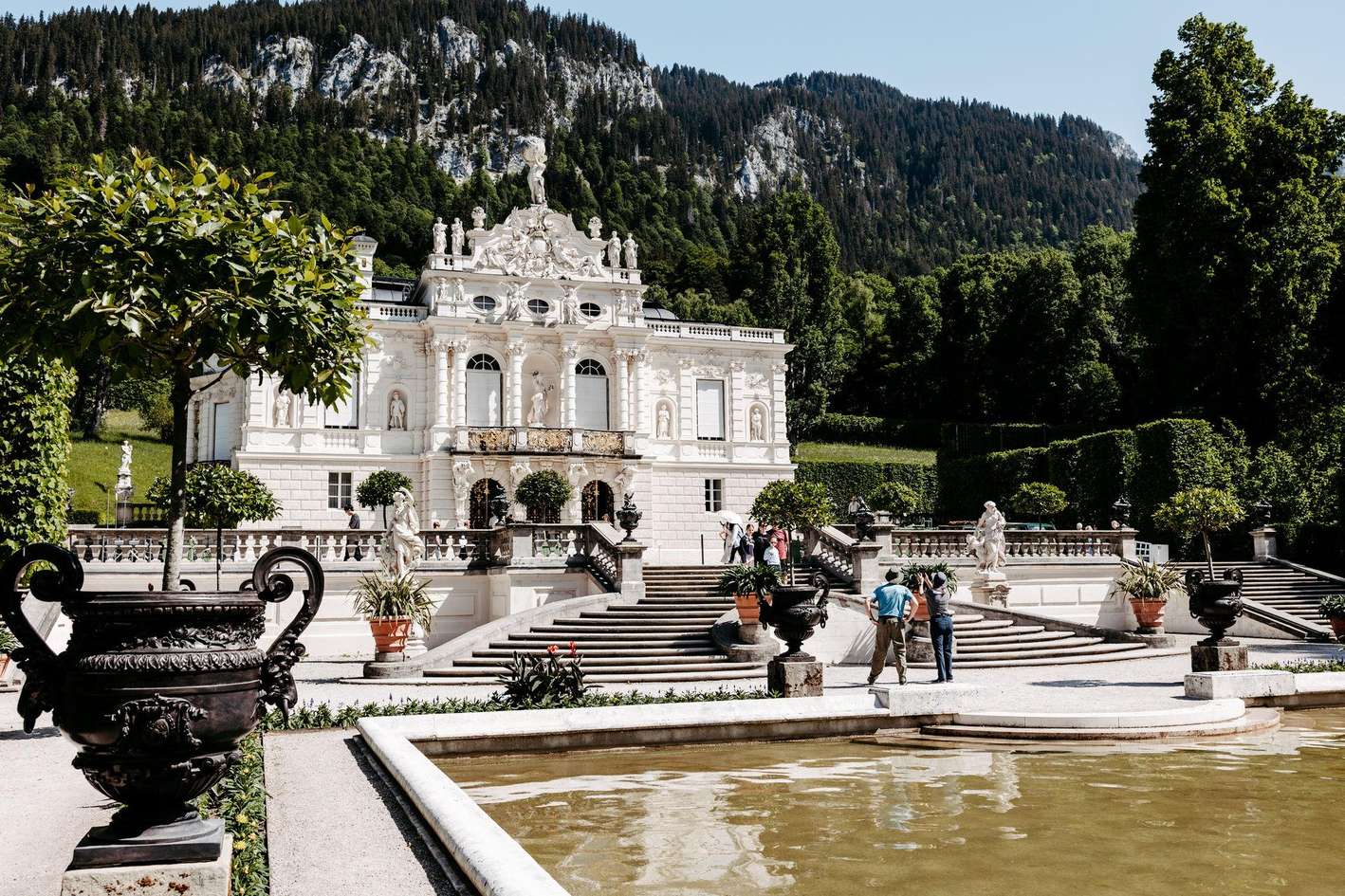
Salzburg has no direct Neuschwanstein tour. The fix is a train to Munich and a coach from there.
Read the guide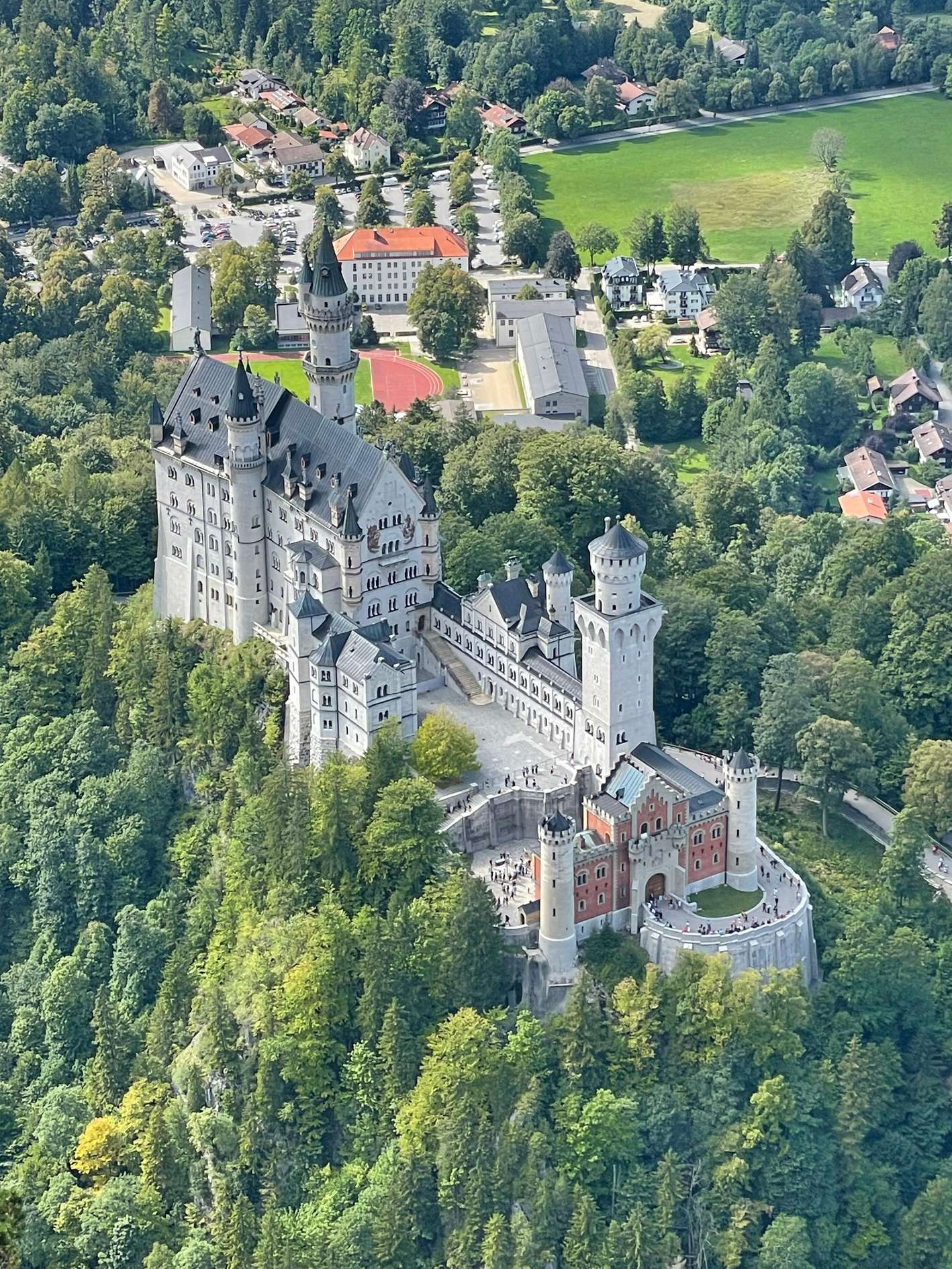
Zurich sits about 2.5 hours of driving from the castle, and a private tour with lunch turns it into one steady day.
Read the guideSame castle, different roads. Start from the hub you are staying in and the routes, tours and timings all change.
The widest choice of tours, from shared coaches to private vans with hotel pickup
The A96 runs southwest out of Munich towards Landsberg am Lech, and the B17 carries you the rest of the way to Hohenschwangau. Without traffic the drive takes about two hours, and you can see the castle from the road as the village comes into view.
Leave before 7:30 am on a summer weekend and the route via Lake Starnberg stays clear of Munich drivers headed for the lakes.
The catch is the last stretch. Cars stop in the valley lots at Hohenschwangau, which can fill by 9:30 am in peak summer, and the castle entrance needs a shuttle, a carriage or a steep walk.
A private van tour removes that whole problem, and some operators hold castle tickets even after public slots sell out.
9 hours · ★ 5.0 (24)From Munich: Private Tour with Neuschwanstein Castle EntryFrom $615 10 hours · ★ 5.0 (19)Private Neuschwanstein Tour from Munich in a Luxury Van for Up to 6 PeopleFrom $330 12 hours · ★ 5.0 (8)Zugspitze, Eibsee, Highline179 & Neuschwanstein TourFrom $805 /group 9.5 hours · ★ 5.0 (6)Munich - Neuschwanstein Castle + Linderhof Private TourFrom $548 Four kilometres from the gates, with walks, bike paths and the earliest starts
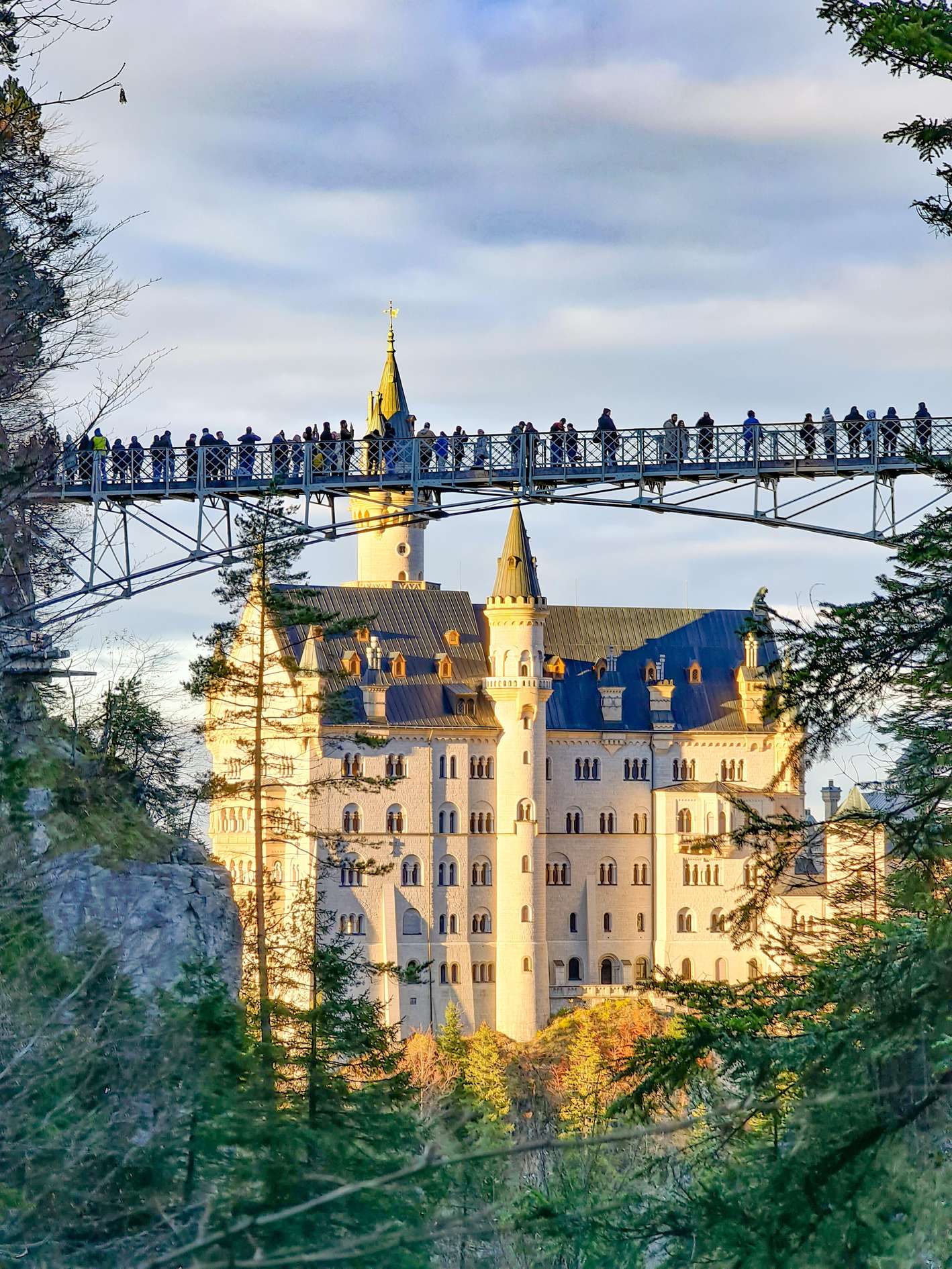
Füssen sits closer to Neuschwanstein than any tour bus from Munich: 5.6 kilometres and one steep hill. Bus 73 or 78 runs from the station in about 15 minutes, or you hire a bike and ride a dedicated path to the valley.
People who stay here grab the 9 am entry slots while the day trippers are still on the motorway.
The town itself is worth the base. The German Alpine Road meets the Romantic Road here, and a guided scenic walk from the old town to the castle passes lakes and waterfalls the bus crowd never sees. Book the timed castle ticket before you leave town, because slots can sell out months ahead.
The shortest drive of the big hubs, with an option to skip winter roads entirely
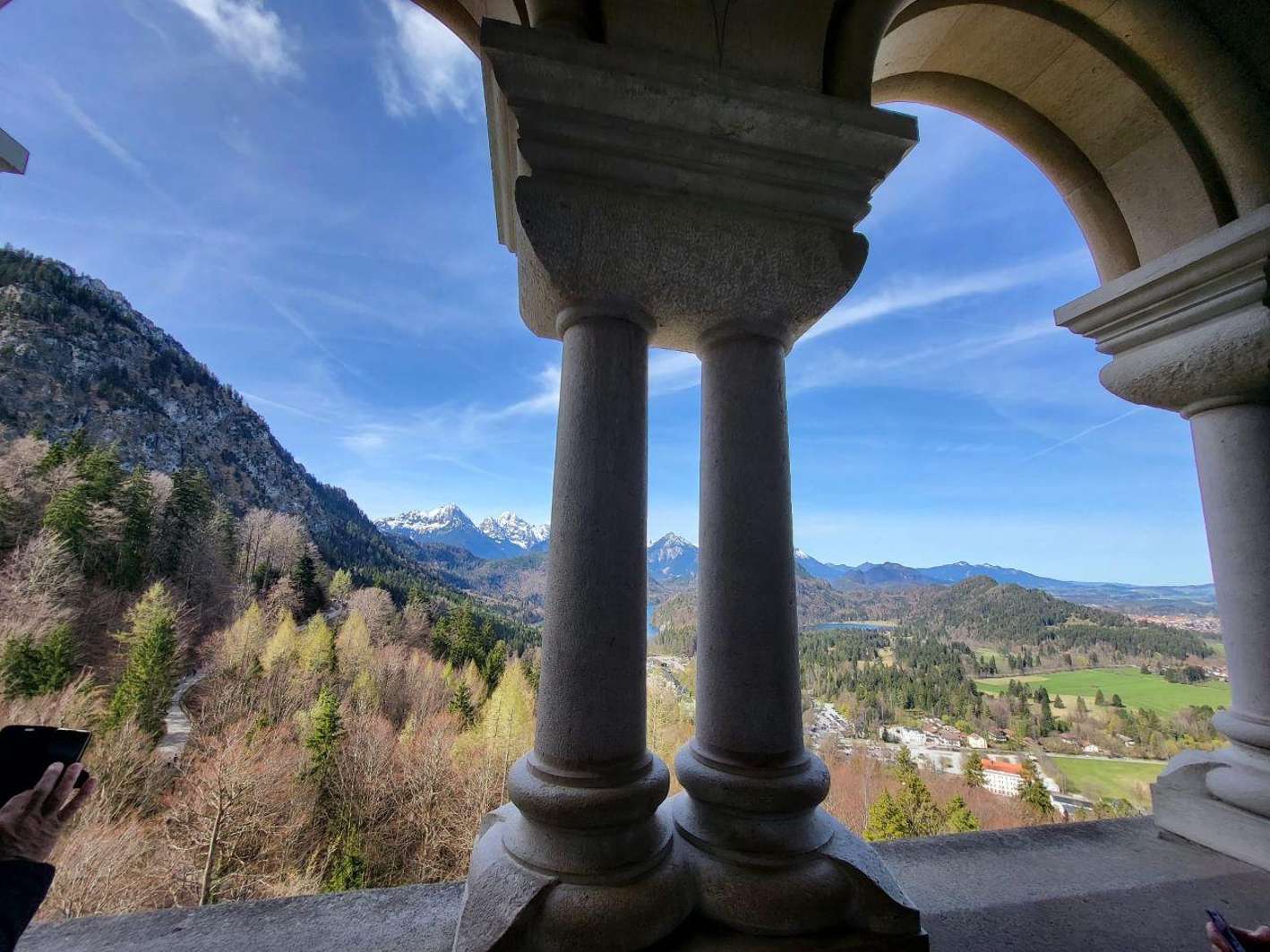
The drive from Garmisch-Partenkirchen crosses into Austria by the B187 and B179 past Ehrwald and Reutte before re-entering Bavaria, taking about 70 minutes over 62 kilometres without traffic.
A German-only alternative sticks to the B2 and B17. Between November and April those mountain curves turn icy, so rental drivers should confirm winter tyres with the provider.
If you would rather not drive at all, an express tour departs from the central station on Bahnhofstraße with a skip-the-line castle ticket, and a private combined tour links the castle with Zugspitze and Highline 179 in a single 12-hour day. Skipping the detour through Munich saves nearly two hours each way.
Under two hours by road over the Fern Pass, past lakes and a valley photo point
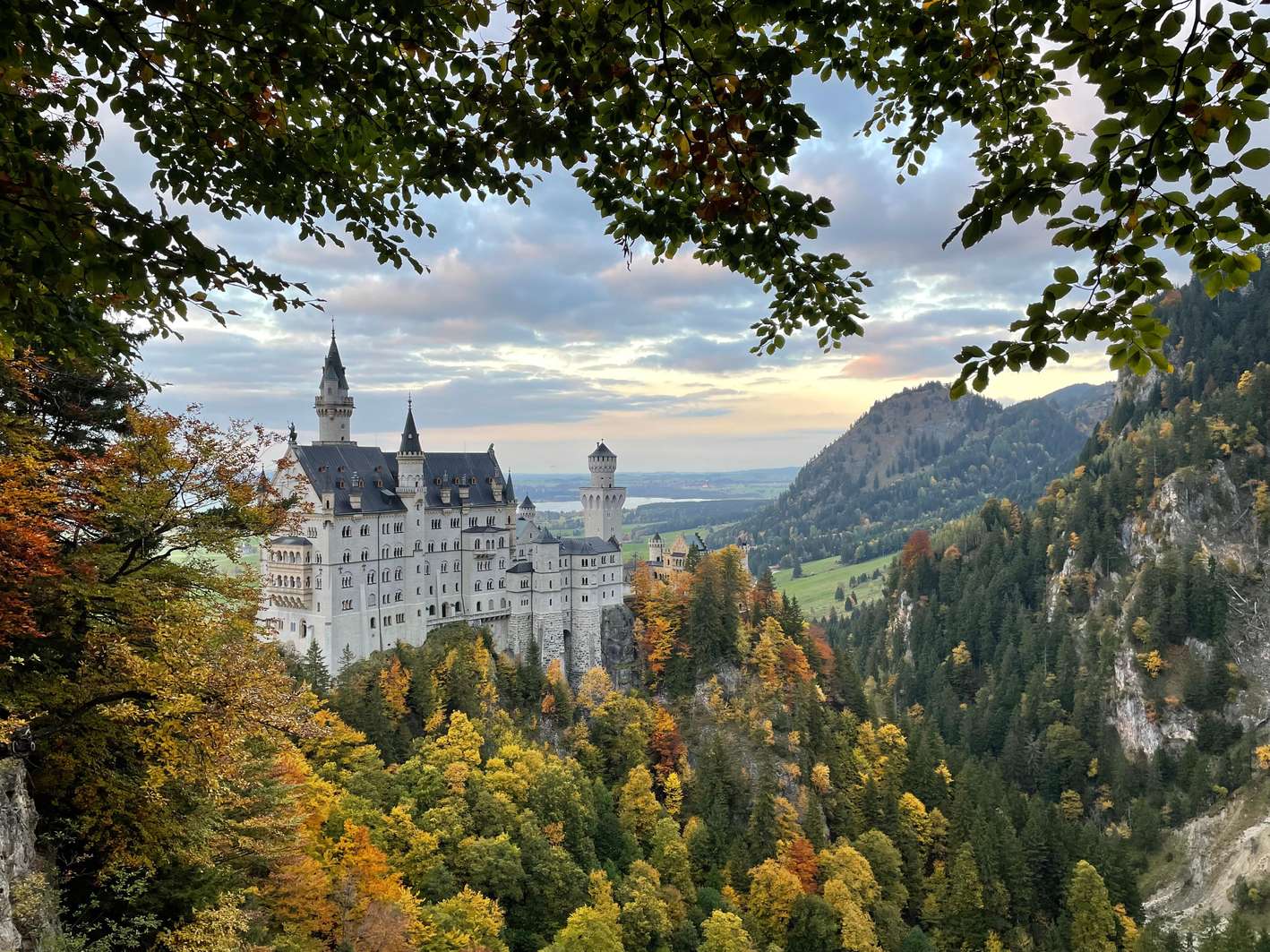
From Innsbruck the A12 runs west through the Inn Valley before the road climbs over the Fern Pass towards Reutte and Bavaria, about 114 kilometres and 1 hour 52 minutes door to door without traffic.
Fernsteinsee makes an easy roadside photo stop, and Plansee waits better for the return drive if your castle slot is tight. Your car needs an Austrian vignette for the A12, and winter tyres on all four wheels whenever the road is wintry.
Public transit is the weak link: a train change in Garmisch-Partenkirchen plus buses stretches the trip to nearly five hours. A private tour with hotel pickup does the crossing direct, adds Highline 179 and Blindsee, and holds a reserved castle entry time.
No direct coach exists, so the day starts with an early train to Munich
Salzburg sends out no cross-border castle coach of its own, which surprises many visitors. The workable day pairs an early regional train from Salzburg Hauptbahnhof with one of Munich's organized departures, and a valid ID card is enough for the Austrian-German border check on the train.
Allow at least 20 minutes for the transfer at Munich Central Station, more with luggage or children.
Once you connect, the day runs like any Munich trip: a coach, a reserved castle slot and a 10-hour round trip. The timed ticket is the hard edge. Arrive late at Hohenschwangau, even because of a delay, and you cannot join the interior tour.
Around 2.5 hours each way and two borders, best left to a private van
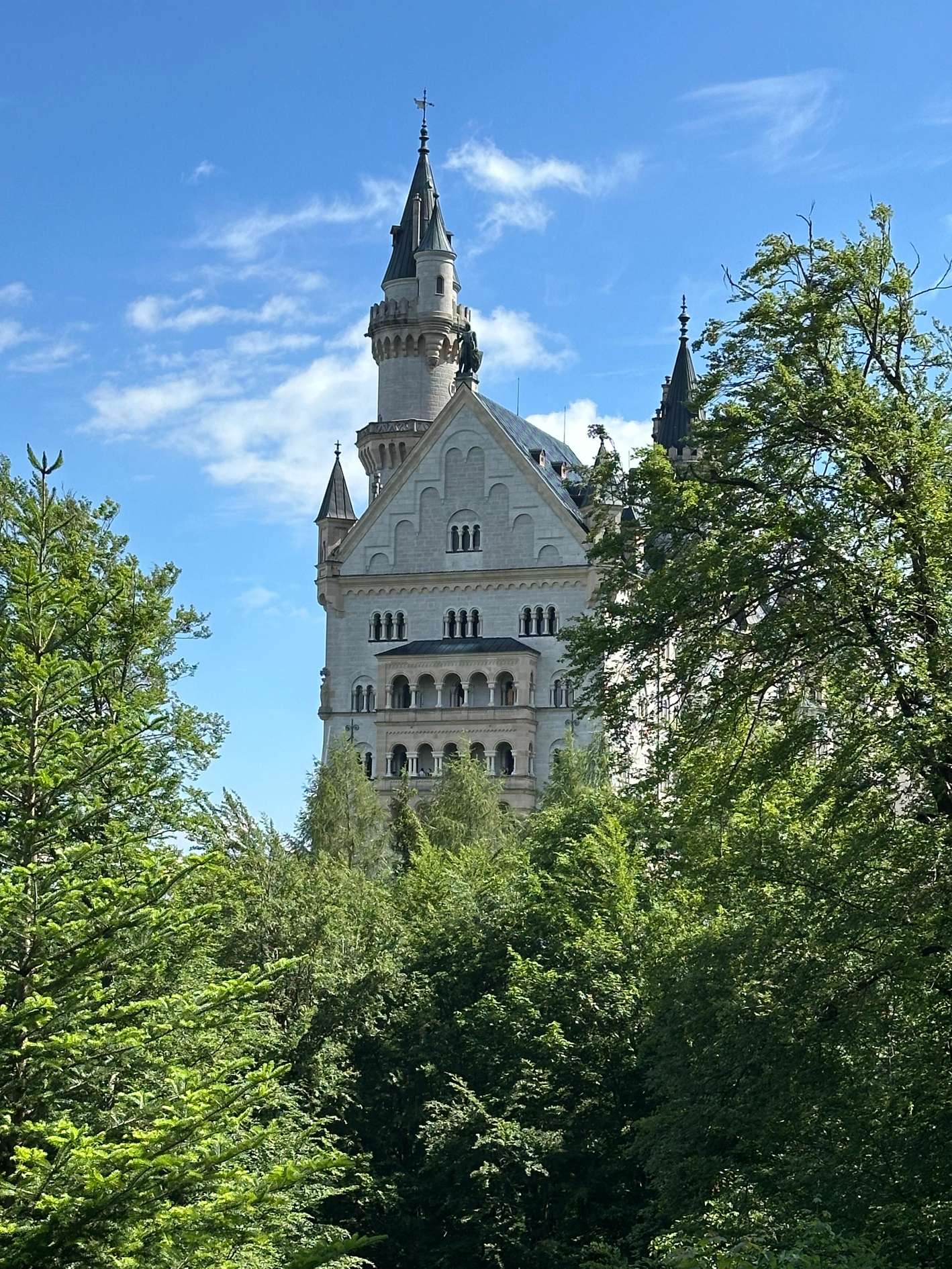
The road east from Zurich runs along Lake Constance towards Lindau, then the Allgäu route brings lakes and mountain views the last stretch into Hohenschwangau, about 2.5 hours each way in normal conditions.
Two borders sit on that route. A Swiss vignette covers the motorways at home, Austria wants its own vignette, and a rental car crossing out of Switzerland needs telling to the rental company in advance.
The private tour from Zurich takes nine hours door to door, with hotel pickup, a skip-the-line castle ticket and lunch at a brewery restaurant with a view of the castle. By train and bus the same journey runs close to seven hours with four changes, so a day return that way is not realistic.
Neuschwanstein comes into view from the valley road, but the last stretch still needs planning. Choose a route, prepare for border and winter rules, and leave enough time for parking and your timed entry.
From Munich, the drive takes about two hours without traffic; summer weekend congestion can add time.
An Austrian vignette is required to use the A12 from Innsbruck, while the approach from Füssen follows German roads.
In Germany, winter tyres are required when roads are icy or snowy; Austria also has a seasonal winter-equipment rule.
Park in Hohenschwangau, then walk uphill or use the shuttle or a horse-drawn carriage; public cars cannot reach the castle.
Arrive in Hohenschwangau 1.5-2 hours before your timed entry. Late arrivals cannot join the tour.
Park in one of the four paid lots in Hohenschwangau village, P1 to P4, then walk the 30 to 40 minutes uphill or take the shuttle bus or horse-drawn carriage from there.
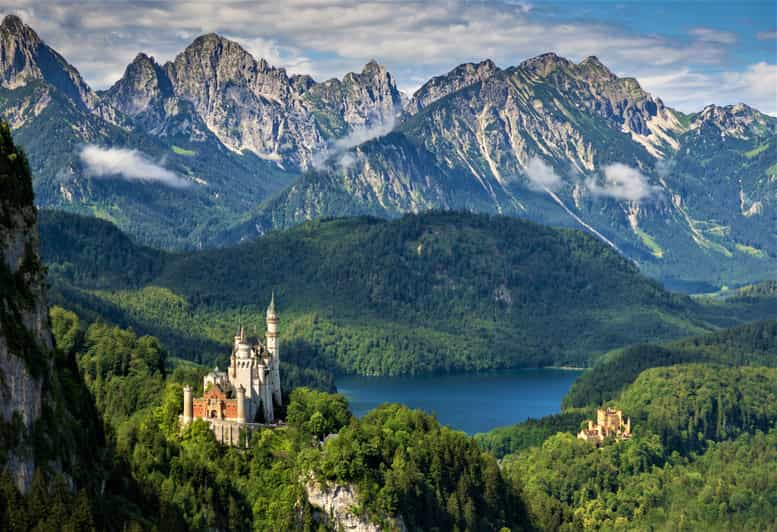
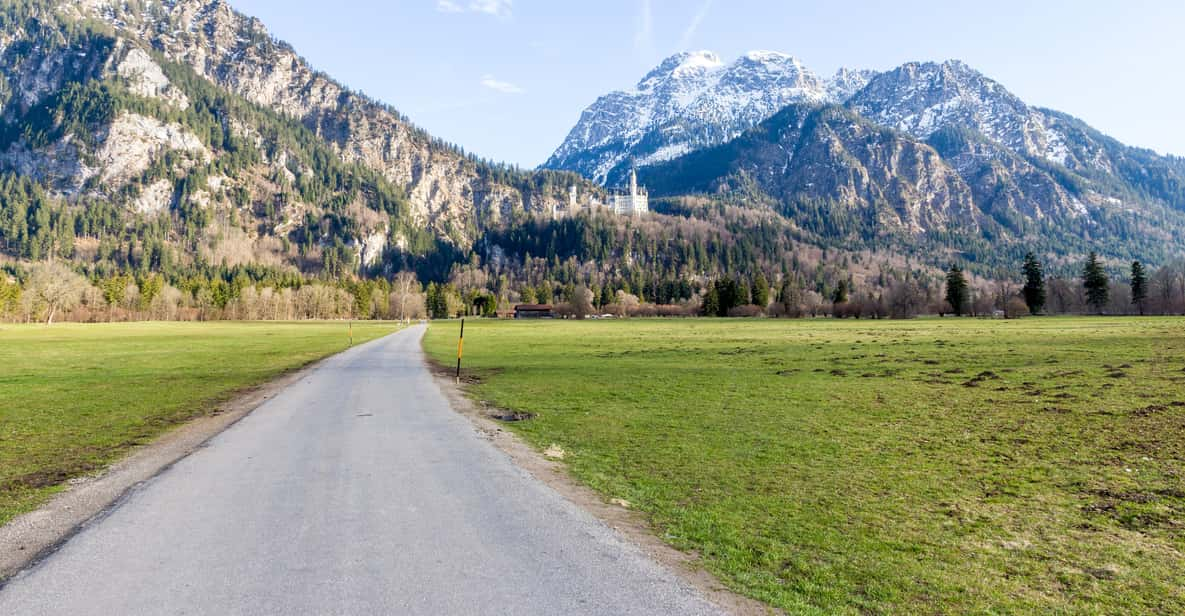
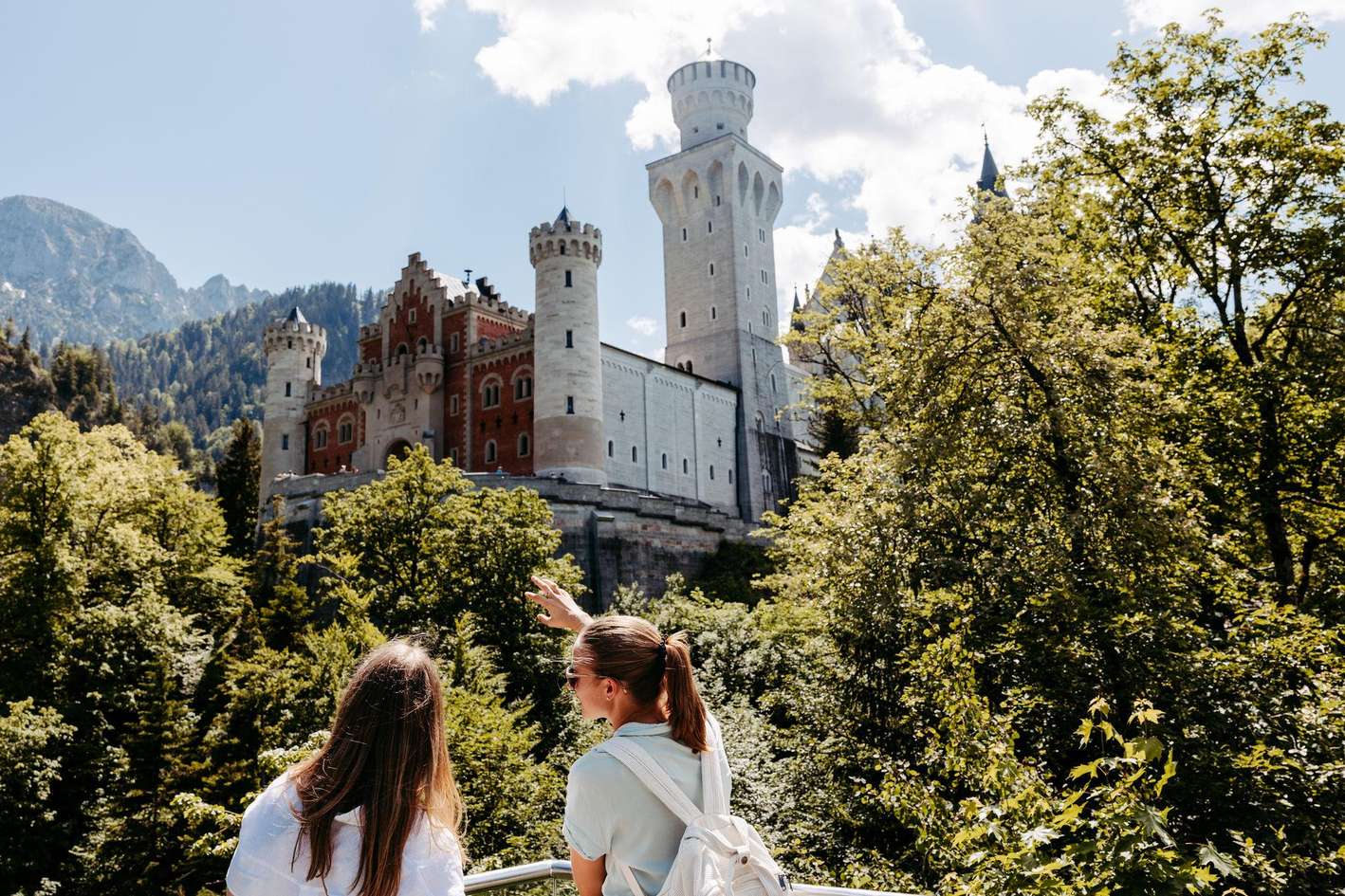
The castle comes into view from the valley road before Hohenschwangau, a first glimpse that makes the last stretch feel close. From Munich, the A96 and B17 take about two hours without traffic.
Garmisch-Partenkirchen has the shortest drive, around 1 hour 10 minutes via Ehrwald and Reutte; Innsbruck’s A12 and Fern Pass route takes about 1 hour 52 minutes.
From Zurich, the drive to Hohenschwangau takes about 2 hours 40 minutes to three hours in normal conditions. These are different journeys, and the Zurich estimate includes its route across Switzerland and Austria.
The Garmisch and Innsbruck routes cross Austria, where holiday traffic can slow the Fern Pass crossing. For departure-specific advice, see the Munich day trip page, Garmisch-Partenkirchen page or Innsbruck page.
The route matters more than the fact that you pass through Tyrol. Cars up to 3.5 tonnes need an Austrian vignette before using the A12 motorway from Innsbruck. The listed approach from Füssen follows German roads, so it does not require an Austrian vignette. Cars do not need an Austrian environmental badge.
The routes differ in what you need at the border, so it helps to separate the road toll from your travel documents.
Only Austrian motorways and expressways where the toll applies require one; the A12 from Innsbruck needs it, while the Füssen approach does not
Carry a valid passport or, where accepted, a national identity card
Tell the rental company before taking its car across the border
Carry a valid passport or national identity card when crossing between Austria and Germany. A driving licence is not a travel document, and children need their own passport or identity card.
Checks are possible at internal Schengen borders. If you are travelling from Switzerland, carry valid travel documents too; entry requirements for visitors from outside the EU depend on nationality.
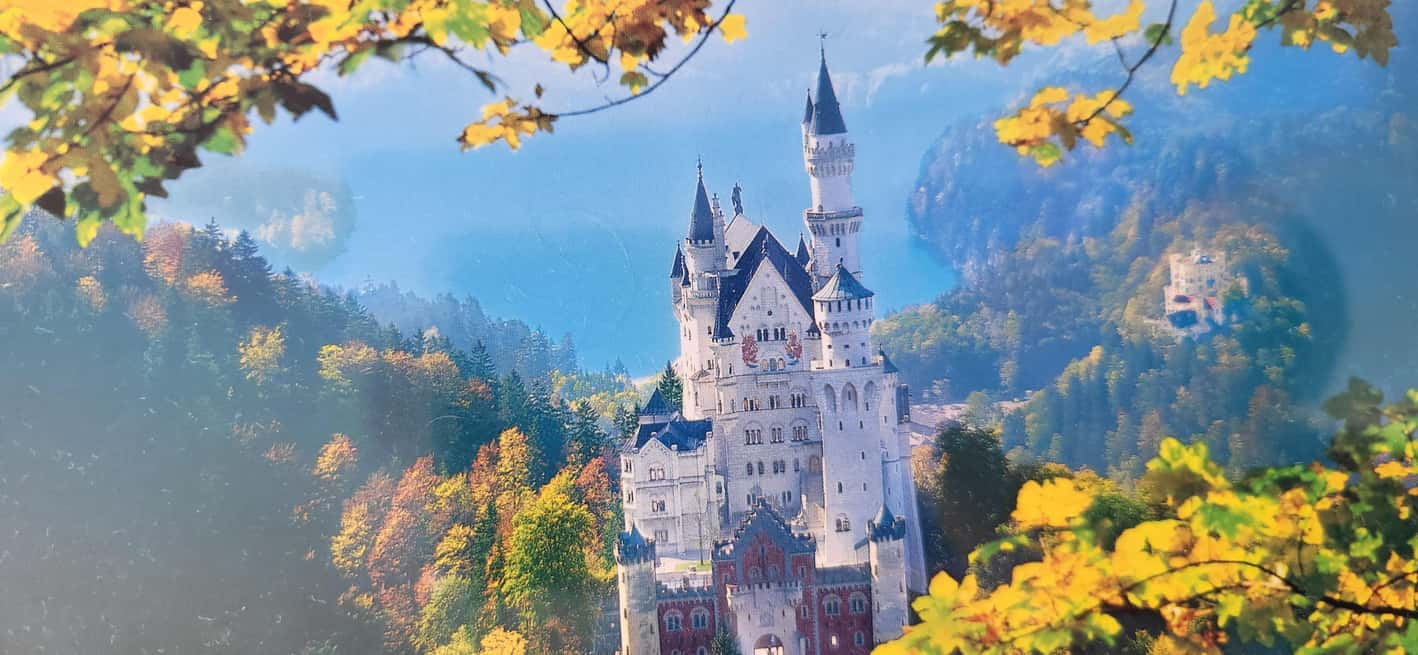
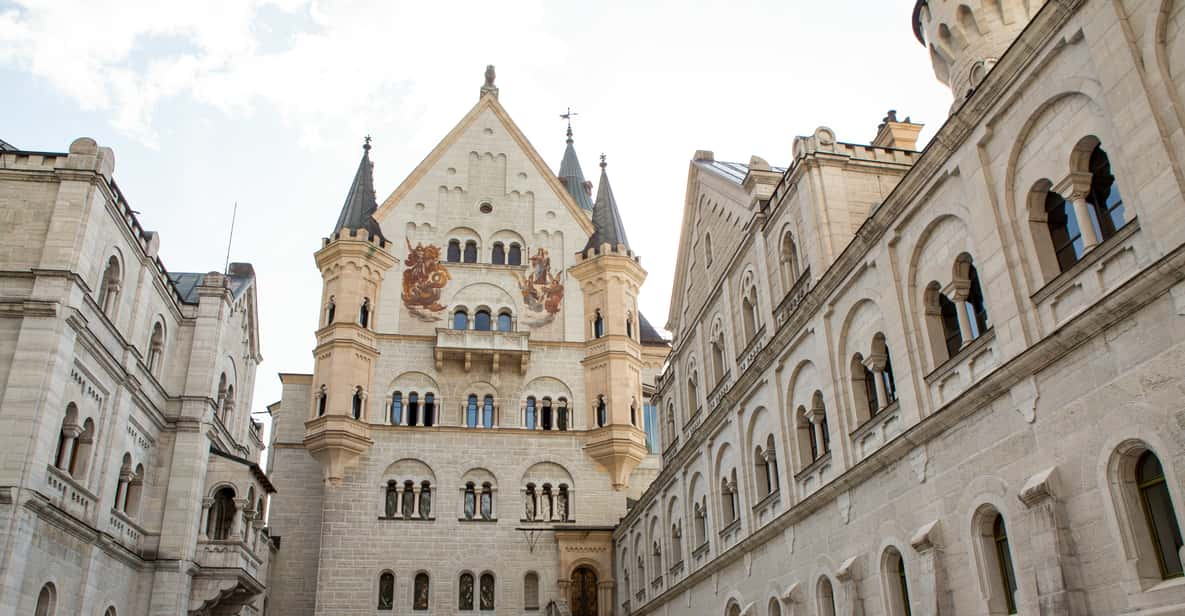
Snow changes the legal requirements on both sides of the border. In Germany, all four wheels need qualifying winter tyres when roads are icy or snowy. The rule is based on road conditions, so check the forecast before you set out.
Austria has both a seasonal window and a weather test. From 1 November to 15 April, cars need winter equipment when conditions are wintry. In snow, slush or ice, use winter tyres on all four wheels.
Chains on at least two drive wheels are allowed as an alternative only when the road is continually or almost always covered with snow or ice.
Mountain curves can be slippery after fresh snow, so take extra care in an unfamiliar rental car. Fog can hide the castle and mountain views, and rain can make paths slick. Leave time to slow down if the weather changes.

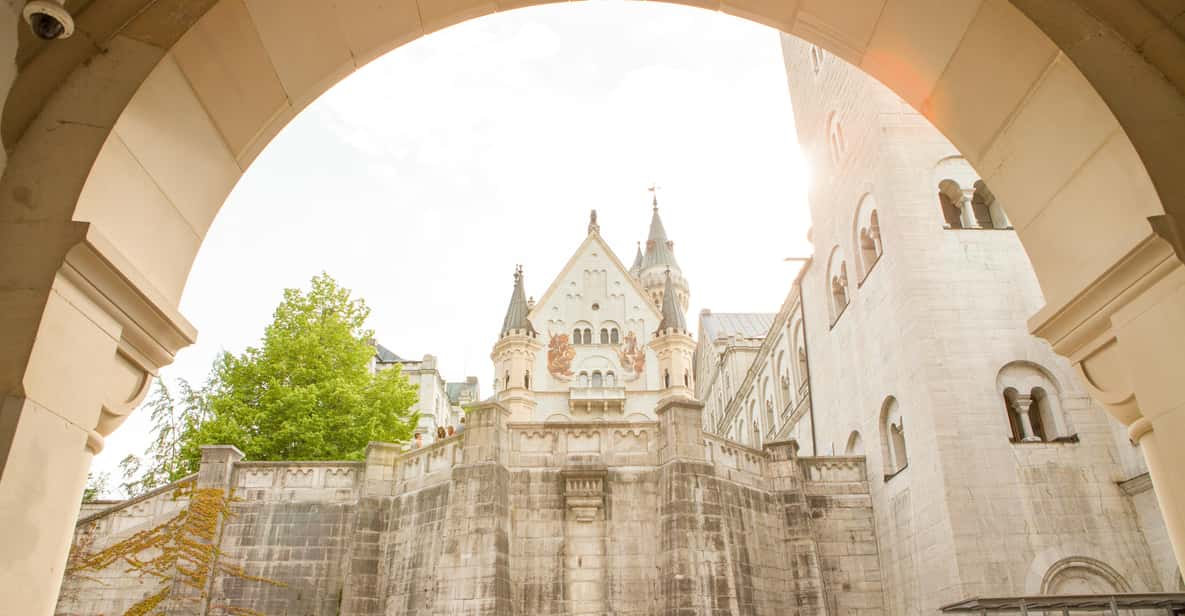
The public road ends below the castle, so drivers leave their cars in one of Hohenschwangau’s paid valley lots.
P1 and P4 take cars and buses, P3 is for cars, and P2 is the only lot for campers, mobile homes and motorbikes. P4 is also where the shuttle departs. In peak summer, the lots can be full by 9:30 am.
From the village, the castle is about 1.5 km uphill. Walking takes 30-40 minutes; the shuttle saves the climb but stops above the castle, while the carriage leaves you below it, with a final uphill walk.
Shuttle and carriage fares are separate from castle admission, and the shuttle does not accept credit cards. Bicycles cannot use the castle access road; cyclists should take the cycle path that branches off shortly after the road begins.
The options all leave you with a final approach on foot. The arrival sequence shows where each one drops you and what comes next.
Paid parking is separate from the castle visit
The road is steep in places
Walk downhill to the castle
Walk uphill from the drop-off point
Return to the valley by foot or ride

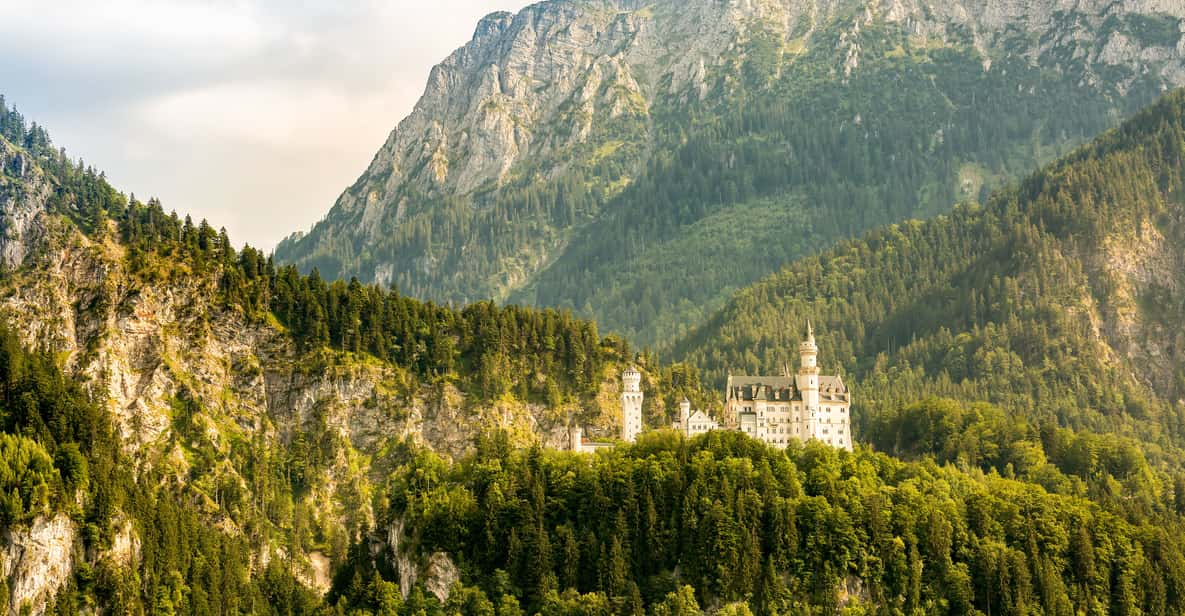
A timed ticket gives you entry at the time printed on it. If traffic or a parking queue makes you late, you cannot join the interior tour, and the journey risk is yours. Allow 1.5-2 hours between arriving in Hohenschwangau and your Neuschwanstein entry time, so you can park and reach the castle without rushing.
If online tickets have sold out, the Ticket Center may release a limited number of same-day tickets from 8 am. They are subject to availability and may sell out by late morning; arrive early and be ready for a line and a later slot.
The printed time decides whether you can join. Build your village arrival around that appointment, not around the drive alone.
Tickets are valid only for the printed time slot; arrive late, even because of road traffic or parking queues, and you cannot join the interior tour Arrive in Hohenschwangau 1.5-2 hours early
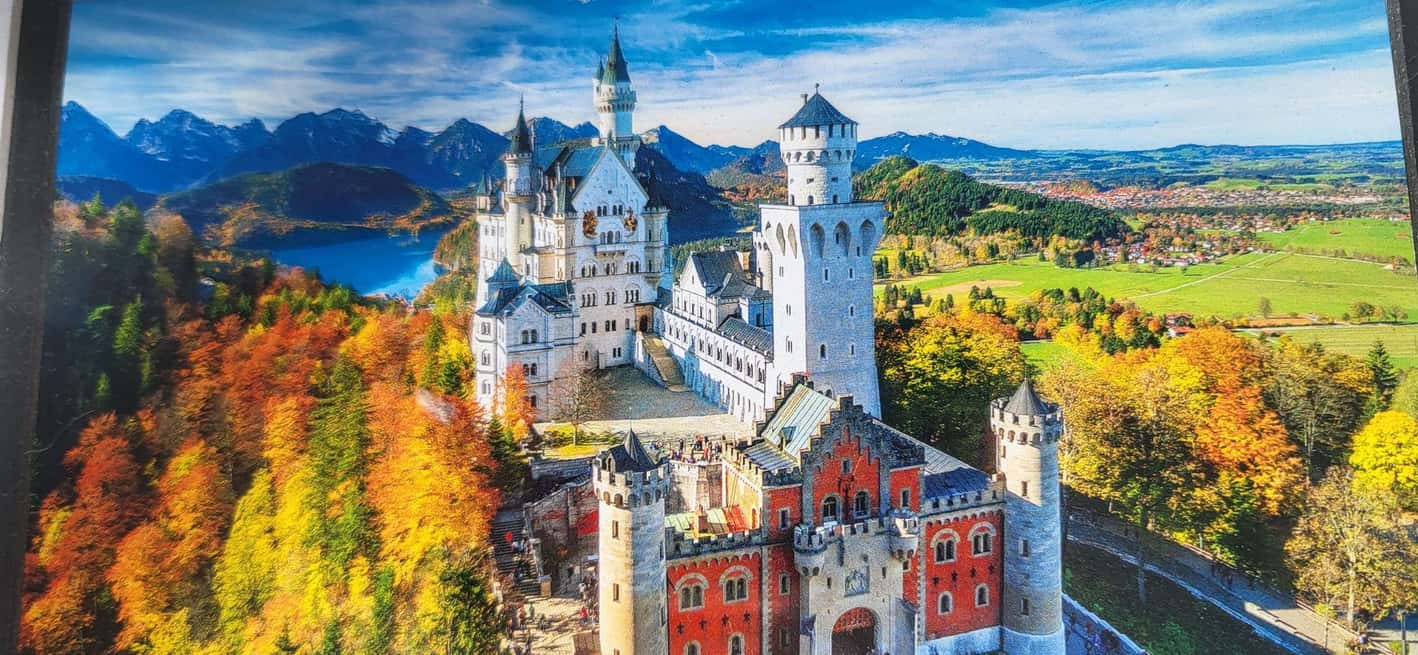
Driving yourself gives you control over the route and stops, while leaving you to manage the road, parking, timed entry and final uphill stretch. A coach or van tour coordinates transport and may arrange a castle ticket; organized tours can sometimes secure entry after public allocations sell out. You follow the tour’s schedule in return.
The Private Neuschwanstein Tour from Munich in a Luxury Van for Up to 6 People runs for 10 hours. Its driver-guide handles the route and vehicle transport, and drinks and Wi-Fi are included; castle and palace admission tickets are not. The tour can also visit places such as Füssen, Plansee and Ettal.
The choice comes down to who handles the arrangements and how much control you want over the day.
| Self-drive | Coach tour | Private van | |
|---|---|---|---|
| Timed ticket | You book and fit it to your route | The tour may arrange it | Check what the tour includes |
| Parking | You choose and pay for a valley lot | The vehicle handles the drive; you still leave it below the castle | The vehicle handles the drive; you still leave it below the castle |
| Schedule | Your choice, with a timed entry to meet | Set tour schedule | Private tour schedule |
| Extra arrangements | Route, parking and uphill transfer are yours | Transport and tour logistics are arranged | Driver-guide manages the route; admission may be separate |

The approach gives you a castle view from the valley road, but detours need to fit around your entry time.
A Munich tour can take the Romantic Road, while the Innsbruck route passes Fernsteinsee for a roadside photo stop. Plansee is a short detour before the border; save it for the return if your castle slot is tight.
Füssen is a natural place to linger: the Royal Allgäu stretch of the German Alpine Road links the castles, the Museum of the Bavarian Kings and nearby lakes. On the way back toward Munich, Seehaus Schreyegg is a lakeside beer garden with Bavarian food and, on clear days, views across the lake to the Alps.
You can spot it from the valley road as you approach
The German Alpine Road meets the Romantic Road there
Neuschwanstein, Highline 179 and Linderhof fit only with an early start and careful timing
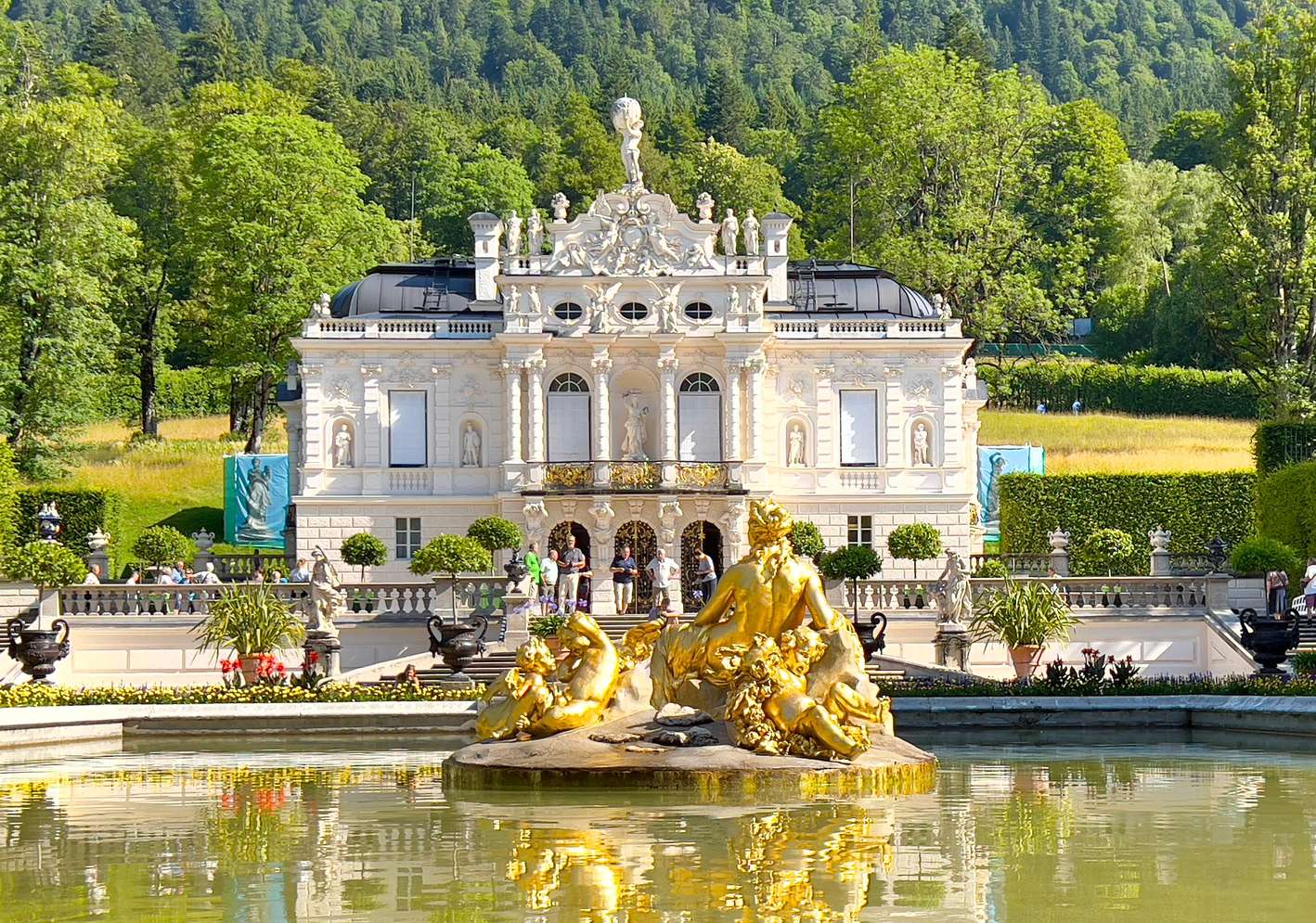
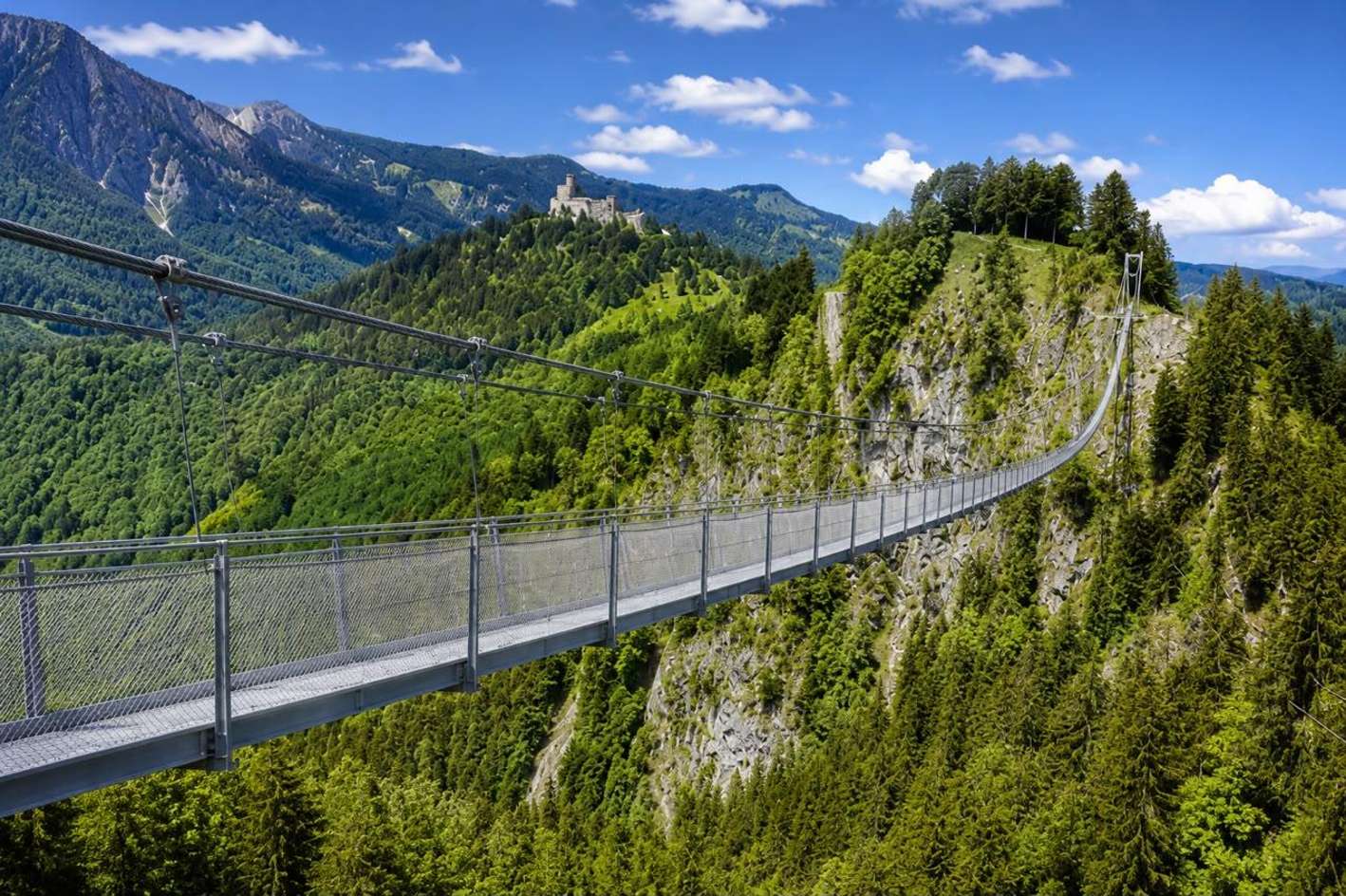
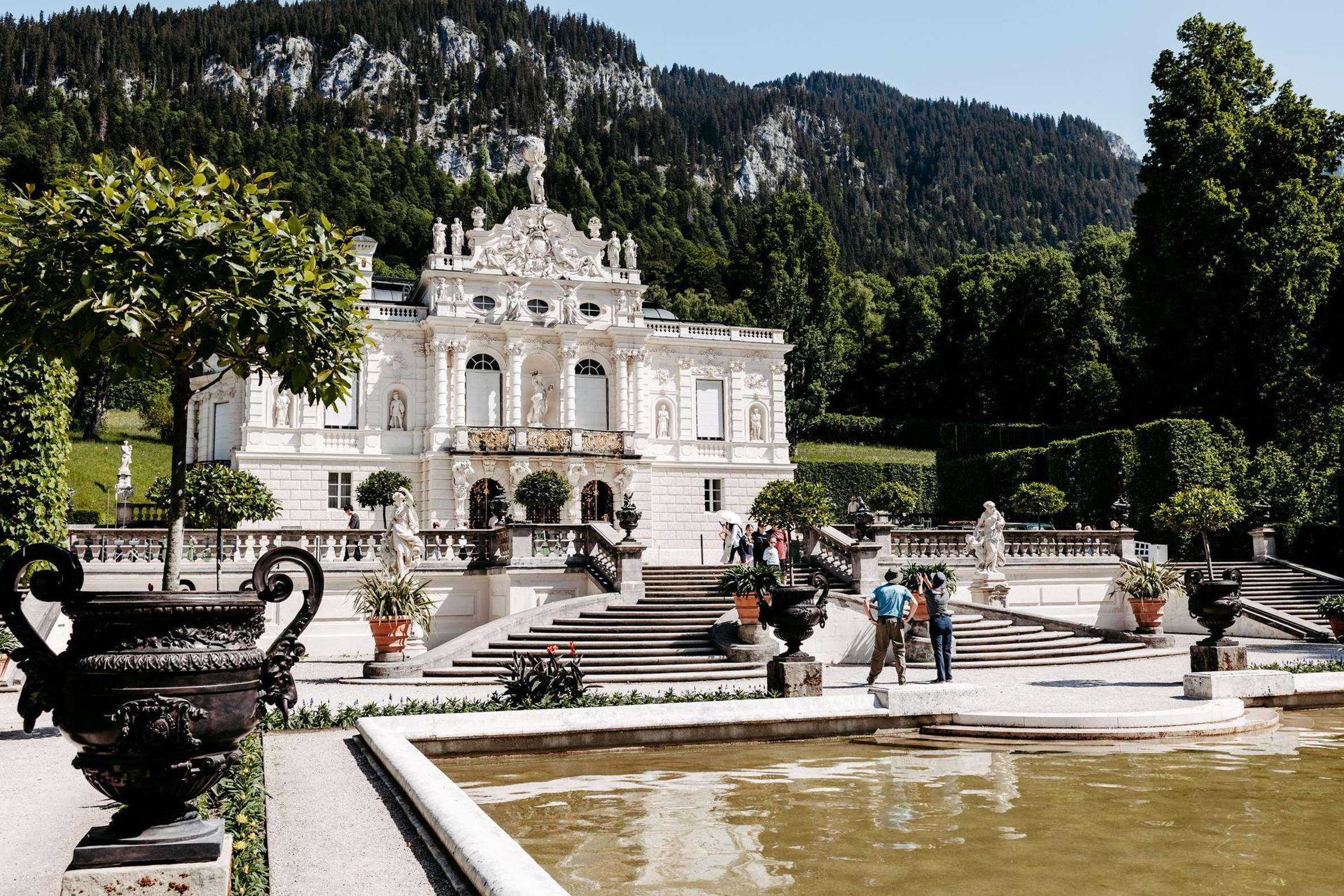
A day that also includes Highline 179 and Linderhof Palace is possible by car, but it is tight. One itinerary allows about three hours for Neuschwanstein, one hour for Highline 179 and 1 hour 15 minutes for Linderhof.
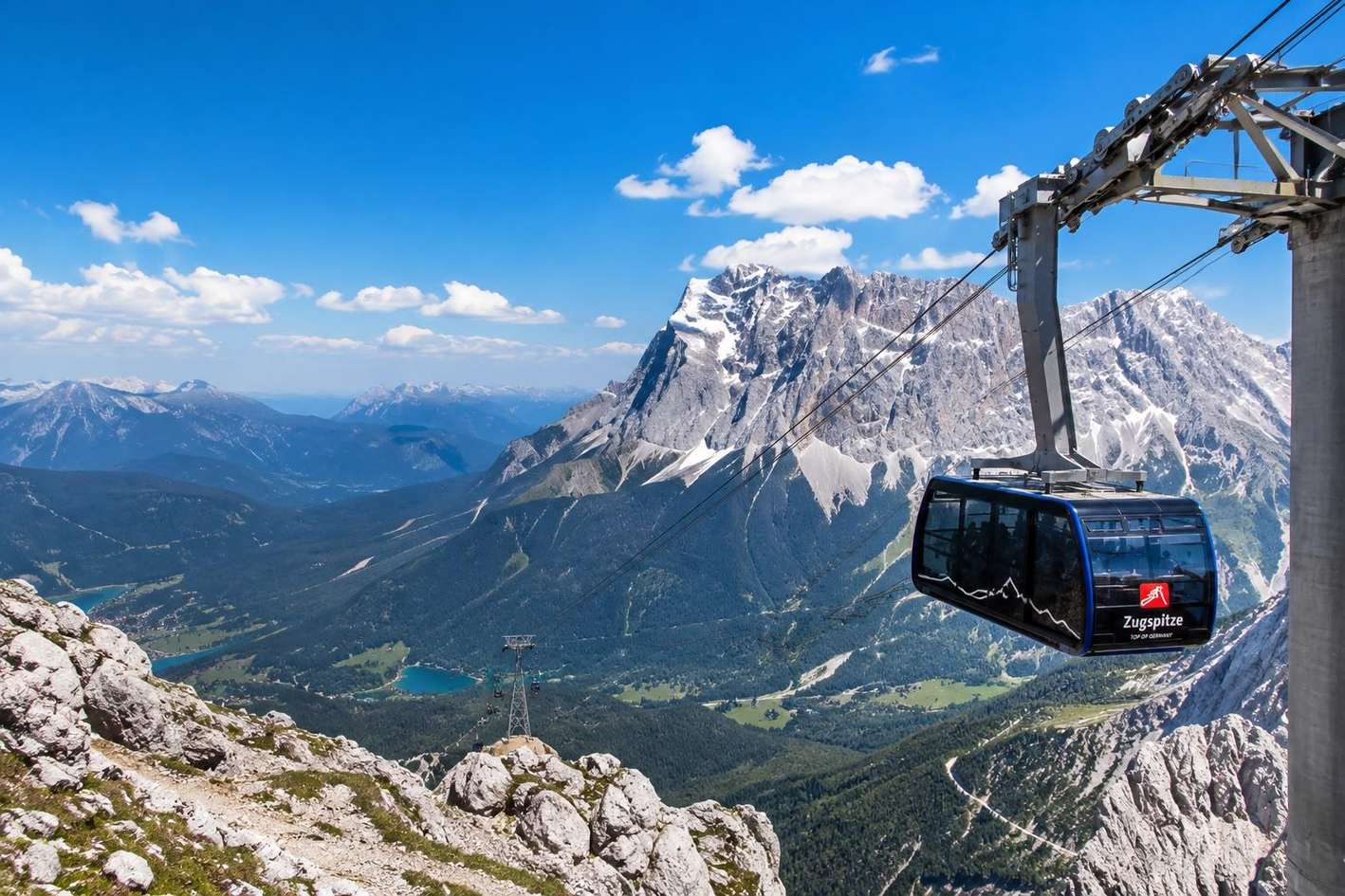
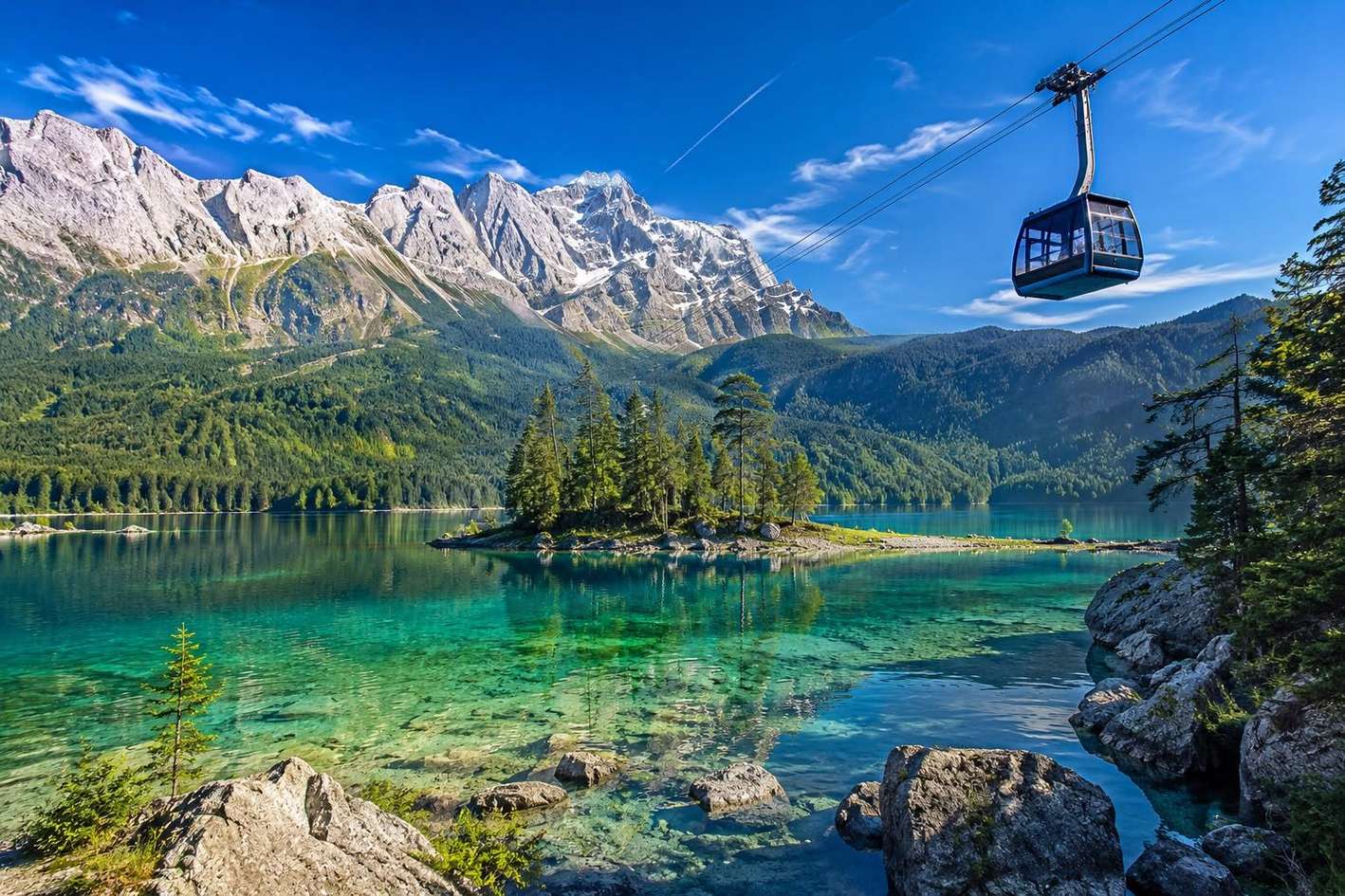
Those figures describe that itinerary’s stops, not every road trip. A separate 12-hour tour combines Zugspitze, Eibsee, Highline 179 and Neuschwanstein, with hotel pickup and a flexible route.
From Munich, public transport means a regional train to Füssen followed by a local bus to Hohenschwangau.
Allow about 2 hours 45 minutes to reach the village, plus any waiting time; buses 73 and 78 take about 15 minutes from Füssen and can be busy in summer. Train works can also change schedules or bring replacement buses, so leave a generous connection buffer.
A Salzburg day trip starts with a train to Munich, then continues on an organized departure from the city. Allow at least 20 minutes to change trains at Munich Central Station, and more if you have luggage or children.
A valid ID card can be used instead of a physical passport for the Austria-Germany train crossing. A delay anywhere on the way can cost you a timed castle slot, so leave room before the tour.

From Zurich, the drive to Hohenschwangau takes about 2 hours 40 minutes to three hours in normal conditions. This is a different journey from the roughly two-hour Munich drive: the Zurich route heads east past St. Gallen, crosses Austria near Bregenz and continues through Germany toward Füssen.
Checks at Schengen internal borders are possible, so carry a valid passport or ID card and tell your rental company before taking its car across borders.
A day by train takes close to seven hours with four changes, which leaves little room for a castle visit and a return the same day.
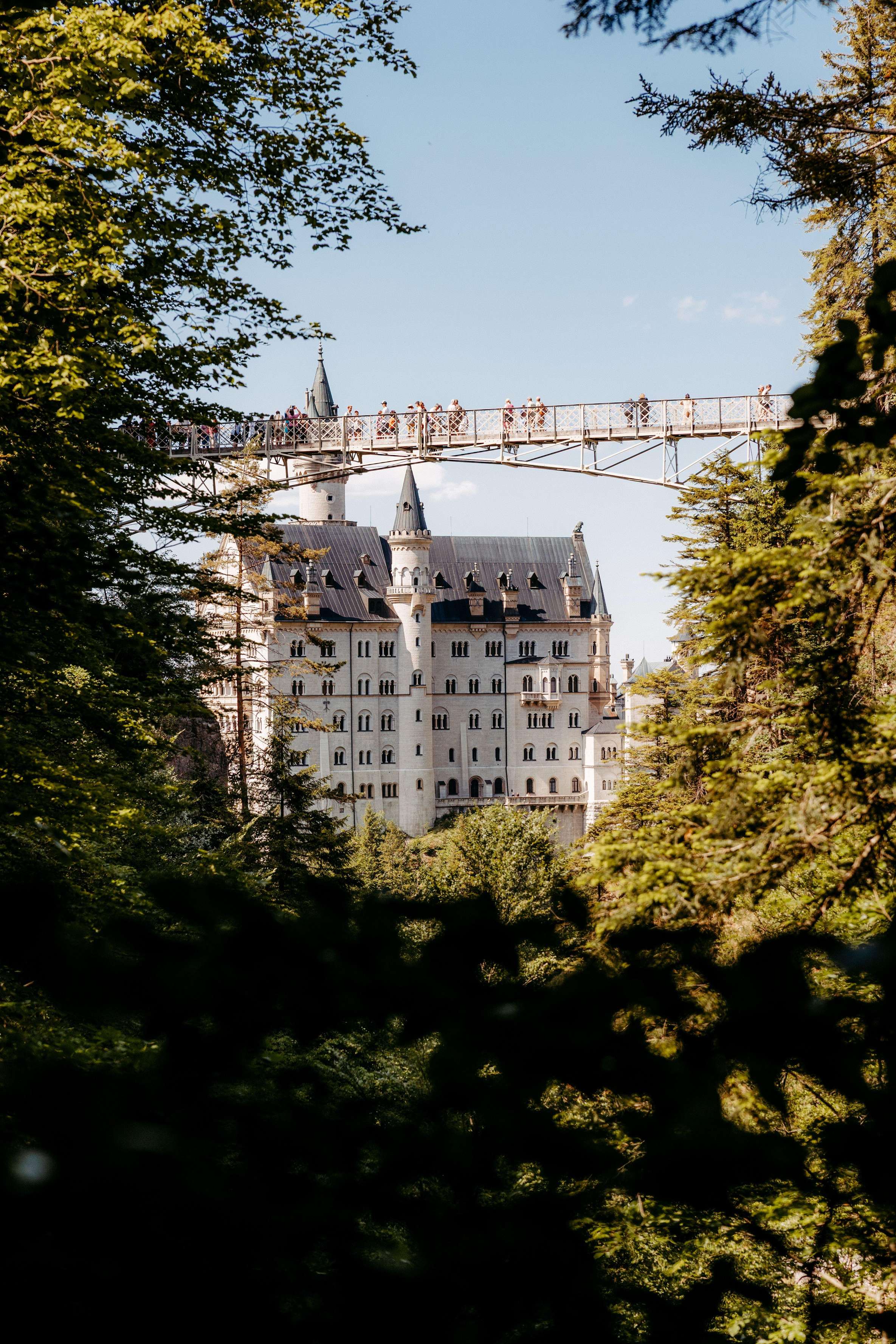
The From Zurich: Neuschwanstein Castle Private Tour with Lunch runs for nine hours and includes round-trip van transport, a private guide, a castle ticket and a visit to Mary’s Bridge. That duration belongs to this specific tour; the longer multi-stop alpine trip is a separate itinerary. Have euros for food and other spending in Germany.
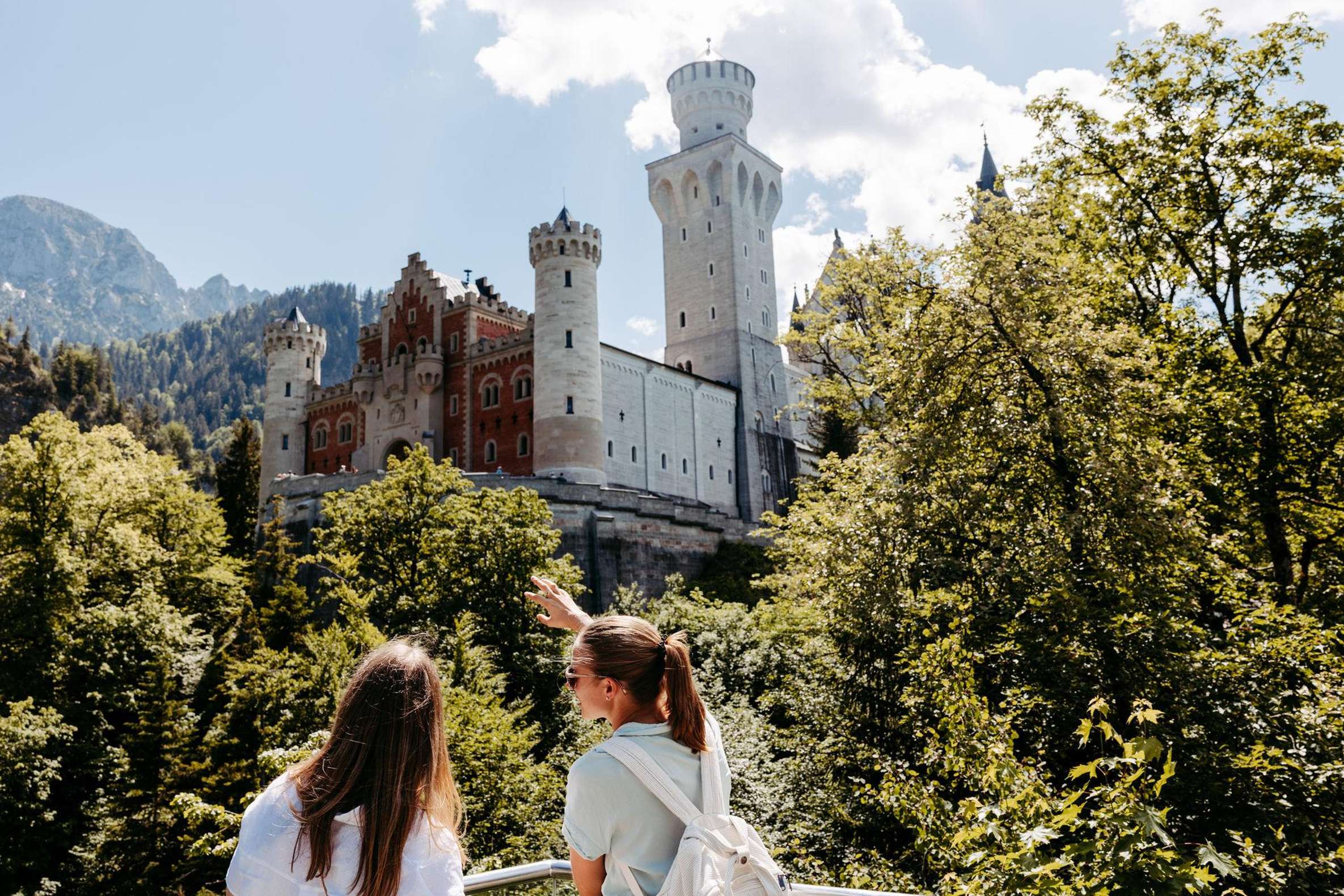
The valley has plenty to fill a spare hour on foot: Hohenschwangau Castle, the Museum of the Bavarian Kings, viewpoints and a waterfall are all close to the village. For a second castle interior, plan a full day and leave at least 2.5 hours between the two entry times; both visits require a guided tour.
The nearby stops make it easier to choose a short walk or a longer drive after your castle visit.
A full loop around Alpsee takes about 1.5 to 2 hours, so check how much free time your tour leaves before setting off. Hohenschwangau is the closest base for early castle slots; Füssen is a practical town base, while quieter Schwangau generally works best if you have a car or bicycle.
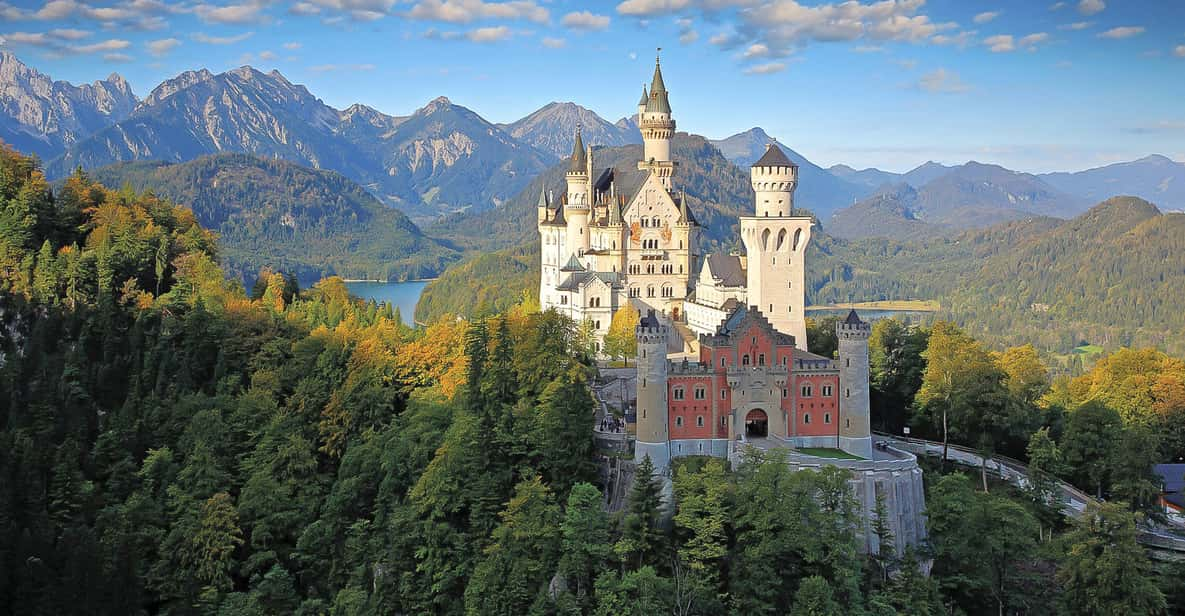
A self-drive road trip gives you the freedom to add lakes, villages and Alpine viewpoints, but it does not take you to the castle gate.
You still need to park below, make the uphill approach and protect your timed entry from traffic delays. Choose an organized van or coach if you would rather hand over the driving and route planning.
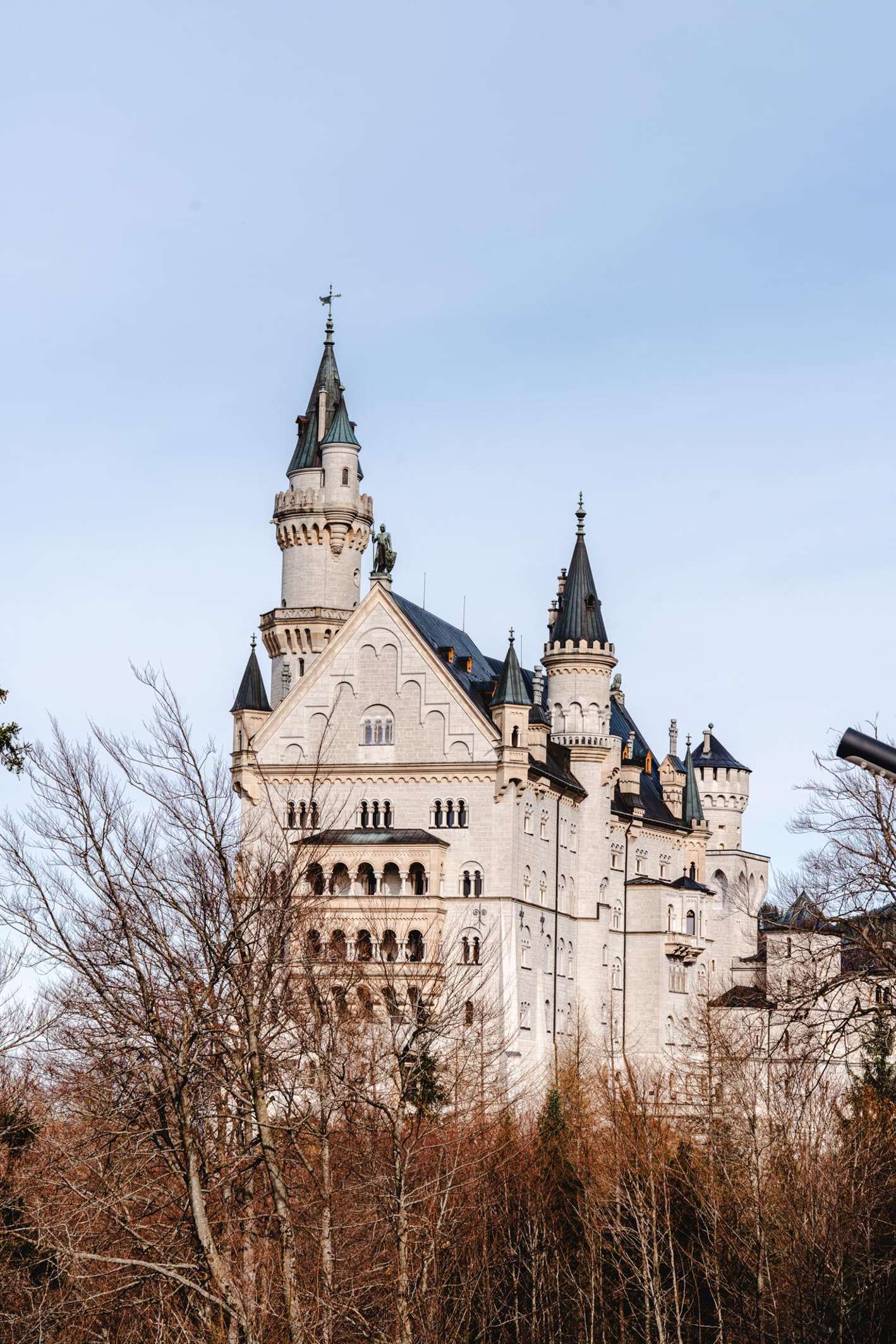
See whether you walk through the rooms on your own or ride with a guide, and what changes on sold-out days.
Hand the driving and the timetable to a small-group day trip and compare the departures from your region.
Timed entry decides your whole day on the road; here is how reserved admission works and when to arrive.
Swap the highway for a lakeside ride around Füssen and cycle to the castle on the flat valley path.
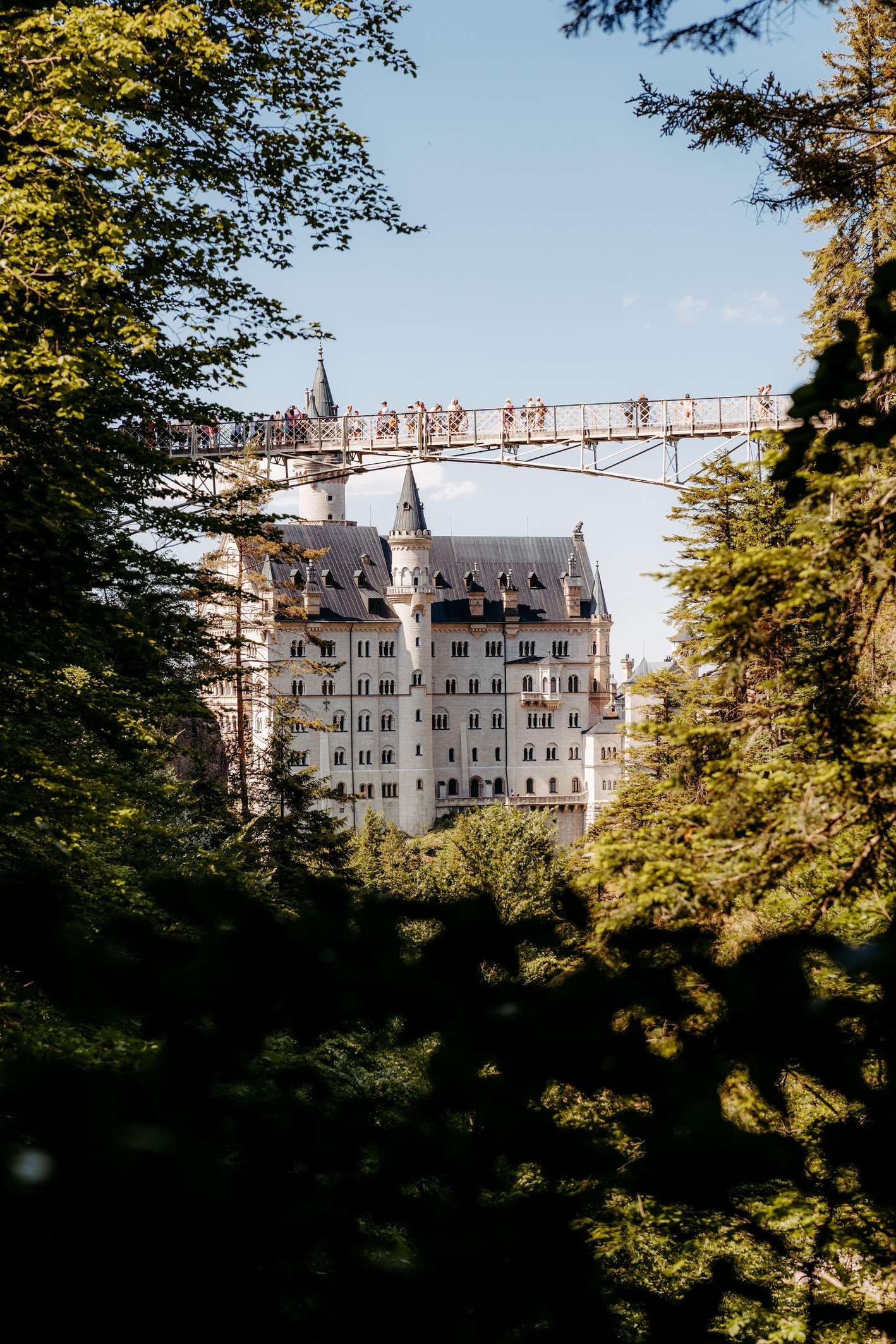
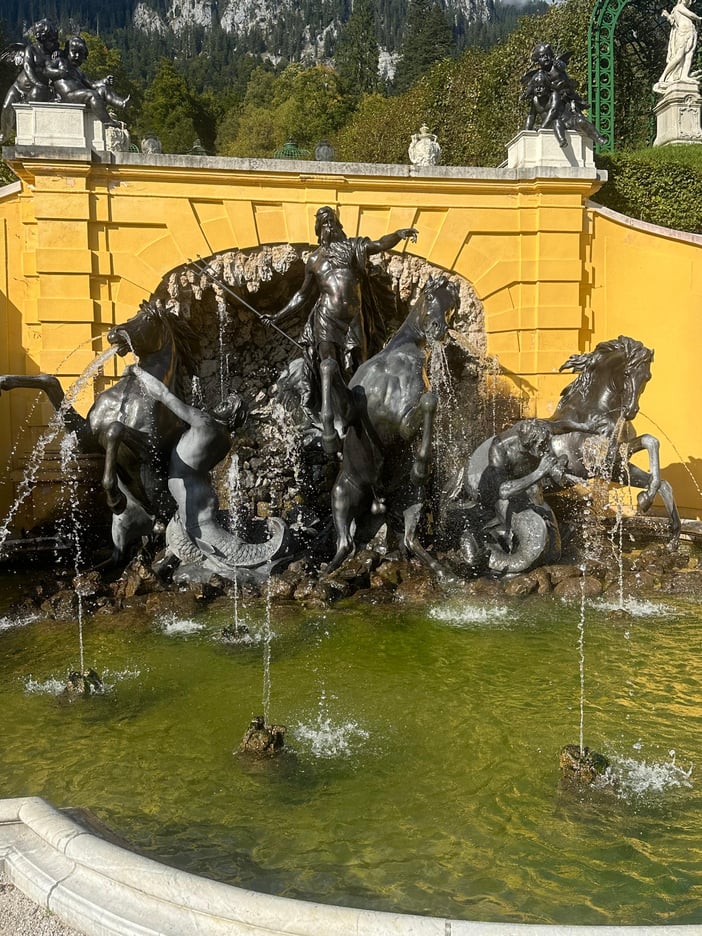
Linderhof Palace sits on the way through the Ammergau Alps; see how both palaces fit into one driving day.
The full transit picture by train, bus and car, including where you must leave the car in Hohenschwangau.
Tickets sell out months ahead in season; here is where to buy and how the timed slots work.
Winter closes the bridge and empties the roads; find out which trade-off suits your route and dates.
Bringing kids or a stroller changes your plan; the uphill walk and the castle stairs explained before you drive.
The things people ask before they point the car south toward Füssen.
 Mottingen2026
The guided tour starts punctually, and a ticket is only valid for the time slot printed on it. Arrive late, even because of traffic, and you cannot join the tour.
Private cars cannot reach the castles, so self-drivers park in the Hohenschwangau valley and then walk up or queue for the shuttle or horse carriage. A door-to-door tour skips the parking lot and the transfer entirely.
It is possible by road with an early start and careful planning. One private itinerary budgets roughly three hours at Neuschwanstein, an hour at Highline 179 and an hour and a quarter at Linderhof, so expect a tight day.
Not on the standard routes from Füssen, which run on the A7 and German roads. If you drive through Austria, a vignette is required for cars on any Austrian motorway where the toll applies.
In summer peak months, the public lots can be full by 9:30 am. Set out early or let a tour handle the transfer for you.
Yes. The drive takes about two hours each way, public transport roughly three, and several full-day van and coach tours run from Munich daily.
About two hours without traffic, covering roughly 128 km southwest to Hohenschwangau. Weekend morning jams on the routes past the lakes can add time, so a 7:30 am start helps.
Hohenschwangau is the closest place to stay, a short walk from the ticket area. Füssen is the nearest town for trains, with buses 73 and 78 linking it to the castles.
Plan about three and three-quarter hours for a full stop, including the 30 to 40 minute uphill walk and the half-hour interior tour. That also leaves room for lunch and the viewpoints.
Take a bus to the Hohenschwangau Neuschwanstein Castles stop, then walk uphill 30 to 40 minutes or ride the shuttle from parking P4. Füssen sits about 5.6 km away, thirteen minutes by car without traffic.
Photography is not allowed inside, so the rooms you remember will be the ones you looked at. Save the camera for Marienbrücke and the terraces outside.
Seehaus Schreyegg, a lakeside beer garden on the way toward Munich, serves Obatzda, Wurstsalat and roast chicken with lake and, on clear days, Alpine views. A relaxed end to the road trip.
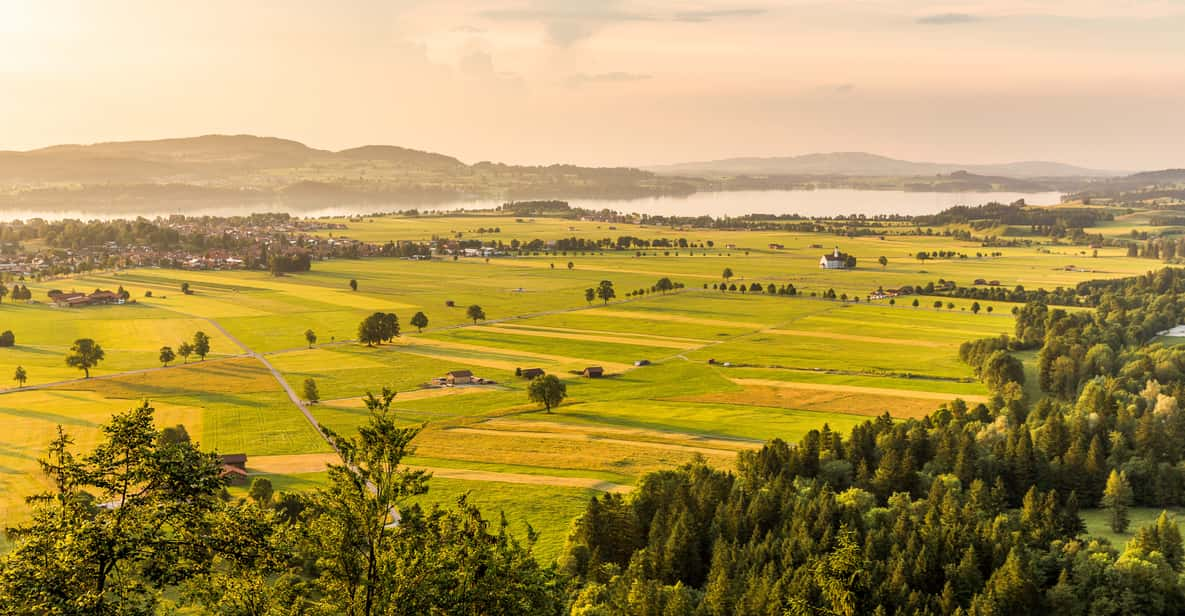
Ride the Romantic Road by van with hotel pickup in Munich and a full day out; free cancellation up to 24 hours before you go.